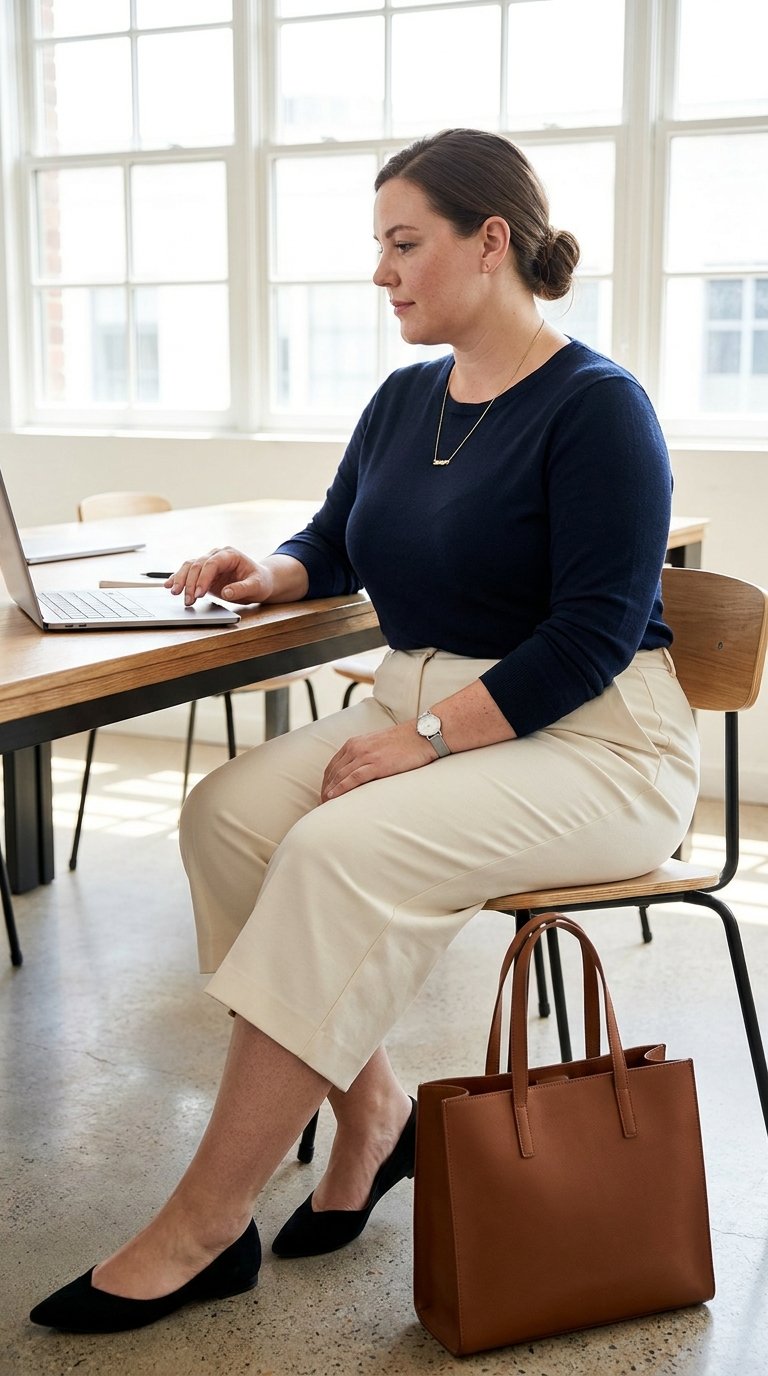
10 Plus Size Office Outfit Mistakes That Are Easy to Fix (and Exactly How to Fix Them)
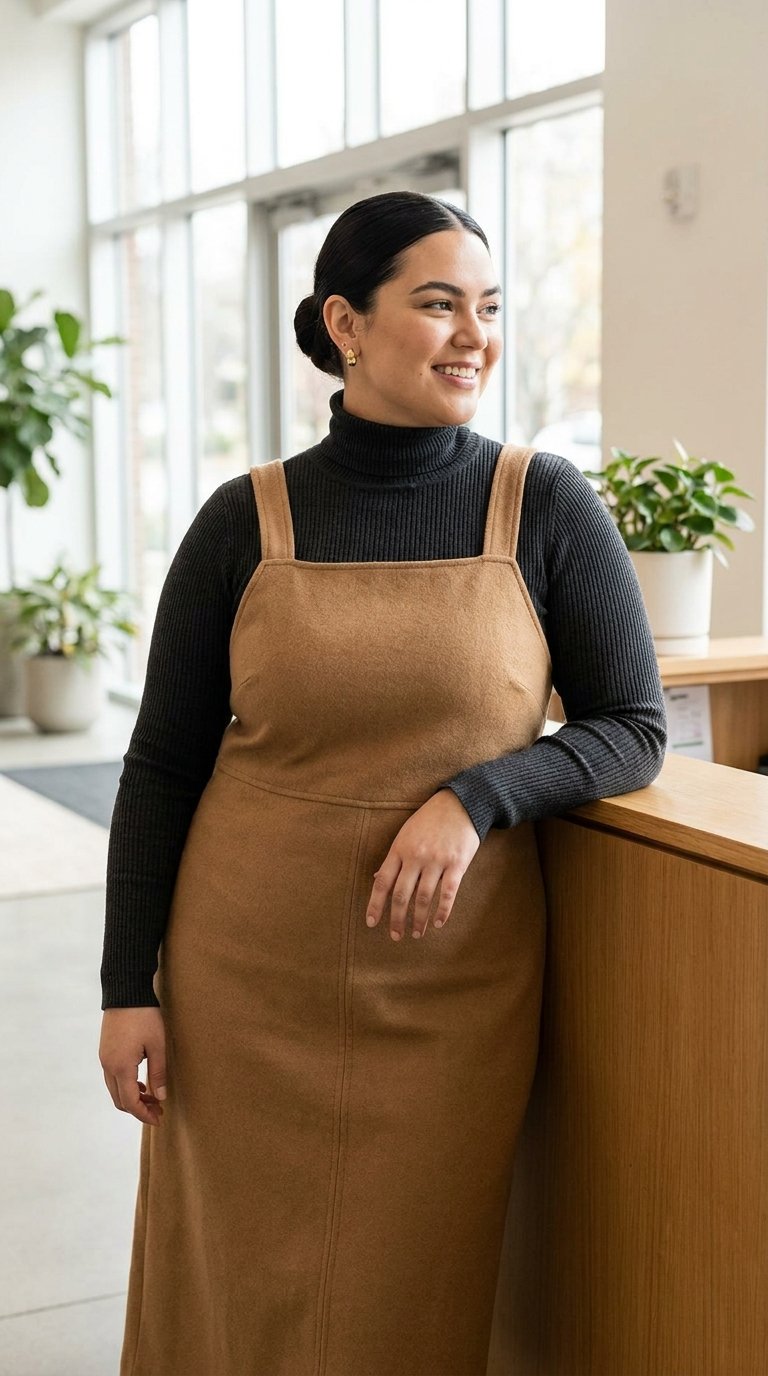
Here is a belief worth dropping today: dressing well at the office is not about having a smaller body. It is about fit, proportion, and a few styling habits that nobody ever actually teaches us.
Most plus size office outfit mistakes have nothing to do with effort. You can spend real money, follow every rule you grew up hearing, and still feel off in the mirror before your 9 a.m. meeting. That is because a lot of those rules were written for a different body, a different decade, or a different job entirely.
The good news is that almost every one of these mistakes has a fix you can make this week. Some cost nothing. Some cost less than lunch. None of them require a new wardrobe.
So grab your coffee, think about the outfit you wore Monday, and let’s walk through the 10 habits that quietly work against you and what to do instead.
1. Wearing a Blazer That Pulls Across the Shoulders

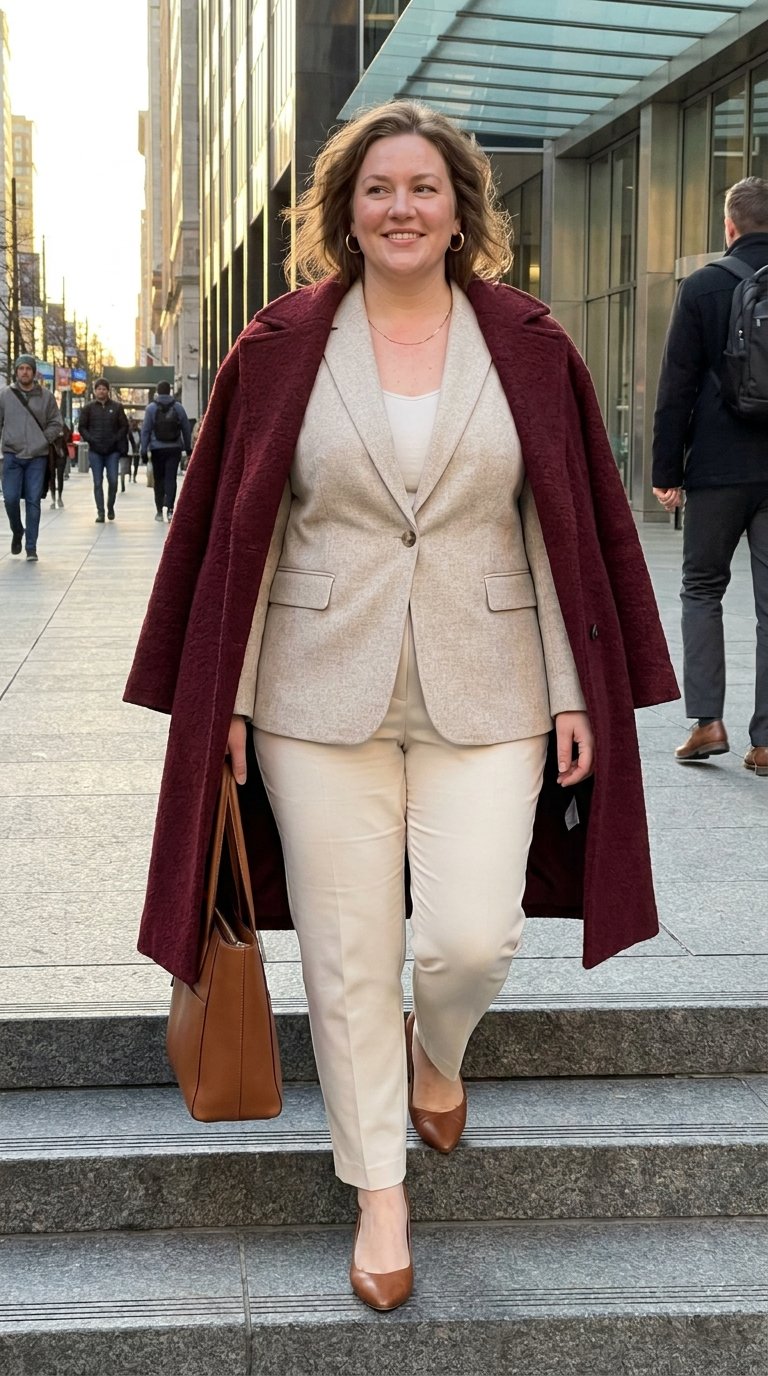
The shoulder seam is the one part of a blazer a tailor cannot easily fix, yet it is the part most of us ignore. If the seam sits past your shoulder bone or the fabric pulls into an X across your back, the whole outfit reads rumpled no matter how nice the rest is.
When you shop, do this instead:
- Button the blazer and raise your arms. If it lifts past your ears without strain, the shoulders work.
- Check the back in a mirror. Smooth fabric means a clean fit.
- Ignore the number on the tag. Sizing across brands is chaos, so trust the seam, not the size.
A blazer that fits your shoulders can be nipped everywhere else. For more foundation pieces like this, the guide to plus size workwear styling tips is a good next read.
💡 Quick Tip
Buy blazers to fit your shoulders and bust, then have the waist and sleeves adjusted. A tailor can take a blazer in, but making shoulders bigger is nearly impossible.
2. Treating Tailoring Like a Luxury Instead of a Tool
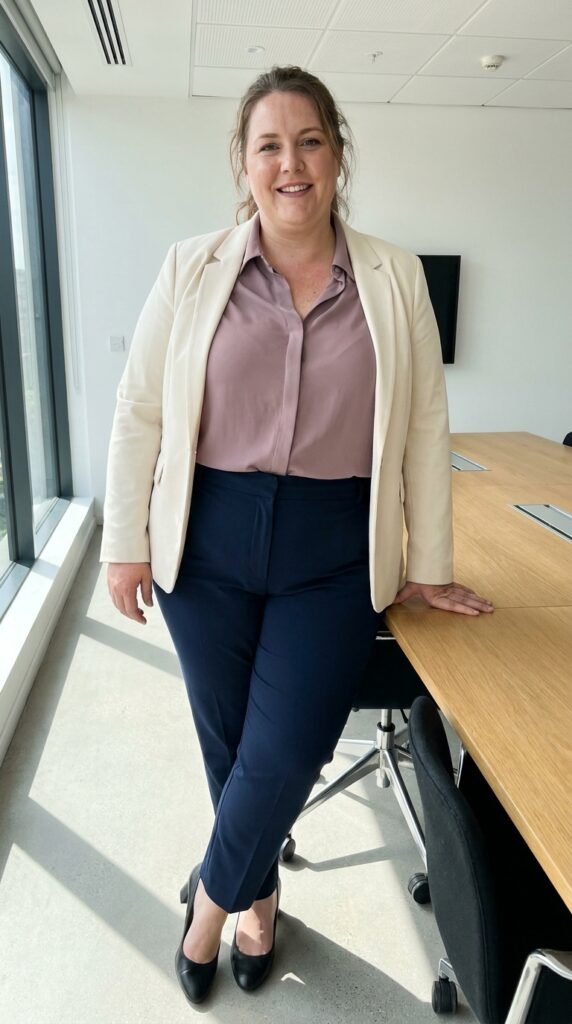
Straight-size mannequins wear clothes that were pinned to fit them. You are allowed the same trick.
Most of us try on work pants, notice the waist gapes or the hem drags, and put them back. That is the mistake. Off-the-rack clothes fit almost nobody perfectly, and plus size cuts are often drafted from one fit model who is not you.
A simple hem runs about the cost of a coffee order. Taking in a waistband is usually under twenty dollars. Those two small fixes change how every pair of pants hangs on you, and they are why some outfits look expensive when the pieces were not. If that polished-on-a-budget effect is your goal, these expensive looking work outfits lean on tailoring hard.
Pants pool at the shoe, the waistband gapes when you sit, and the blazer sleeves swallow your hands. Everything feels borrowed.
Hems break cleanly at the shoe, the waist stays put, sleeves end at the wrist bone. Same pieces, but now they look made for you.
3. Sizing Up Everywhere Instead of Where You Need It
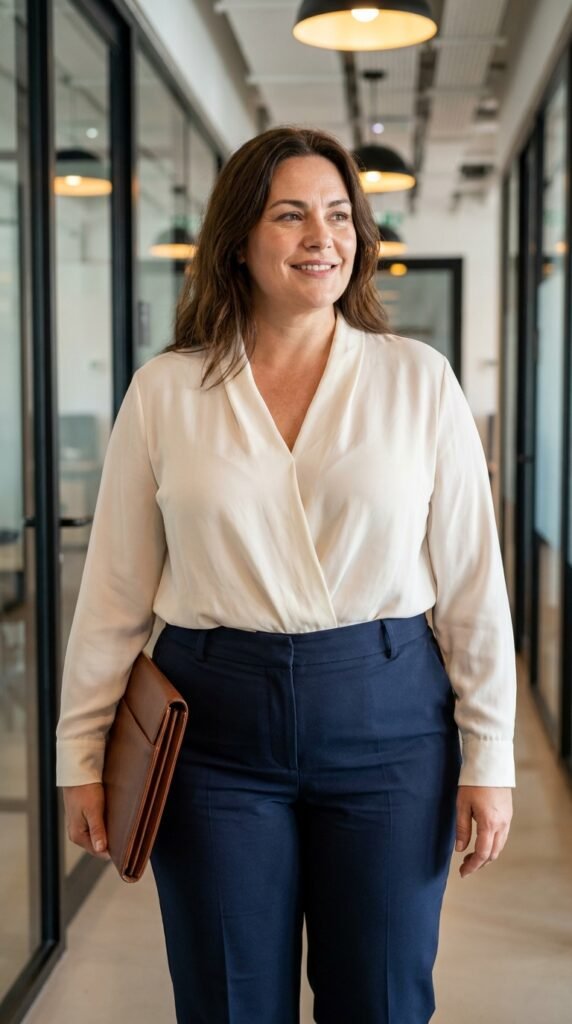
Somewhere along the way, many of us learned that bigger clothes are safer clothes. So we size up in everything, and then wonder why outfits feel shapeless by lunchtime.
Oversized can be a deliberate style choice. It stops working when it is the default for every single piece. The fix is contrast: one relaxed piece, one defined piece.
A roomy blouse works with straight or tapered trousers. Wide-leg pants want a top that ends at or near the waistband. When both halves are loose, the eye has no anchor point, and fabric starts doing the talking instead of you.
| Everything Oversized | One Loose + One Defined |
|---|---|
| Big blouse over wide pants, no waist anywhere. | Big blouse tucked into straight trousers. |
| Fabric bunches when you sit or reach. | Clothes move with you, not around you. |
| Reads casual even in nice fabrics. | Reads intentional and put together. |
4. Defaulting to All Black, Every Day

Black is easy. Black matches. And a closet full of only black quietly flattens your whole work wardrobe into one long Monday.
You do not need neon to break the pattern. Start with deep, office-friendly colors that behave like neutrals but photograph and feel warmer.
- Swap one black blazer week for a camel, burgundy, or olive one and keep everything else the same.
- Add a colored blouse under the blazers you already own.
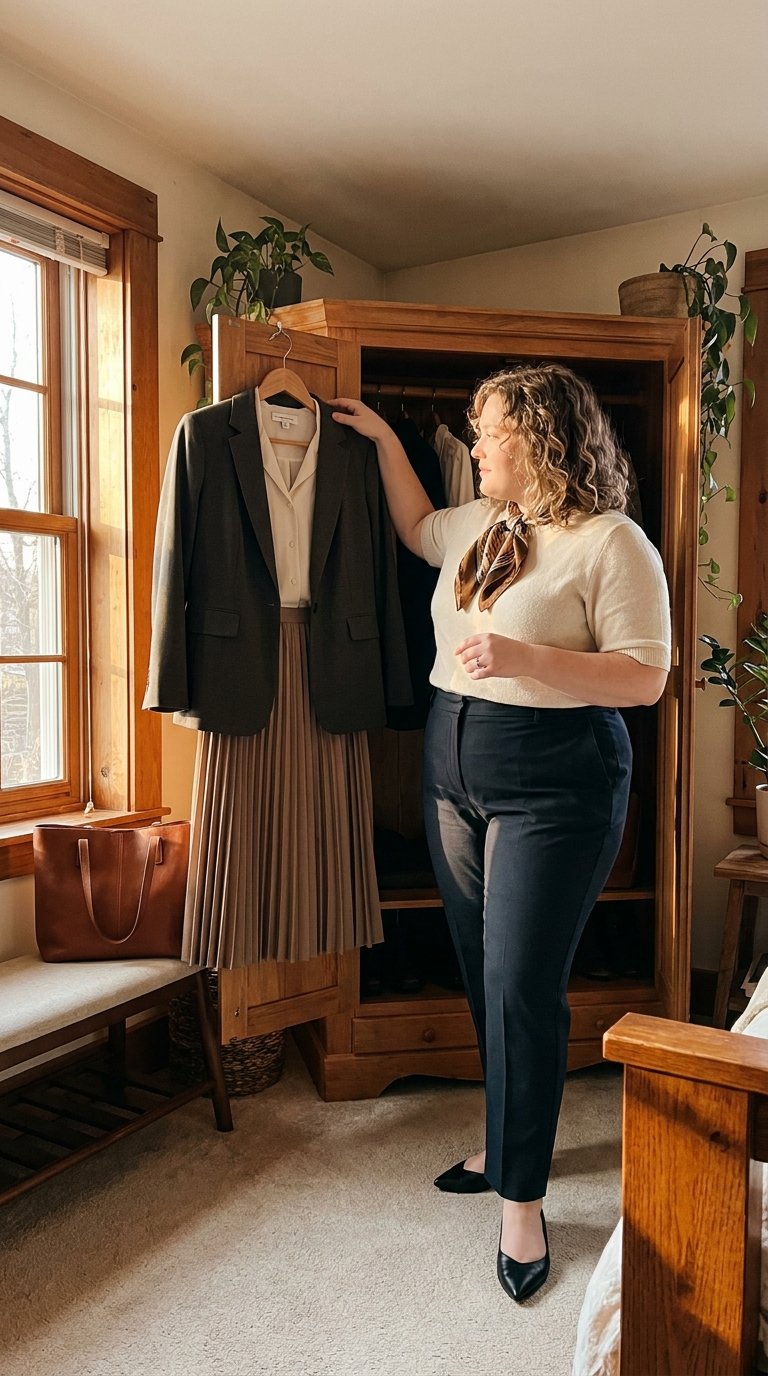
- Once that feels normal, try a full column of one non-black color, like navy trousers with a navy knit.
If mixing shades makes you nervous, this breakdown of work outfit color combinations gives you pairings that are hard to get wrong.
5. Building Outfits on the Wrong Foundations

A great blazer over the wrong bra is still the wrong outfit. Foundations decide how everything above them sits, and most of us have not been measured in years.
Two short truths here. First, bra bands stretch out, so the bra that fit two years ago probably does not now. Second, the right base layer is about smooth lines and comfort through an eight hour day, not about changing your shape.
Before your next workwear shopping trip, run through this:
Foundation check before you shop
6. Ignoring Fabric Weight When You Buy
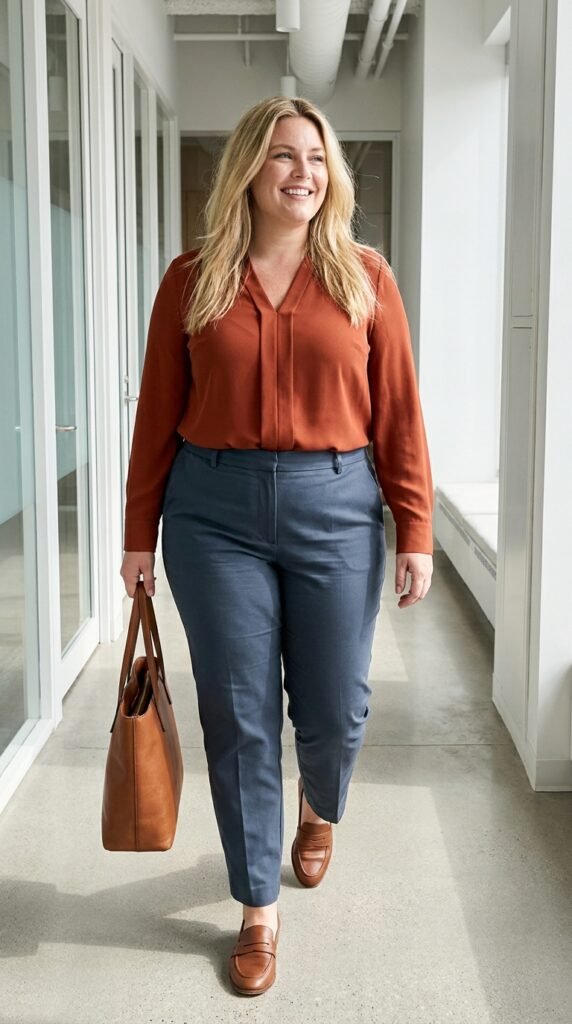
Two shirts can look identical online and behave completely differently on your body. The difference is almost always fabric weight.
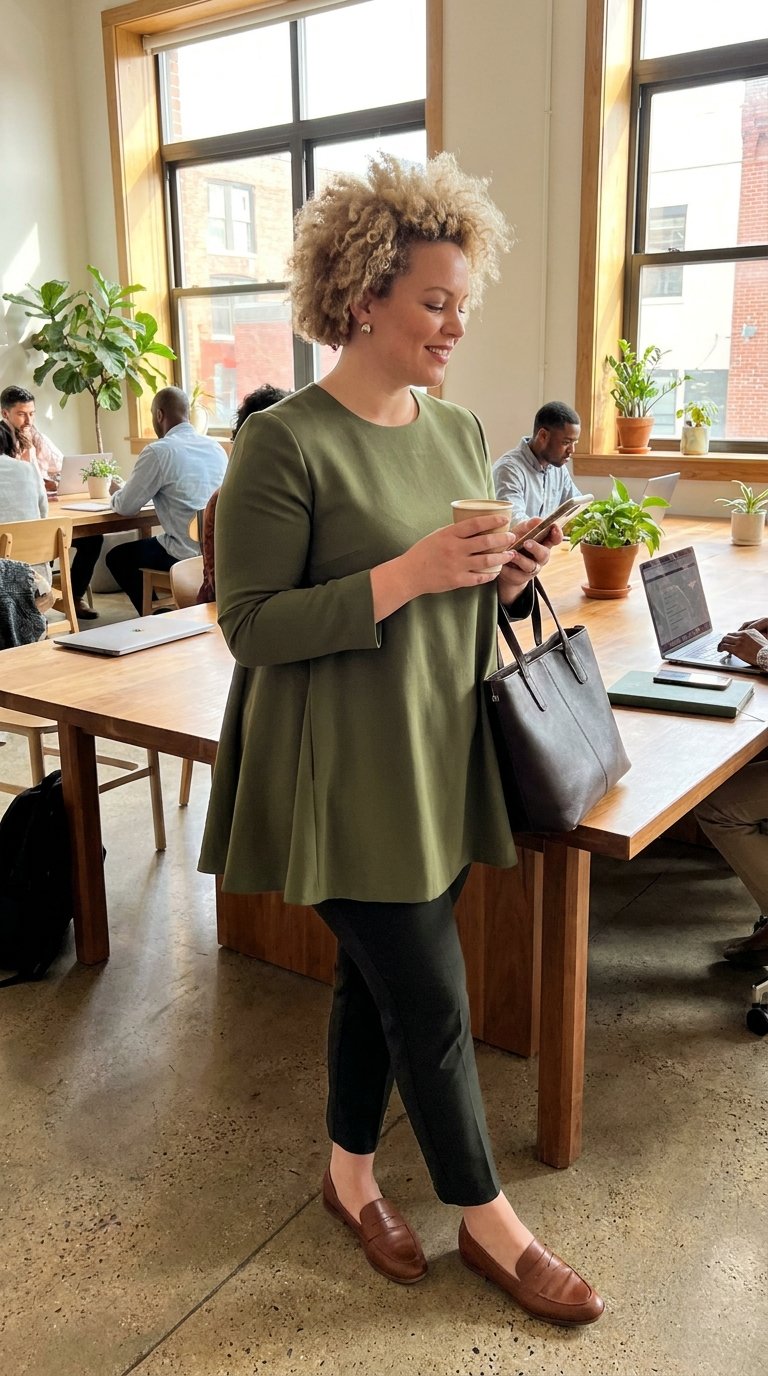
Thin, clingy jersey grabs every seam of whatever is underneath it and wrinkles by 10 a.m. Mid-weight fabrics with a little structure, like ponte, crepe, twill, and heavier cotton poplin, hold their shape through meetings, commutes, and lunch.
Do the hand test in store: scrunch a corner of the fabric in your fist for five seconds. If it springs back mostly smooth, it will survive your workday. If it stays crumpled, it will look tired on you by mid-morning too.
Ponte, crepe, twill, scuba, heavier poplin.
Knits with at least a little thickness and stretch recovery.
Tissue-thin jersey and slinky viscose for fitted pieces.
100 percent linen for long days unless you love the wrinkled look.
7. Letting Pants Pool Over Your Shoes
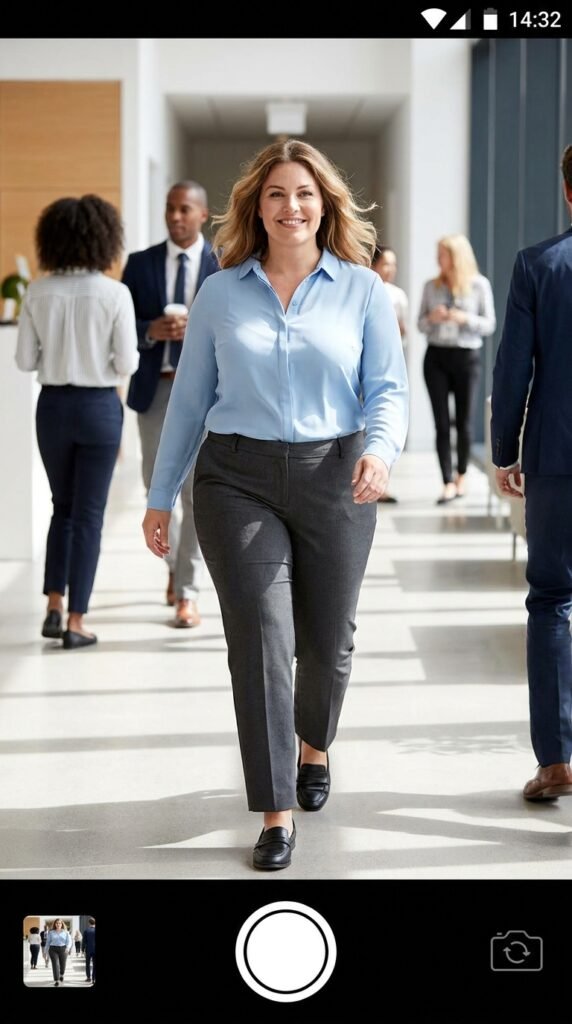
Look down right now if you are wearing trousers. If there is a puddle of fabric sitting on top of your shoe, that is the single cheapest fix on this list.
Hem length is where a lot of otherwise sharp outfits fall apart, and petite-plus and tall-plus women get hit hardest because most brands cut for one imaginary height.
Here is how to get it right:
Decide the shoe first. Hem trousers for flats or for heels, not for both.
Aim for one small break. Straight legs should just kiss the top of the shoe. Wide legs can fall a touch longer.
Batch your hems. Take three pairs to the tailor at once and you are set for the season.
Ankle pants sidestep the whole problem, which is why they earn a permanent spot in so many work capsules.
8. Belting at the Widest Point Instead of the Narrowest
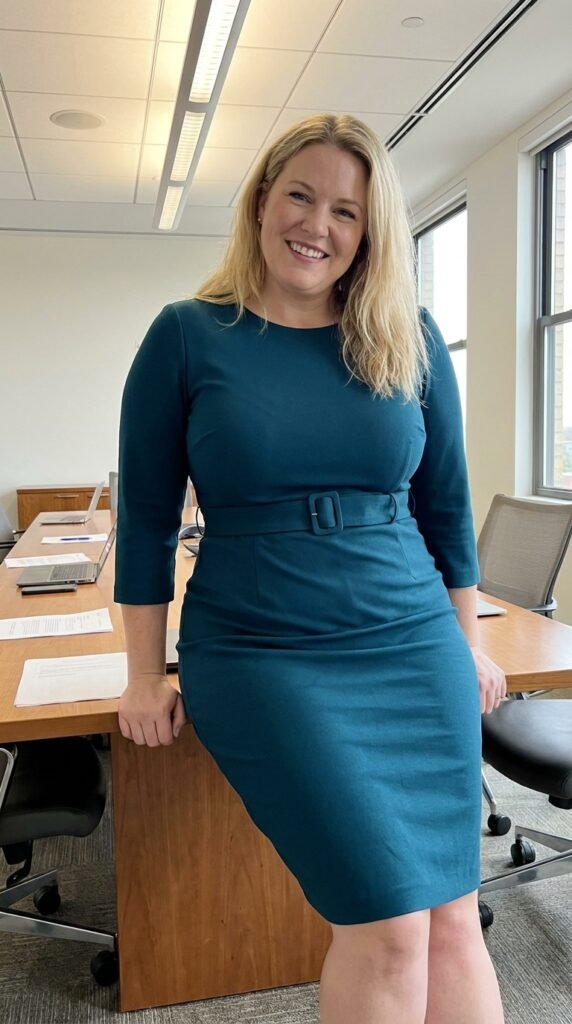
Belts are one of the best tools in workwear, and one of the most misused. The common mistake is placing a belt wherever the dress’s belt loops happen to sit, even when that spot does nothing for the outfit.
Your natural waist, usually the narrowest point between ribs and hips, is where a belt creates shape. On many of us, that is higher than where dresses put their loops. Move the belt up. Skip the loops entirely if you have to.
One more thing: a slightly wider belt, around one and a half to two inches, tends to sit better and stay put compared to skinny belts that fold and roll.
Belt where your body bends when you lean to the side. That crease point is your natural waist, and it is where a belt actually earns its keep.
9. Wearing Shoes You Have to Survive
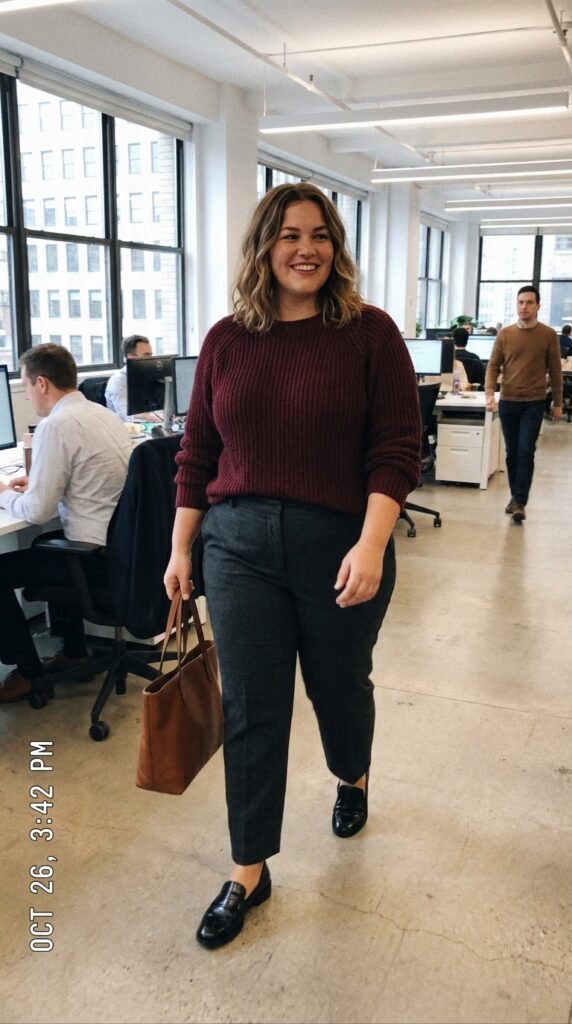
Nothing undoes a confident outfit faster than the walk of someone whose feet hurt. You know the walk. We have all done the walk.
Painful shoes change your posture, your pace, and your face by 2 p.m. Comfort is not a downgrade from style. It is what makes style wearable for nine hours.
What to look for instead:
- ▸Block heels under two and a half inches carry weight better than stilettos and still read polished.
- ▸Pointed-toe flats and low loafers give the dressed-up effect with zero recovery time.
- ▸Look for wide-width options and cushioned footbeds. Many brands now make them without the orthopedic look.
- ▸Keep one dressy pair at your desk so your commute shoes can be whatever you want.
10. Skipping Layers Because You Think They Add Bulk
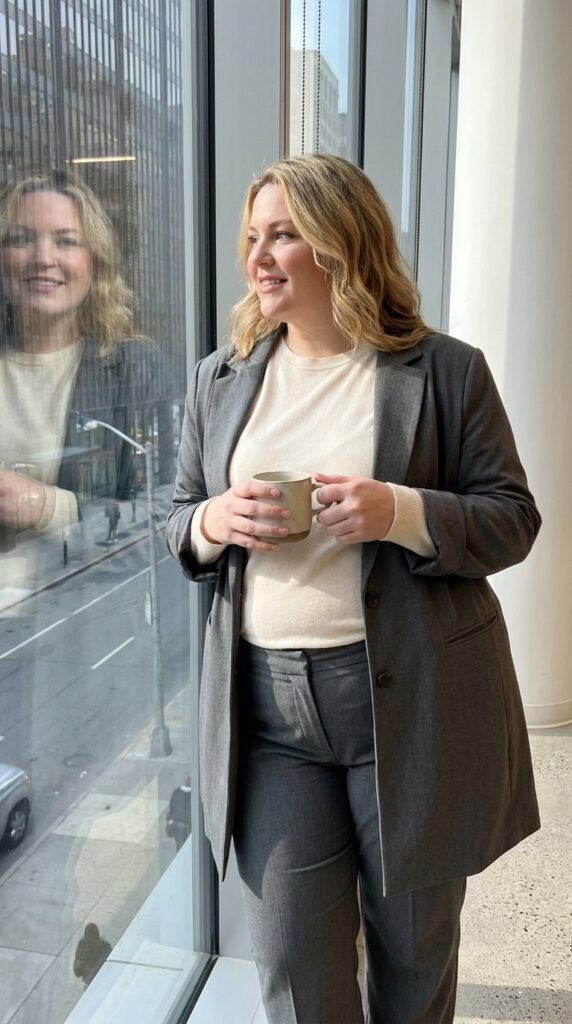
A lot of us avoid layering entirely, convinced a third piece will only pile on fabric. The opposite is true when the layers are chosen well.
A third piece is what separates “shirt and pants” from an outfit. The trick is structure and length, not thickness. A longline vest, an open-front cardigan in a fine knit, or an unstructured blazer adds a vertical line and a finished feel while weighing almost nothing.
The full method takes a little practice, and these office layering tips walk through it piece by piece. Start with one fine-gauge knit under one blazer and build from there.
Your Workwear, On Your Terms
Every fix on this list comes back to the same idea. The problem was never your body. It was clothes that did not fit, rules that were never true, and habits nobody taught us to question.
Start small. Hem one pair of pants. Move one belt to your natural waist. Retire one pilled sweater. Fixing plus size office outfit mistakes is not a makeover montage, it is a series of tiny upgrades that stack up fast.
Save this list to your workwear board so it is there the next time you are standing in front of your closet before a big meeting. Future you will be glad it is one tap away.