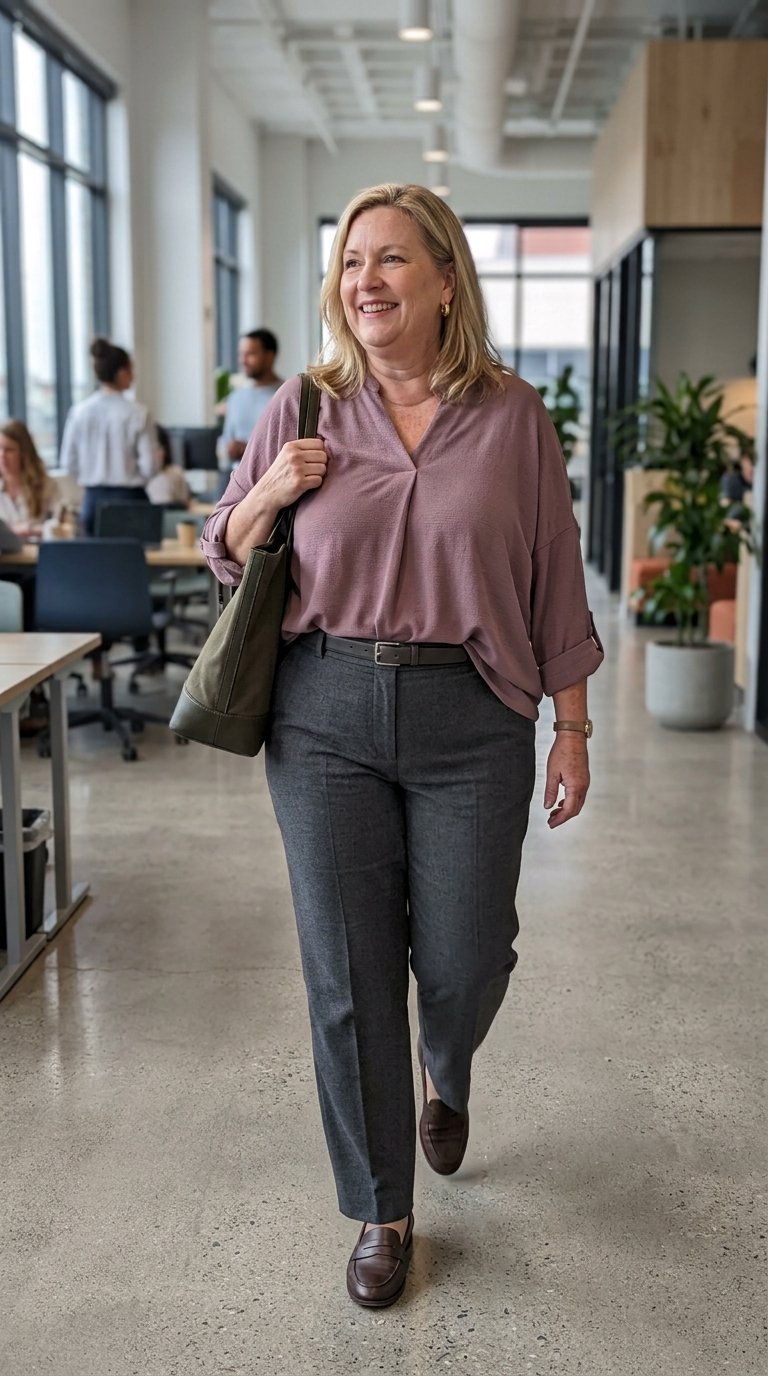
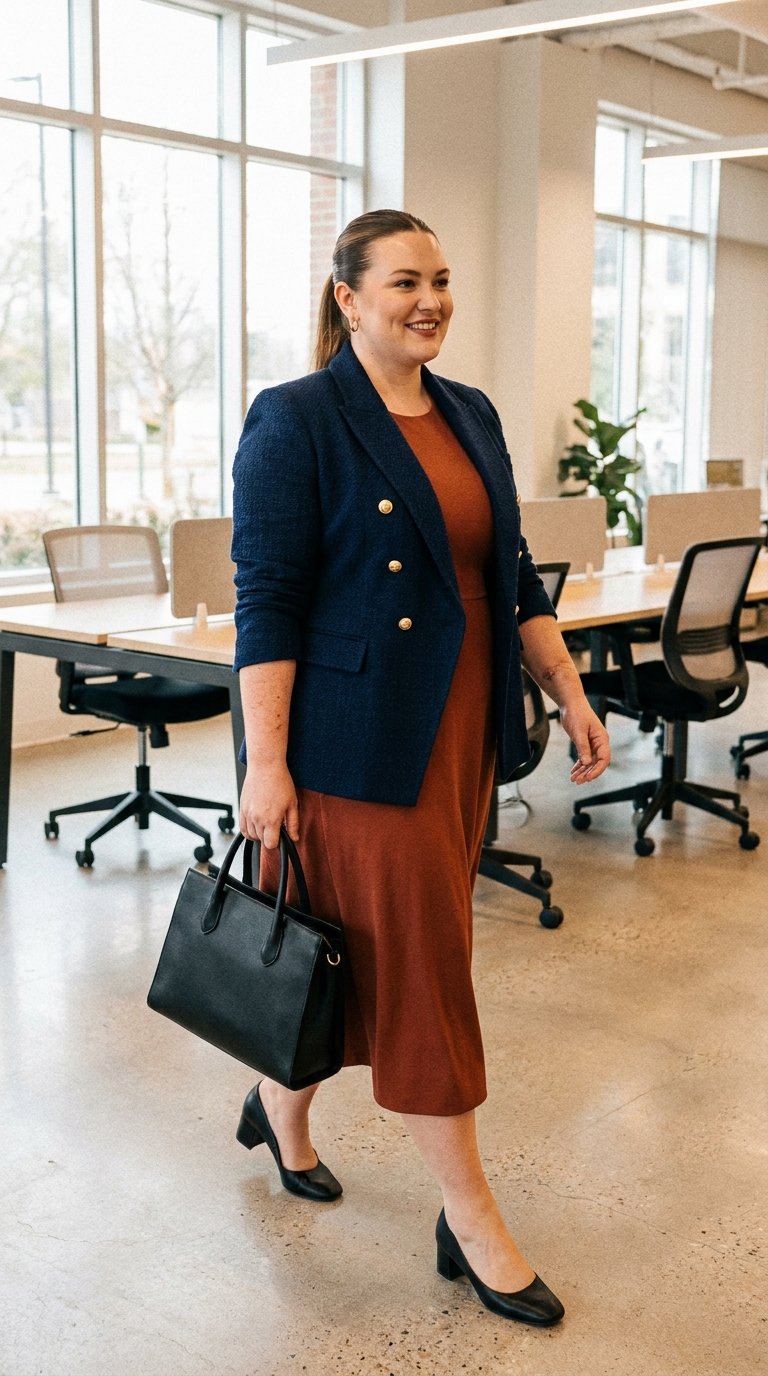
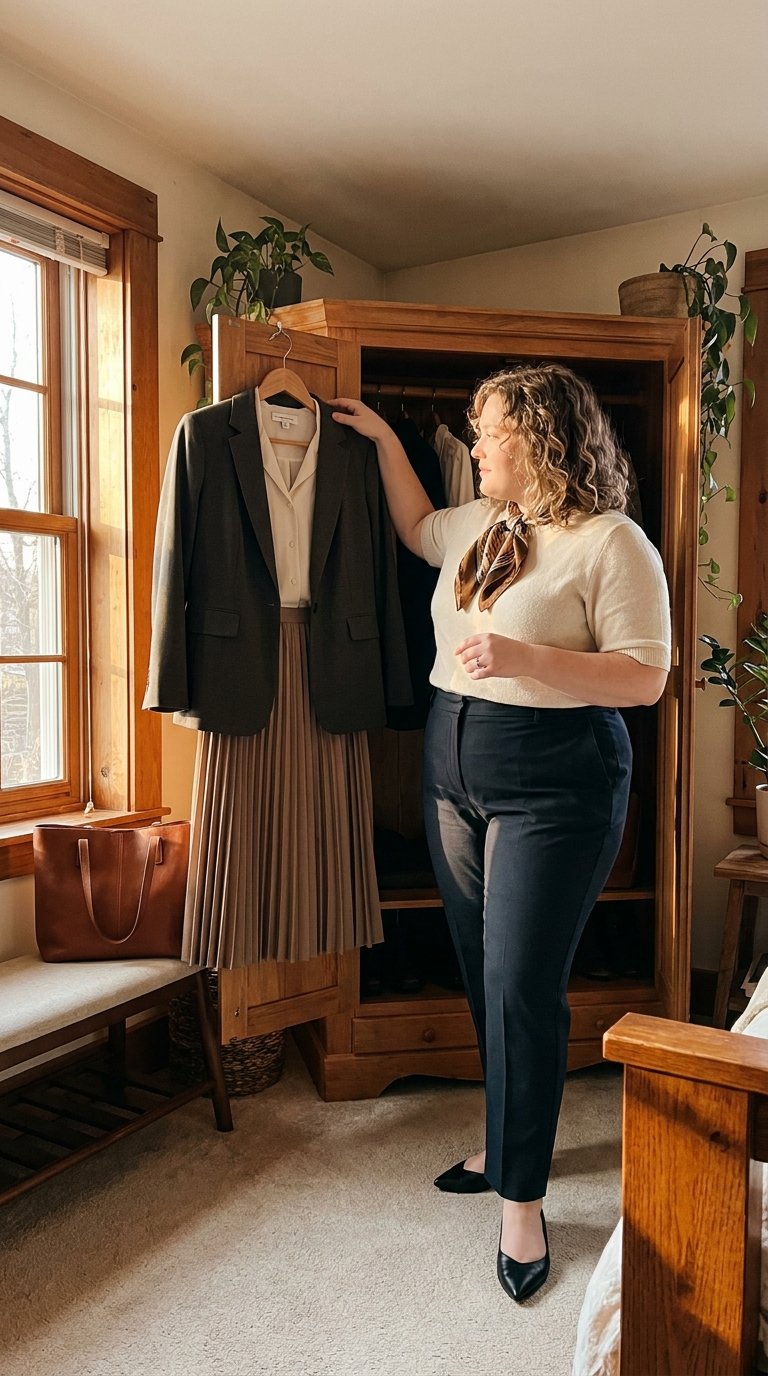
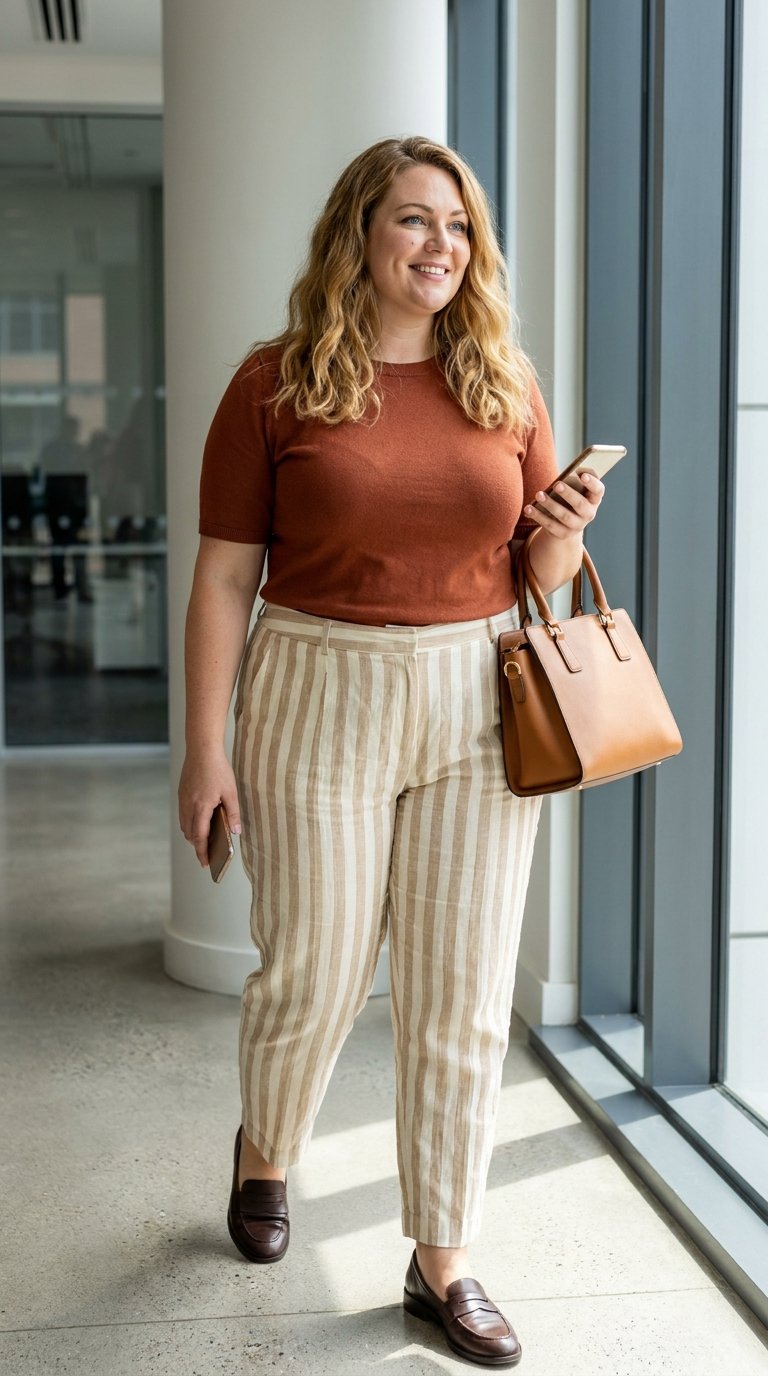
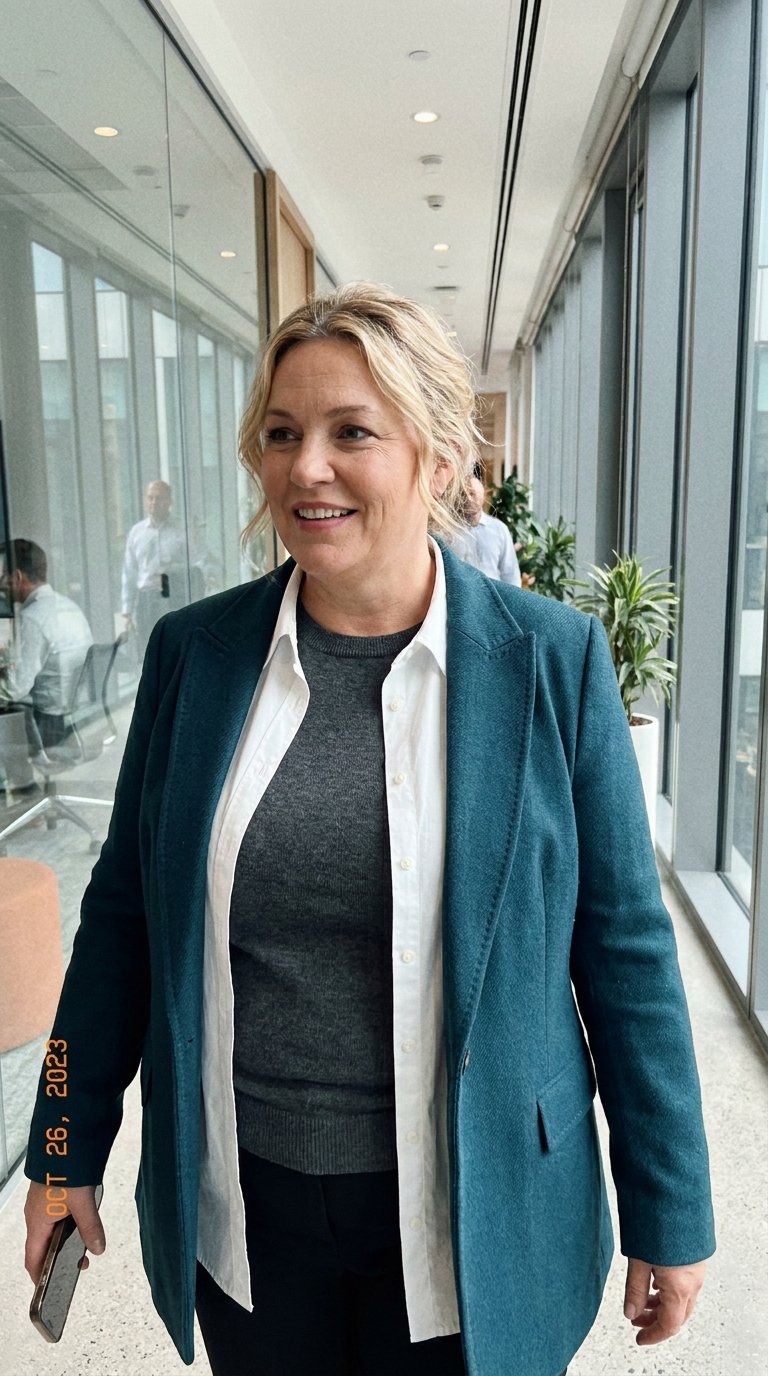
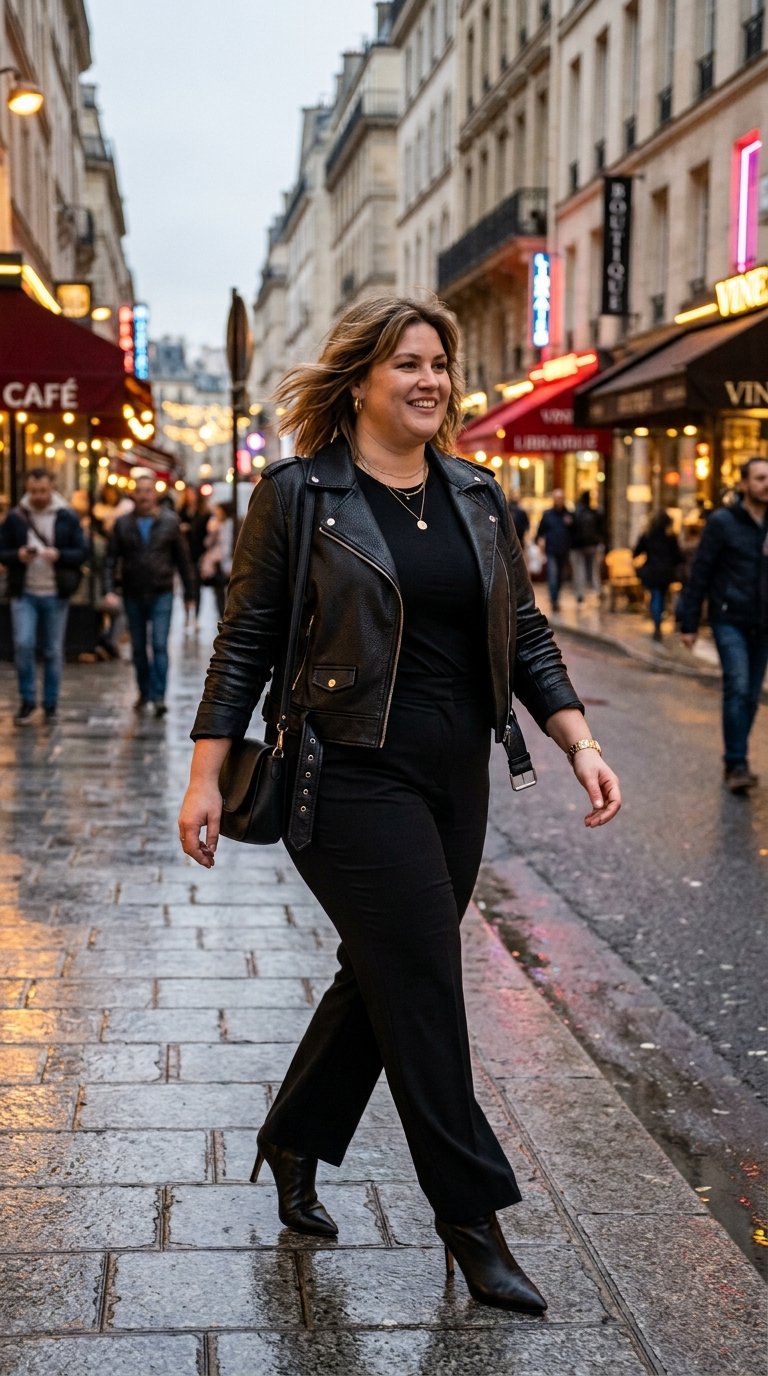
How to Dress Professionally With a Plus Size Body: 10 Styling Rules That Actually Work
Most workwear advice for plus size women is quietly insulting. It tells you to cover up, stick to black, and pick “forgiving” fabrics, as if the goal is to take up less space at the office. That advice does not help you get dressed on a Tuesday morning, and it definitely does not help you feel sharp walking into a meeting.
Here is the truth. Learning how to dress professionally with a plus size body is not about rules for shrinking. It is about fit, fabric, and a few smart outfit formulas you can repeat without thinking. Once you know those, getting dressed takes five minutes and you stop second guessing yourself in the elevator.
The 10 tips below are specific. Real fabrics, real outfit combos, real fixes for the things that actually bug you, like blazers that pull at the shoulders or trousers that gap at the waist. Save the ones you need, skip what you don’t, and build a work wardrobe that works as hard as you do.
1. Buy for Your Shoulders, Tailor Everything Else
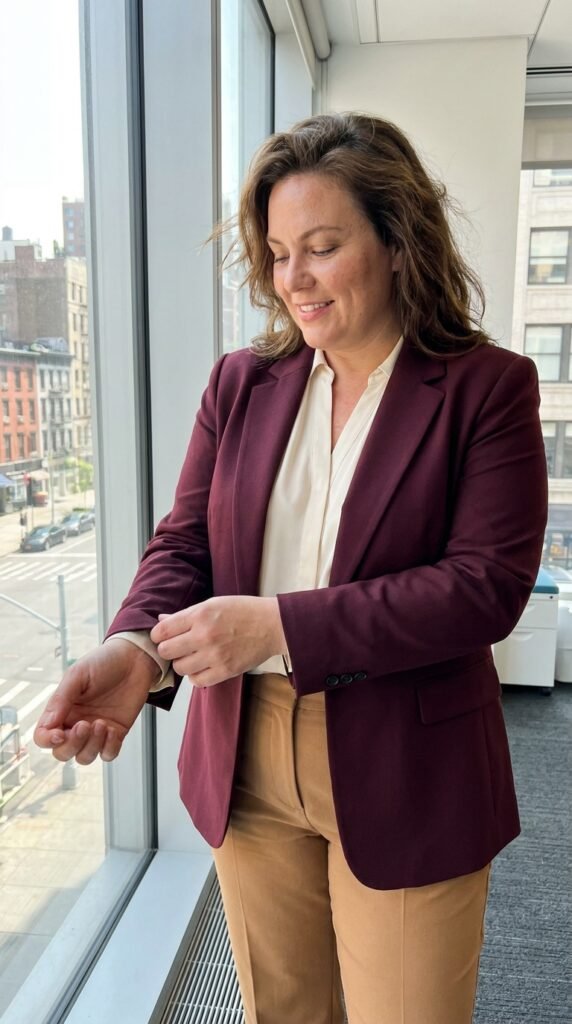
A blazer that fits your shoulders can be altered almost anywhere else. A blazer that fits your hips but pulls across the back cannot be saved. That one rule changes how you shop.
When you try on a jacket, check these three spots first:
- The shoulder seam should sit right at the edge of your shoulder bone, not past it.
- The back should lie flat when you cross your arms forward.
- The button should close without the lapels bowing open.
A tailor can take in a waist, shorten sleeves, or hem trousers for 15 to 40 dollars per fix. Think of tailoring as part of the price, not an extra. For more fit-first strategies, this guide on how to structure professional outfits that fit well goes deeper.
💡 Quick Tip
Find a tailor before you need one. Bring them one blazer as a test run. If the shoulders come back clean, you have found your person for every future alteration.
2. Build Around Three Base Colors, Not a Rainbow
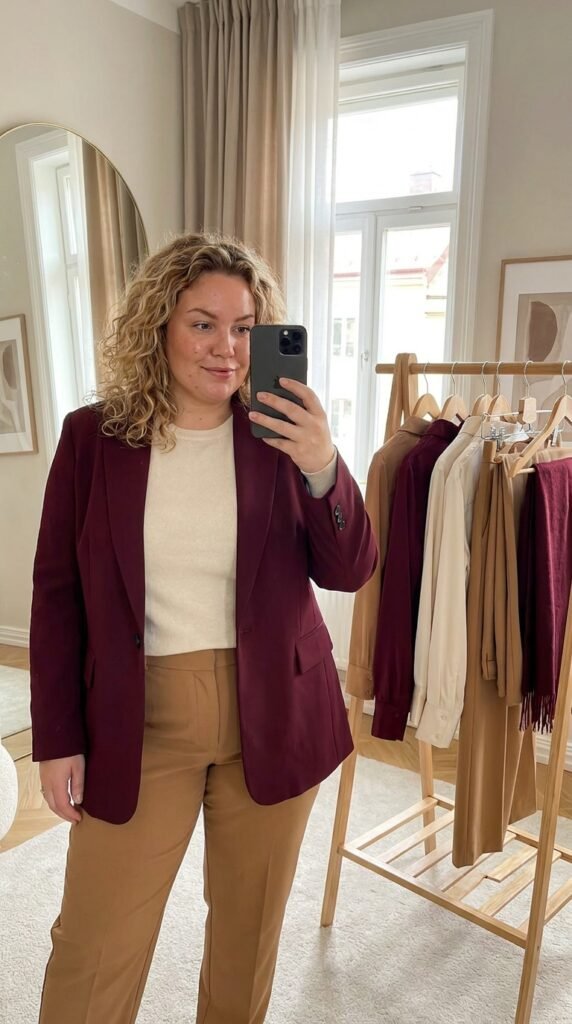
A closet full of single-outfit pieces is why you “have nothing to wear.” A closet built on three base colors means almost everything matches almost everything.
Pick one dark neutral, one light neutral, and one accent. For example: deep burgundy, warm ivory, and camel. Or navy, soft grey, and dusty rose. Every trouser, skirt, and blazer you buy should live inside that trio. Then let tops, scarves, and jewelry bring in the fun colors.
Ten pieces in a planned palette can make over 25 outfits. Ten random pieces make about six. If you want ready-made combos, browse these work outfit color combinations for plus size women.
3. Choose Fabric With Weight, Skip Anything Flimsy
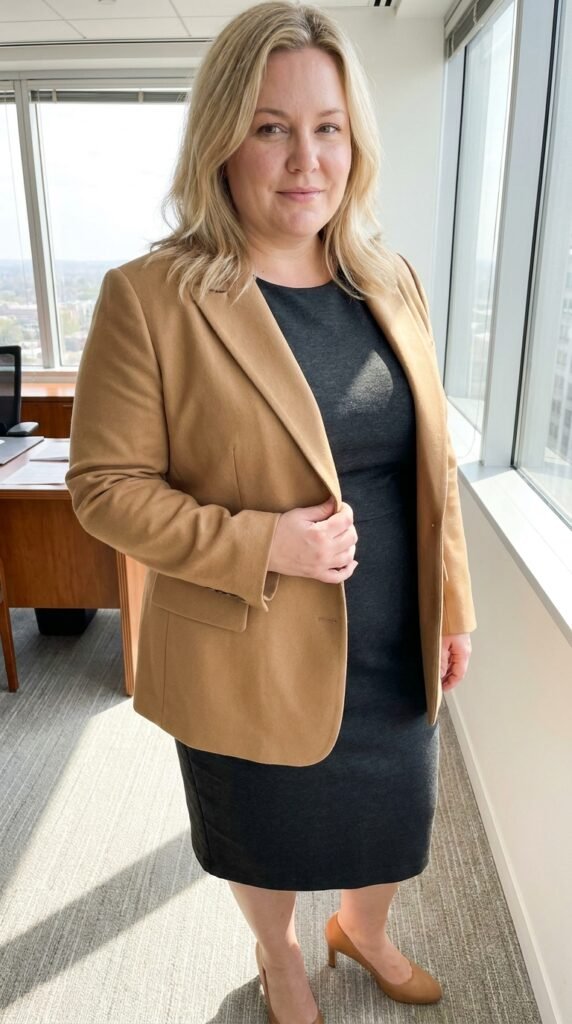
Cheap thin fabric is the fastest way to make an expensive-looking outfit look cheap. Weighty fabric drapes smoothly, holds its shape through an eight hour day, and reads polished from across the room.
Do a quick test in the fitting room. Grab a handful of the fabric and squeeze for five seconds. If it springs back without deep wrinkles, it will survive your commute. If it stays crushed, put it back.
- Look for ponte knit, scuba crepe, and heavy jersey for dresses and skirts.
- Pick twill, thick crepe, or wool blends for trousers and blazers.
- Skip thin rayon challis and lightweight polyester for anything fitted.
More tricks like this live in this roundup of style tricks that make everyday work outfits look high-end.
Ponte, scuba crepe, twill, double-knit jersey, wool blends.
Anything that passes the five second squeeze test.
Thin rayon challis, clingy lightweight polyester, sheer button-ups that need a cami.
Fabric that wrinkles the moment you sit down.
4. Master the Front Tuck Instead of Buying New Tops
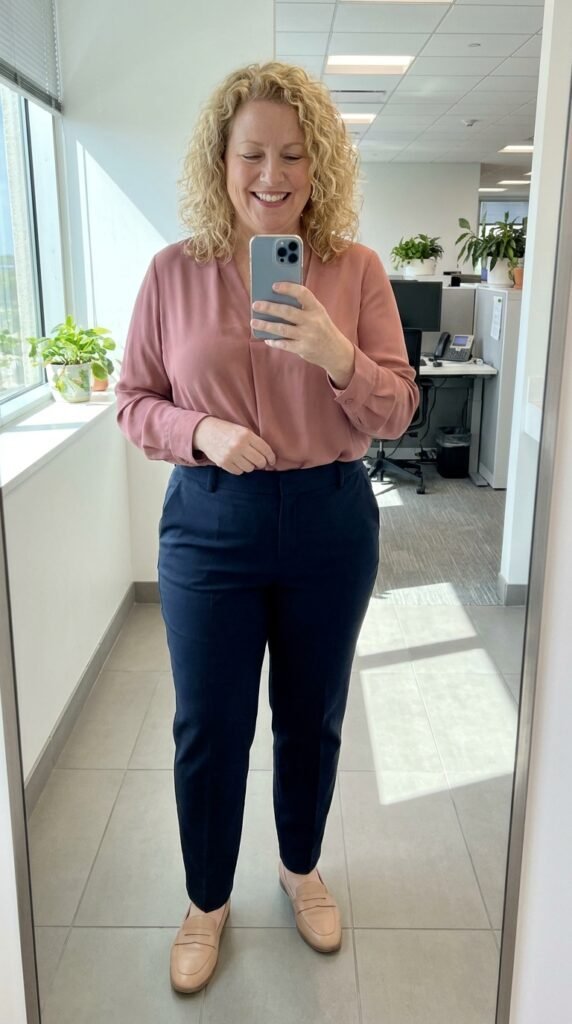
You do not need more tops. You need to style the ones you own so they show your waistline and stop pooling at your hips. The front tuck does that in ten seconds.
It works with blouses, tees, even light sweaters. The trick is keeping it loose so it blouses out slightly instead of pulling tight.
- Tuck only the front 4 to 6 inches of the shirt into your waistband, centered under the buttons.
- Pull the fabric up an inch so it drapes softly over the waistband.
- Leave the sides and back untucked and smooth them down.
Pair it with high-rise trousers and the whole outfit looks intentional, not accidental.
Tuck the front 4 to 6 inches of fabric into your waistband, right at the center.
Pull it back up about an inch so it drapes instead of pulling.
Leave the sides and back loose, then smooth everything with your hands.
5. Own One Blazer That Actually Closes
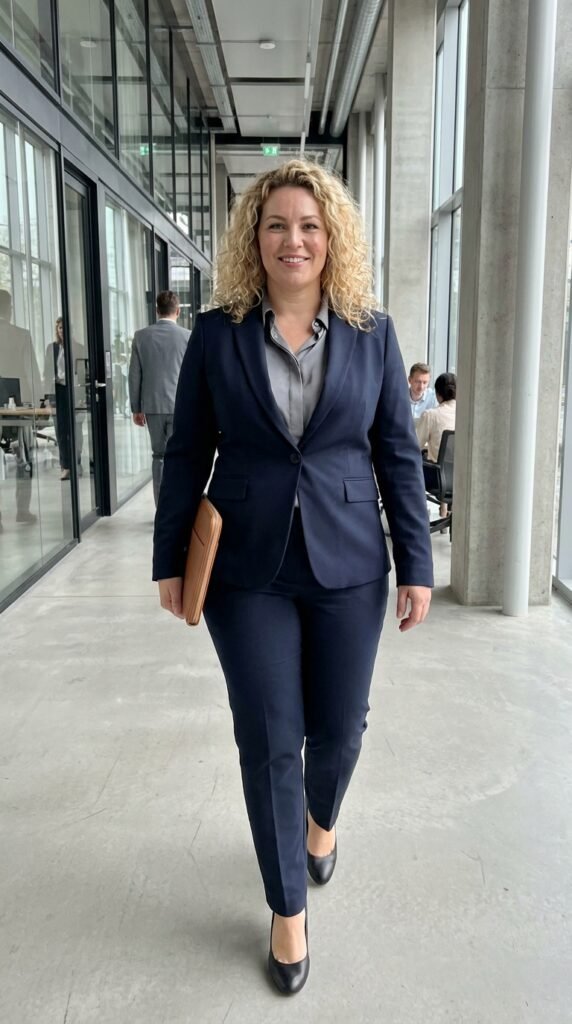
Plenty of women wear blazers they can never button. Then one cold conference room later, they are pulling at lapels all day. A blazer that closes comfortably, with room to move, changes how you carry yourself in it.
Look for stretch woven fabric with at least 2 percent spandex, a single button placement at your natural waist, and a slightly longer cut that hits at mid hip. Brands that cut for curves size their blazers around real hip and bust measurements, not just scaled-up straight sizes.
One closing blazer in your dark base color covers interviews, presentations, and every “big meeting” morning. That is power dressing in its simplest form, and there are more ideas in these plus size power dressing outfits.
Blazer fitting room checklist
6. Solve the Waist Gap With High-Rise Trousers and a Curvy Cut
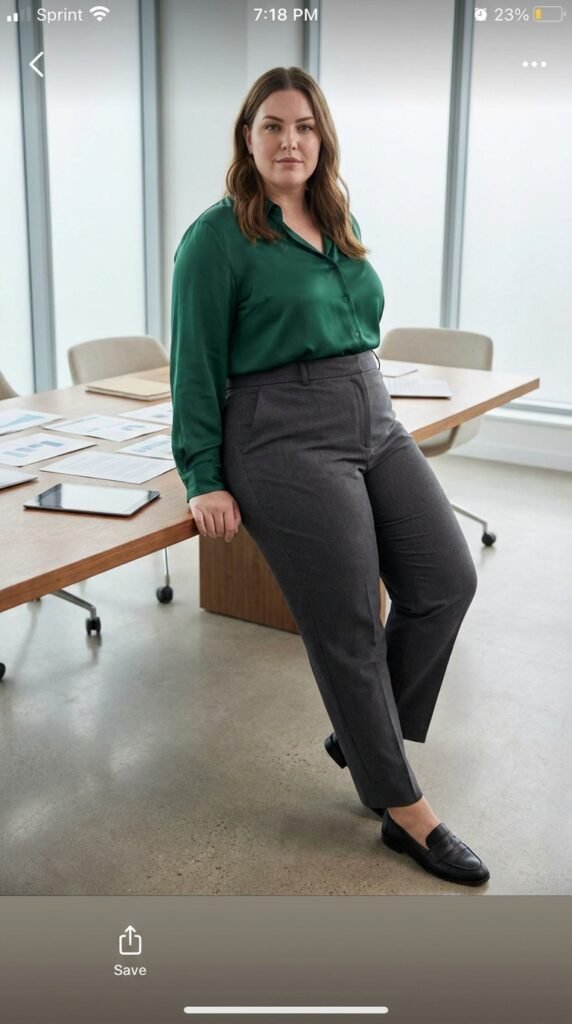
Trousers that fit your hips but gap two inches at the back waist are not a body problem. They are a pattern problem. Most trousers are drafted with a small hip-to-waist difference, and many plus size bodies have a bigger one.
The fix is buying cuts labeled “curvy fit,” which are drafted with a higher back rise and a smaller waist relative to the hip. High-rise styles also sit at the narrowest part of your torso, so they stay put when you sit down instead of sliding and folding.
If you find a pair that fits your hips but still gaps slightly, a tailor can dart the back waistband for around 20 dollars. Cheaper than buying pants you tug at all day.
Standard-cut mid-rise trousers. Fit the hips, gap at the back waist, slide down every time you stand up, constant tugging by 10 a.m.
Curvy-cut high-rise trousers, waistband darted by a tailor. They stay at your waist through meetings, lunch, and the commute home.
7. Use a Third Piece to Finish Every Outfit
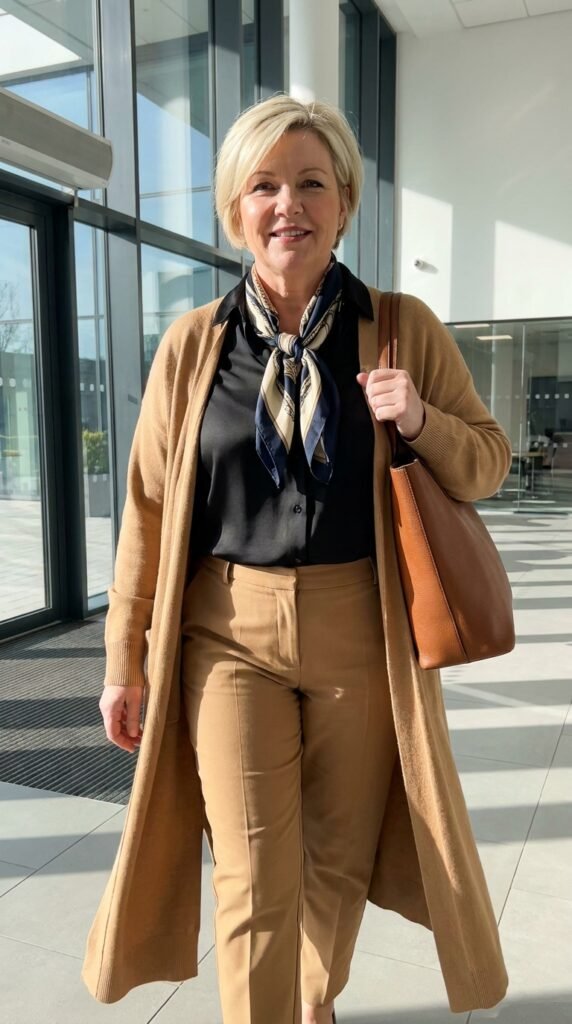
Here is a stylist habit worth stealing. A top and bottom is an outfit. A top, bottom, and third piece is a look. The third piece is whatever layers over or accents the base: a blazer, a long cardigan, a vest, a structured scarf, or a statement necklace.
On days you feel blah about a plain blouse and trousers, do not change the outfit. Add one thing. A longline camel cardigan over a black base. A silk scarf knotted at the neck. A wide belt over a shift dress.
Layering on a plus size body works best when the layers have structure and hit at different lengths. This guide to office layering that adds shape without bulk breaks down the lengths that work.
📌 Good To Know
Keep two third pieces hanging on the back of your closet door: one blazer, one long cardigan. When an outfit feels unfinished, grab whichever matches your shoes. Decision made.
8. Pick Dresses With Built-In Shape, Not Shapeless Ones
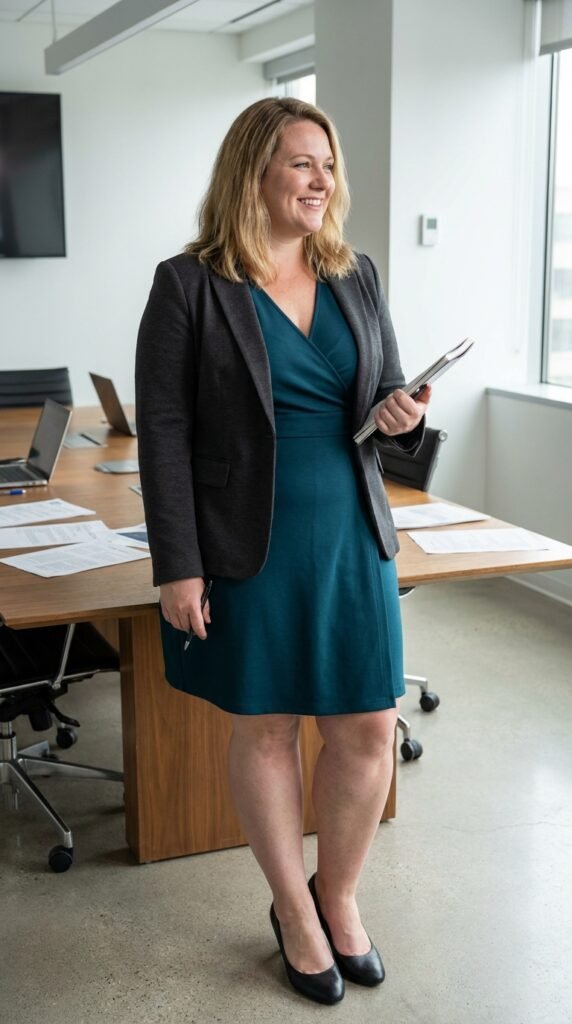
The sack dress trap is real. A loose dress feels easy in the morning, then reads like a nightgown under office lighting. The fix is not tighter. It is dresses with shape sewn in.
Look for these details on the hanger:
- A defined seam or band at the natural waist
- Wrap or faux-wrap styles that adjust to your exact proportions
- Fit-and-flare or A-line skirts in heavy knit that swing instead of cling
- Princess seams on sheath dresses, which curve the fabric to your body
One well-cut ponte dress plus your closing blazer is a complete outfit with zero decisions. Keep two and you have covered every important meeting on your calendar.
9. Get Your Bra Fitted Before You Buy Anything Else
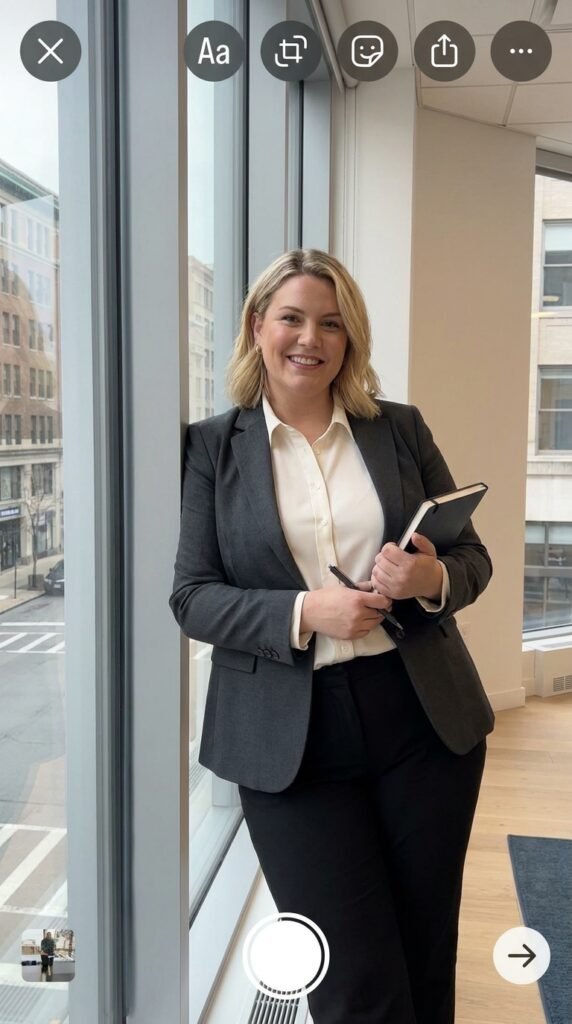
An ill-fitting bra changes how every single top, dress, and blazer sits on your body. Straps that dig, a band that rides up, a cup that gaps. All of it shows through work clothes, and no amount of shopping fixes it.
Most women wear a band that is too big and a cup that is too small. A proper fitting, free at most lingerie stores and many department stores, takes fifteen minutes.
After a real fitting, tops button smoothly, necklines sit where they should, and blazers stop pulling across the chest. It is the least glamorous tip on this list and the one with the biggest payoff.
Your bra is the foundation of every work outfit you own. Get fitted before your next clothing purchase, not after.
10. Dress in a Column of One Color, Then Break the Rules on Top
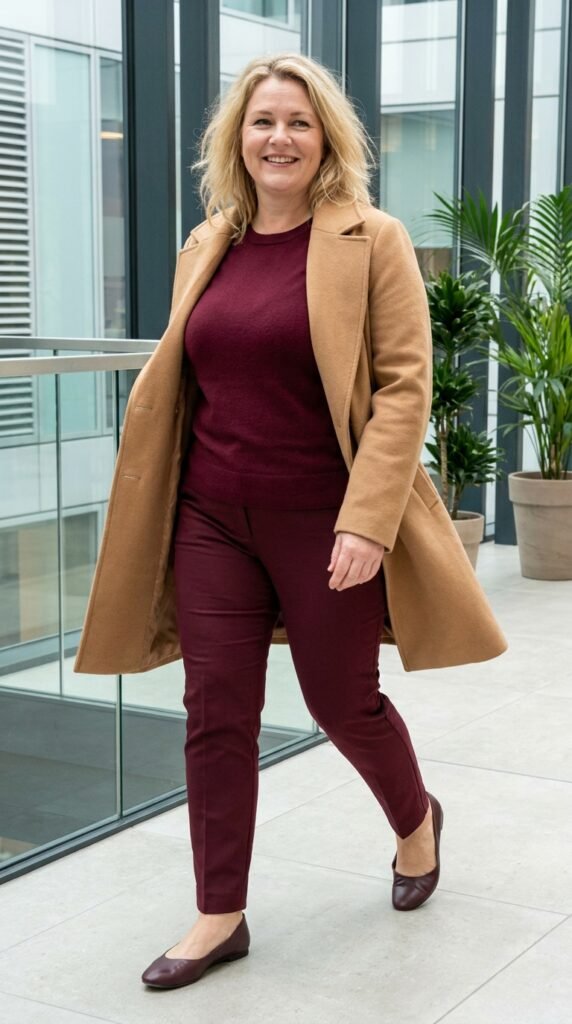
A single color from shoulder to shoe creates one long, unbroken line. Stylists call it column dressing, and it is the easiest expensive-looking trick there is. Burgundy sweater, burgundy trousers, burgundy flats. Done.
The fun part is what goes over it. Once the column is set, your third piece can be anything: a contrast blazer, a printed kimono cardigan, a camel coat. The column keeps the base calm so the top layer can be bold.
Start with a black or navy column since those pieces are easiest to find, then build one in your accent color. More looks like this are in these expensive-looking work outfits for plus size women.
Pick one color and match your top, bottom, and shoes to it. Slight shade differences are fine.
Add one layer in a different color or texture over the column.
Keep jewelry in one metal so the whole look stays cohesive.
Your Work Wardrobe, On Your Terms
Getting dressed for work should not be the hardest part of your morning. Once you know how to dress professionally with a plus size body, it comes down to a handful of repeatable moves: buy for the shoulders, choose fabric with weight, keep your colors connected, and let a tailor handle the rest.
Start with one tip this week. Get the bra fitting, or take that almost-right blazer to a tailor. Small fixes stack up fast, and within a month your closet starts working for you instead of against you.
Save this list to your work style board so it is there the next time you are staring at your closet at 7 a.m.