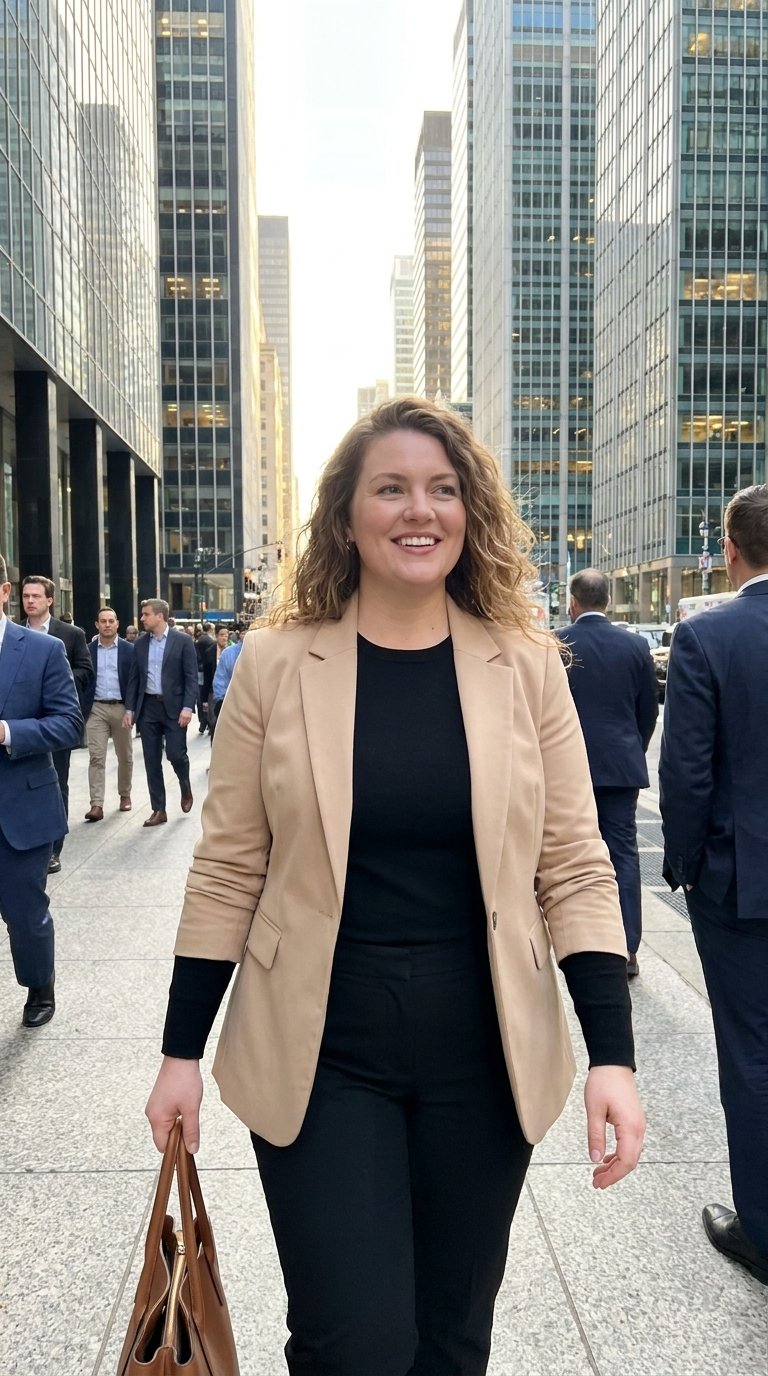
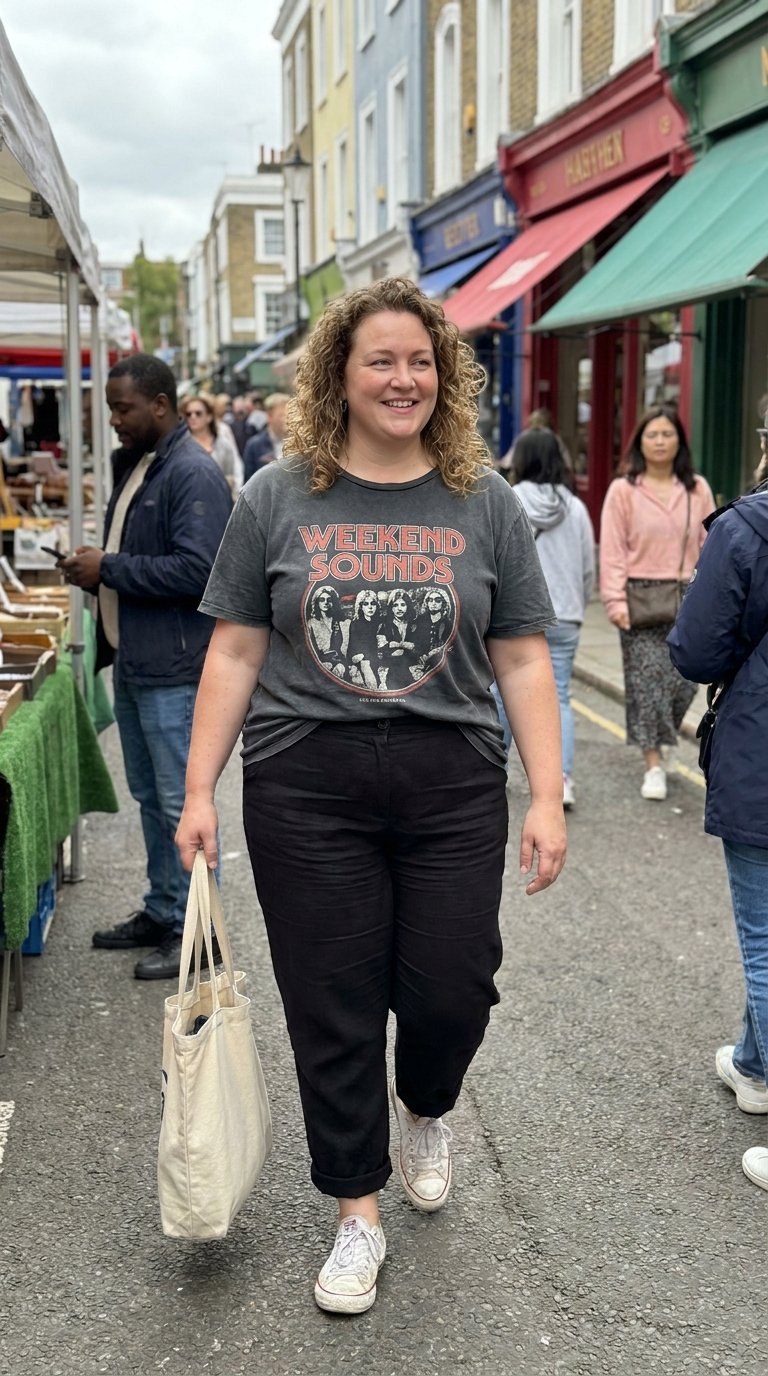
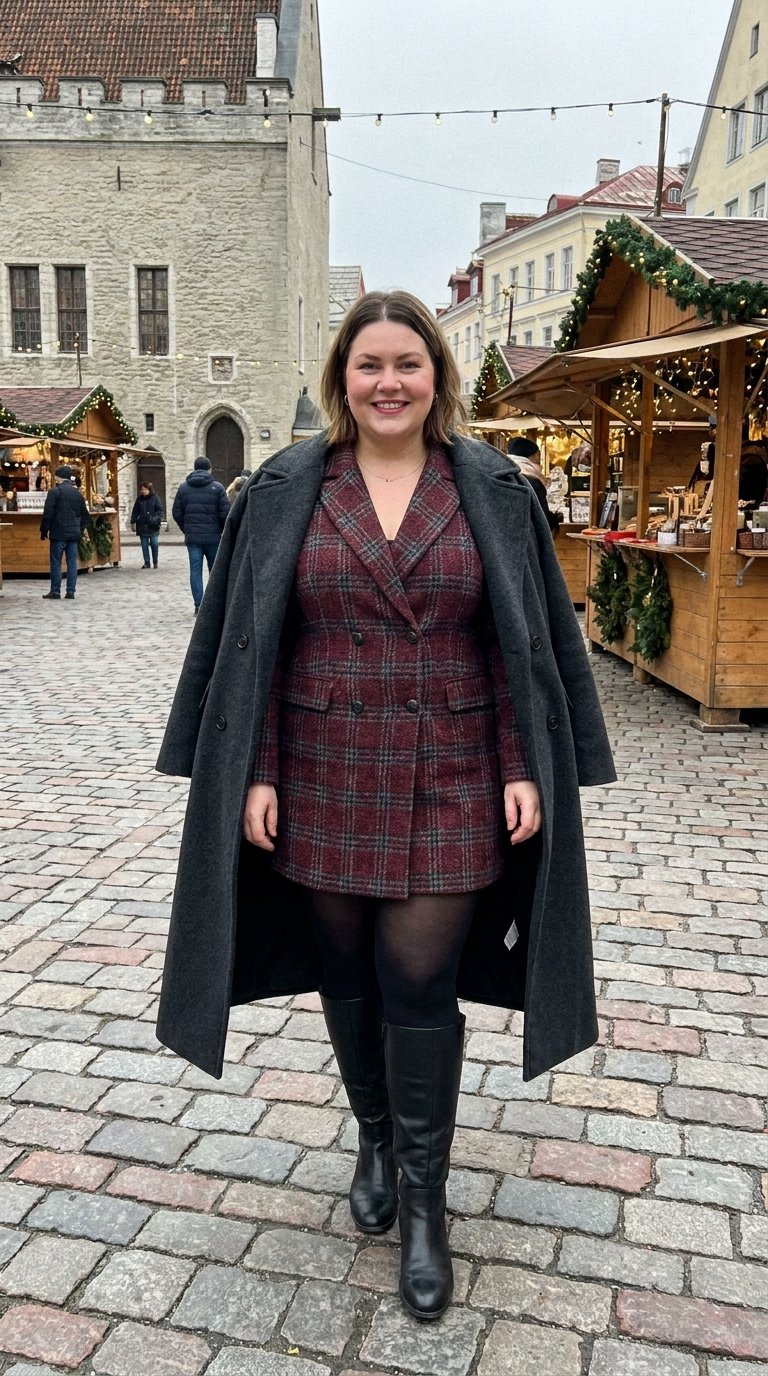
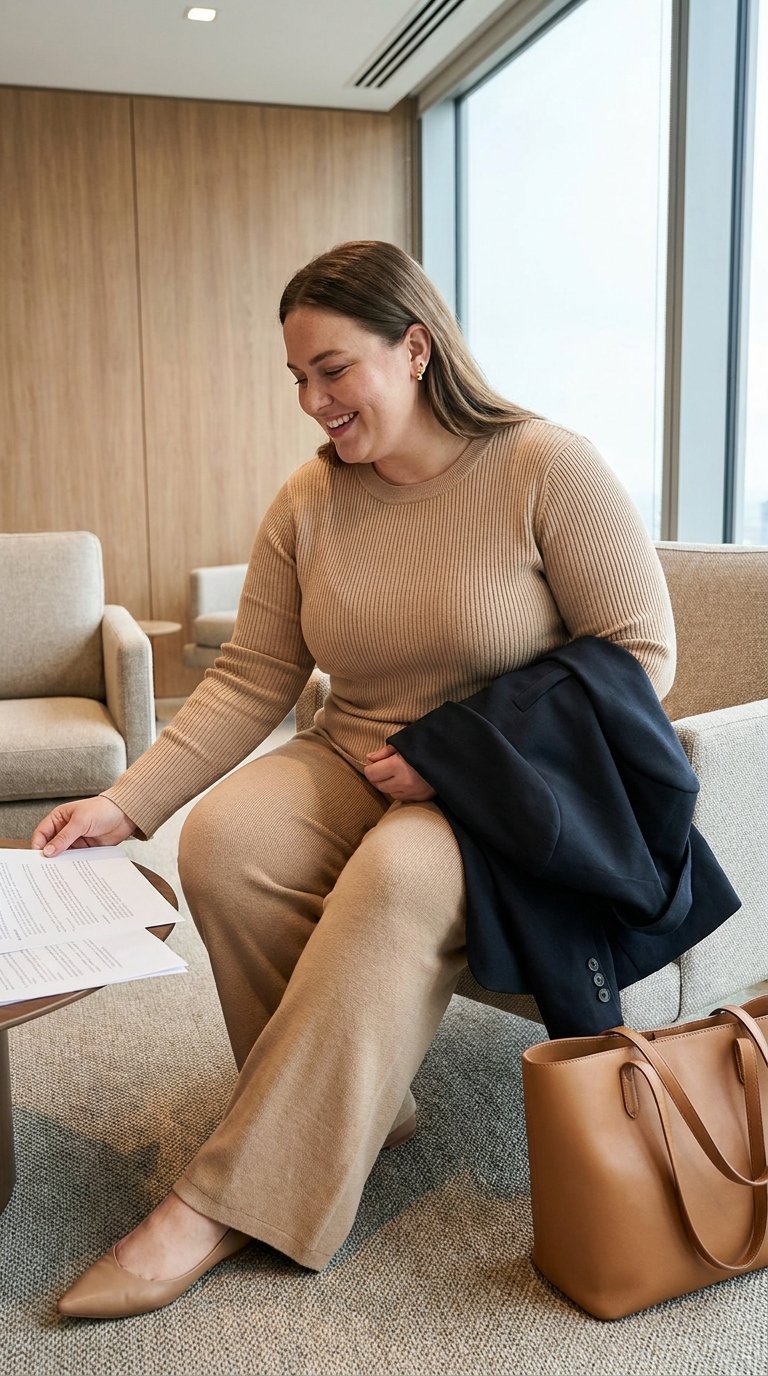
10 Fashion Rules for Plus Size Professionals That Deserve to Be Broken
Here is the truth nobody says out loud: most fashion rules were written decades ago, by people who never dressed a size 14 body, for a world that no longer exists. Yet plus size women still walk into work every morning carrying a mental rulebook full of “can’t” and “shouldn’t.”
The old fashion rules for plus size professionals were never about style. They were about taking up less space. That is why following them so often leaves you feeling frumpy, invisible, and vaguely uncomfortable in clothes that were supposed to be “safe.”
Breaking these rules is not rebellion for its own sake. It is how you end up with a work wardrobe that actually fits your body, your job, and your personality. The women in your office who always look put together? They broke most of these rules years ago.
Here are 10 rules to leave behind, and what to do instead.
1. Rule to Break: “Stick to Black Because It’s Safe”

Black is fine. A closet that is 90 percent black is a uniform you never chose. Color reads as confidence in professional settings, and rich shades photograph beautifully in meetings, presentations, and LinkedIn headshots.
Start with one colored anchor piece instead of a full rainbow:
- A burgundy blazer over your usual black trousers
- A forest green shell under a neutral suit
- Camel or rust as your new “neutral” instead of gray
If pairing shades feels tricky, this guide to work outfit color combinations makes it almost formulaic.
2. Rule to Break: “Horizontal Stripes Are Off Limits”

This one has been repeated so long that people forget to question it. In practice, stripe width and fabric matter far more than stripe direction.
A crisp Breton stripe top under a blazer looks classic, not costume-y. What actually causes trouble is thin, clingy fabric, on any body, in any print.
Two quick checks before you buy:
- Hold the fabric up to light. If you can see your hand through it, skip it.
- Look for structure at the shoulder seam. A defined shoulder keeps stripes looking sharp.
💡 Quick Tip
Wider stripes in a heavier knit almost always look more expensive than thin stripes in jersey. When in doubt, size up the stripe, not the shirt.
3. Rule to Break: “Bold Prints Will Overwhelm You”

Somebody decided plus size women should stay quiet, and prints got caught in the crossfire. Meanwhile, a great print does half your styling work for you. A printed wrap top means you need zero accessories. A printed midi skirt with a plain sweater is a complete outfit in two pieces.
The trick is scale and placement, not avoidance. Medium to large prints in structured fabrics look intentional. Tiny busy prints in flimsy fabric are what read as chaotic.
For more looks built around statement pieces, browse these professional outfit ideas for plus size women.
Pick one printed piece and keep the rest of the outfit solid.
Choose medium or large prints in fabrics with weight and drape.
Tiny ditsy prints on thin, clingy jersey.
Print on print until you have practiced with one piece first.
4. Rule to Break: “Shapewear Is Mandatory Under Everything”
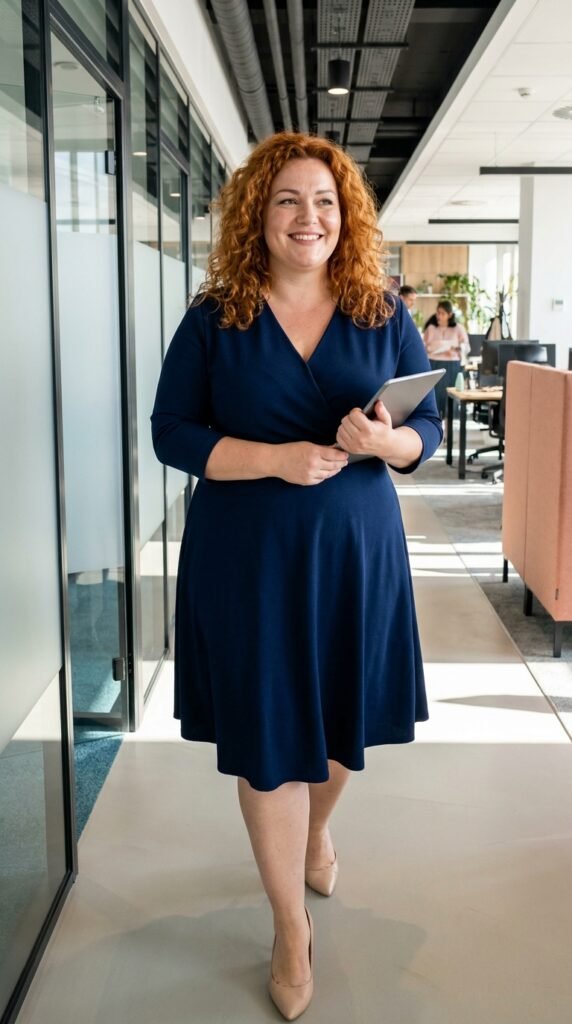
You cannot lead a 3 pm meeting well when you have been holding your breath since 8 am. Shapewear is a tool, not a requirement, and wearing it daily under every outfit is a comfort tax nobody should pay.
Save compression pieces for the rare outfit that truly needs a smooth line, like a bias-cut dress. For everyday workwear, well-fitted clothes in substantial fabric do the same job without the squeeze.
Before you default to shapewear, run through this instead:
Try these before shapewear
5. Rule to Break: “Loose Clothes Look More Professional”
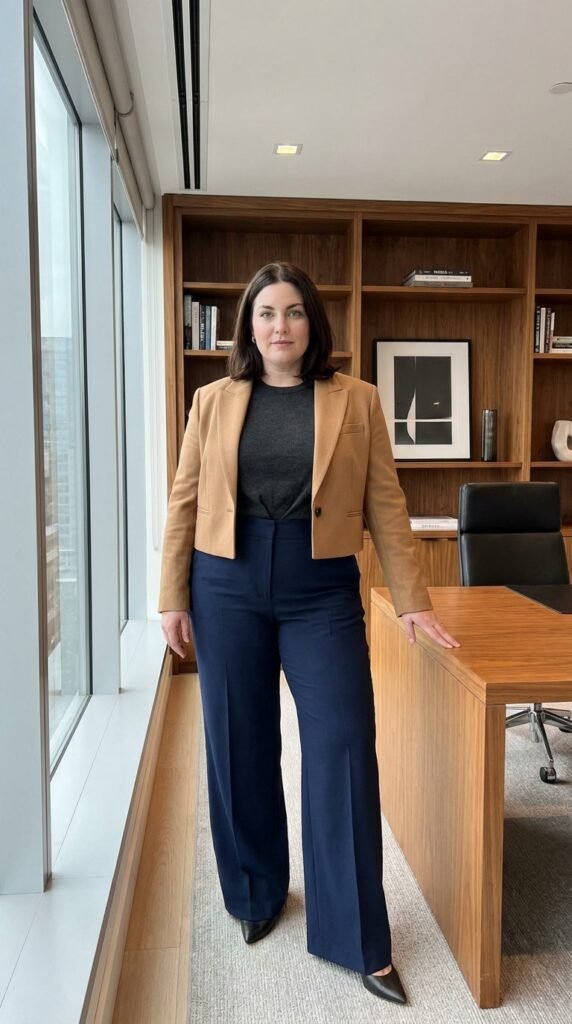
The oversized-everything approach usually backfires. Head-to-toe baggy reads as unsure, while clothes that skim the body read as deliberate. There is a big difference between fitted and tight. Fitted means the fabric follows your shape with a little ease. Tight means the fabric is working overtime.
Try the one-fitted-piece formula. If your trousers are wide, make the top closer to the body. If the top is roomy, define things with a structured bottom. That single contrast is what makes an outfit look styled instead of thrown on.
This guide on how to dress professionally with a plus size body breaks the formula down piece by piece.
Oversized tunic, loose wide pants, long open cardigan. Three roomy layers, no defined shape, and the outfit wears you.
Same wide pants, but with a fitted knit tucked at the front and a cropped structured blazer. One shape defined, instantly polished.
6. Rule to Break: “Belts Are Not for Your Body”
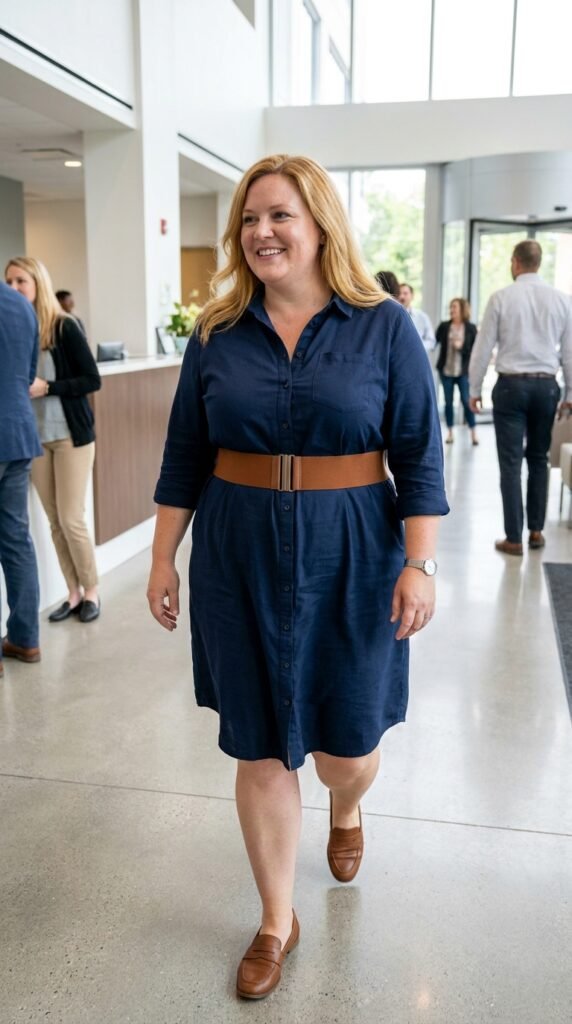
Skipping belts means skipping the fastest way to make an outfit look finished. The waist you define does not have to be your natural waist, and it does not have to be cinched hard. A belt resting softly over a dress or blazer creates a focal point, and focal points are what stylists get paid for.
Ease into it in three steps:
Start with a wide elastic belt over a shirt dress. Elastic moves with you all day.
Place it where your body naturally bends when you lean sideways, not where a size chart says your waist should be.
Fasten it snug, not tight. You should fit two fingers under it comfortably.
Once belting feels natural, try it over a longline blazer. That one move is a favorite in plus size power dressing outfits for a reason.
7. Rule to Break: “Your Tops Must Always Cover Your Hips”

The hip-length-or-longer rule is where so many outfits go to die. When every top ends at the same spot, every outfit has the same silhouette, and none of them have shape.
A front tuck, a cropped-at-the-waist blazer, or a sweater that hits high on the hip creates proportion. Proportion is what makes an outfit look expensive. Full coverage every single day just makes it look repetitive.
Keep tops in a mix of lengths and rotate them against different bottoms.
8. Rule to Break: “Wide Leg Pants Add Too Much Volume”
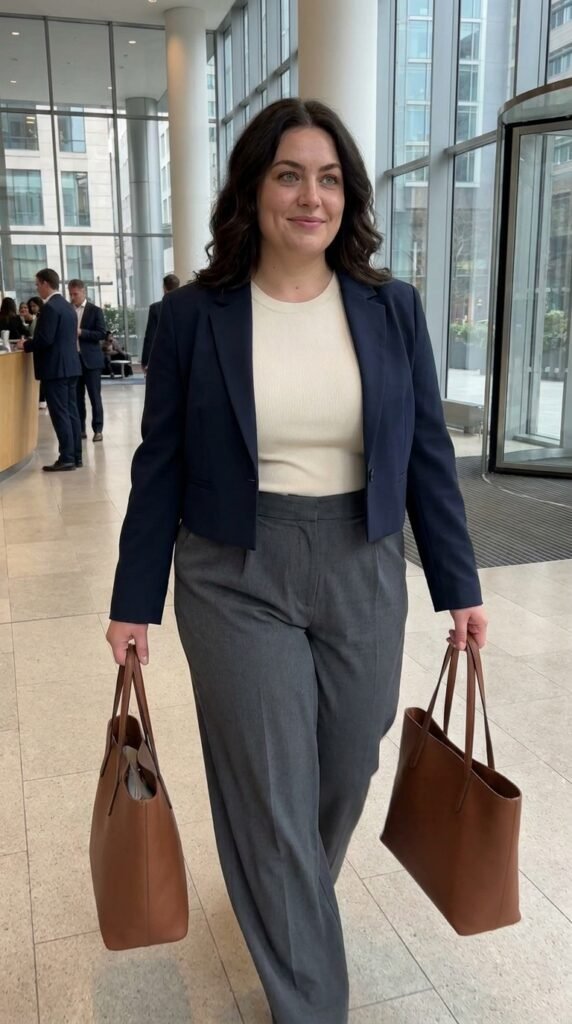
Whoever spread this rule has clearly never worn a great pair of high-rise wide legs. On curvy bodies, they are often the single most comfortable and most polished trouser style available. They glide over hips and thighs instead of gripping them, and they move beautifully when you walk.
The fit points that matter: a high rise that sits at your waist, a flat front, and a hem long enough to nearly touch the floor in your work shoes.
| Wide Leg Trousers | Skinny Trousers |
|---|---|
| Skim over hips and thighs, no pulling at the seams. | Cling all day and often bag out at the knees by lunch. |
| Read as current and tailored in most offices. | Need a very long top to feel balanced, which limits styling. |
| Pair with fitted tops, front tucks, and cropped blazers. | Still fine under dresses and long knits, just not your only option. |
9. Rule to Break: “Head to Toe One Color Is Too Much”
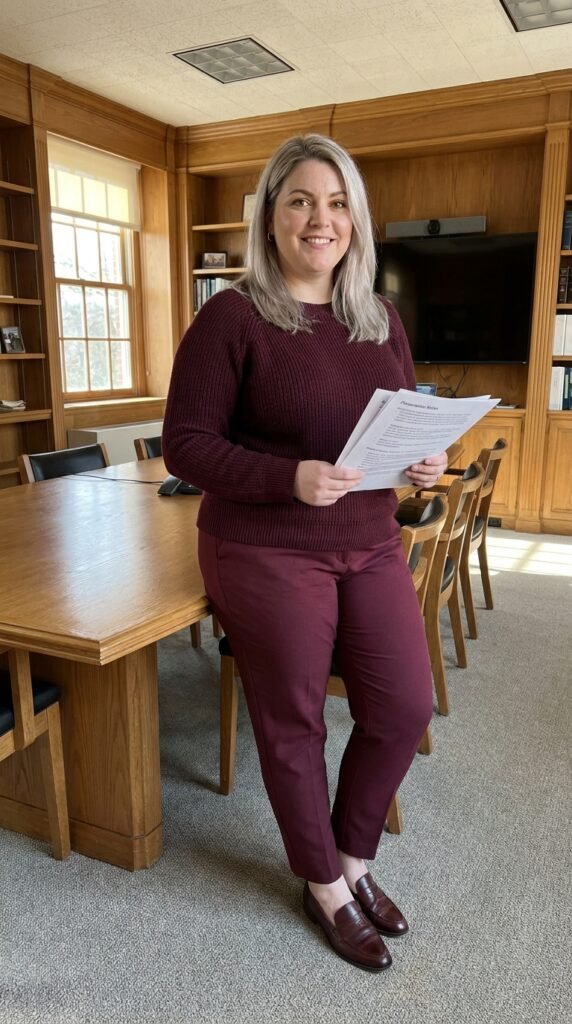
Wrong. A single-color outfit is one of the oldest luxury styling tricks there is, and it works on every body at every size. One column of color, top to bottom, creates a long unbroken line that looks tall, calm, and deliberate. It also takes about four seconds to put together on a rushed morning.
You do not need exact matching shades. Burgundy trousers with a wine sweater and oxblood loafers counts. Close cousins in the same family look richer than a perfect match anyway. This is also one of the core moves behind expensive looking work outfits that cost very little.
Shades in the same color family do not need to match. Mixing two or three close tones of one color looks more expensive than a perfect match.
10. Rule to Break: “Keep Accessories Small and Quiet”
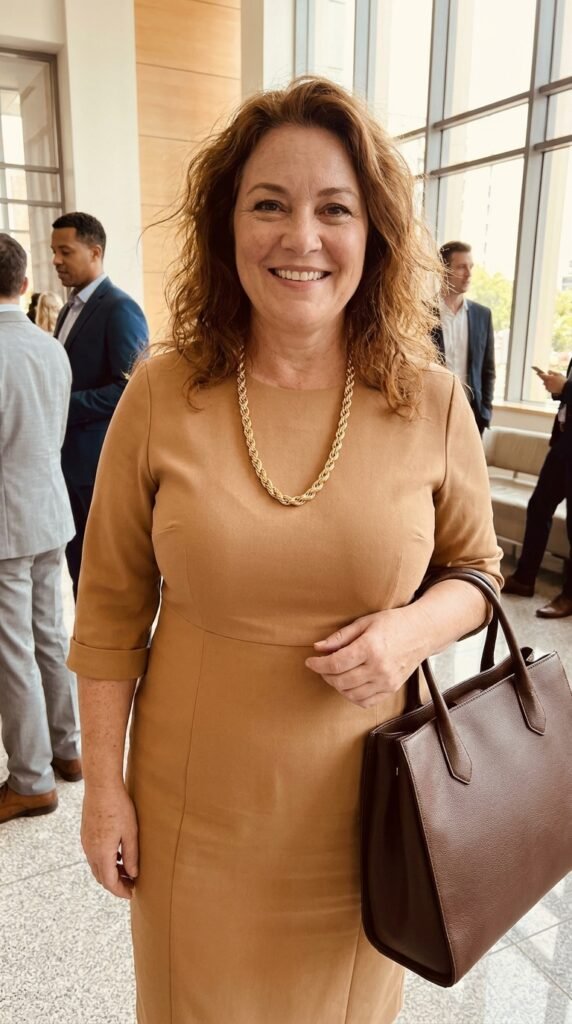
Dainty jewelry on a curvy frame can disappear entirely. Scale your accessories to your body and your presence, and suddenly everything looks intentional.
A few swaps that change an outfit fast:
- ▸Trade a thin pendant for one chunky gold chain or a bold collar necklace.
- ▸Swap tiny studs for sculptural earrings that show when your hair is down.
- ▸Carry a structured medium or large bag. A tiny bag against a curvy frame looks borrowed.
- ▸Pick one statement per outfit and keep the rest simple.
One caution here. Statement means one strong piece, not five competing ones. Let the necklace or the earrings be the headline, then stop.
Your Style, Your Rules
Every rule on this list was written for a body that was never yours, and none of them survive contact with a well-fitted blazer and a little confidence. The old fashion rules for plus size professionals are not standards to live up to. They are habits to unlearn, one outfit at a time.
Start small. Pick one rule from this list and break it this week. Wear the color, belt the dress, tuck the top. Notice how people respond, and more importantly, notice how you feel walking into the building.
Save this list to your Pinterest workwear board so it is there the next time you are staring at your closet wondering what the rules are. Spoiler: you make them now.