How to Dress Professionally Plus Size: 12 Polished Outfit Strategies That Never Look Frumpy
Finding workwear in a size 14 and up should not be this hard, but here we are. Most stores stock boxy blazers, shapeless shift dresses, and pants that fit in the hips but gape at the waist. So many of us end up settling for outfits that feel “fine” instead of outfits that feel like us.
The usual advice does not help much either. It tells curvy women to stick to black and stay safe, which is exactly how a wardrobe turns boring and dated.
Here is the truth. Learning how to dress professionally plus size is not about following more rules. It is about fit, proportion, and a few smart styling habits that make any outfit look intentional. Your body is not the issue. The styling approach is.
These 12 strategies cover tailoring, layering, color, fabric, and the small finishing touches that separate a polished look from a frumpy one. Every single one works in a real office, on a real budget, on a real body.
1. Get Two Pieces Tailored Before You Buy Anything New
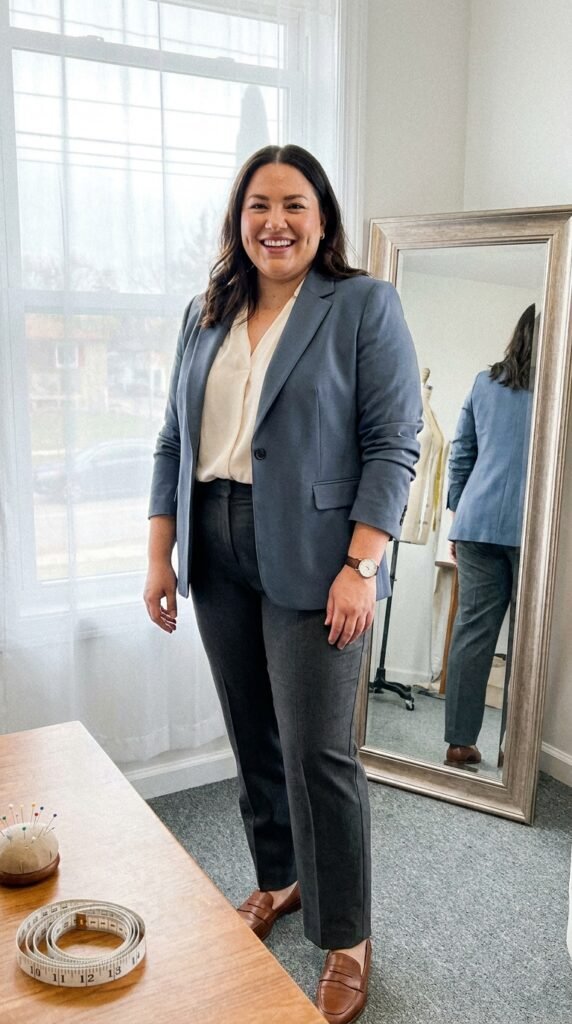
Frumpy is almost never about the clothes themselves. It is about fit. A blazer that pulls at the button or pants that pool at the ankle will read sloppy no matter what they cost.
Before adding anything to your cart, take your two most worn work pieces to a tailor. Common quick fixes:
- Shortening blazer sleeves so a bit of wrist shows
- Hemming pants to hit the top of your shoe
- Taking in a waistband that gapes in the back
Most of these alterations cost less than a new top and change how the whole outfit hangs. For more fit-focused ideas, this guide on structuring professional outfits that fit well goes deeper.
2. Swap the Boxy Blazer for One With a Defined Waist
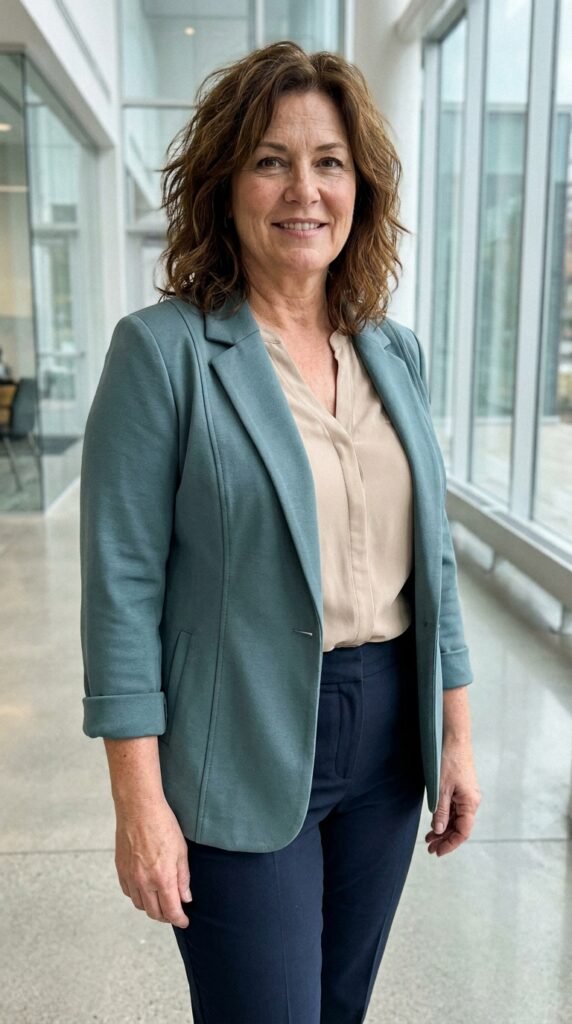
That oversized blazer from the plus section is usually the frumpiest thing in the closet. When a jacket hangs straight down from the shoulders with no shape, the whole outfit loses its lines.
Look for blazers with a single button right at your natural waist, princess seams down the front, or a soft belt. Ponte knit blazers are a quiet hero here because they have structure without stiffness.
One small trick worth stealing: wear the blazer open with the sleeves pushed to just below the elbow. It instantly looks more relaxed and more expensive at the same time.
💡 Quick Tip
Check the seams before you buy. A blazer with visible vertical seams down the front will always hold its shape better than a flat, dartless one, even in the same size.
3. Build Around a Column of One Color
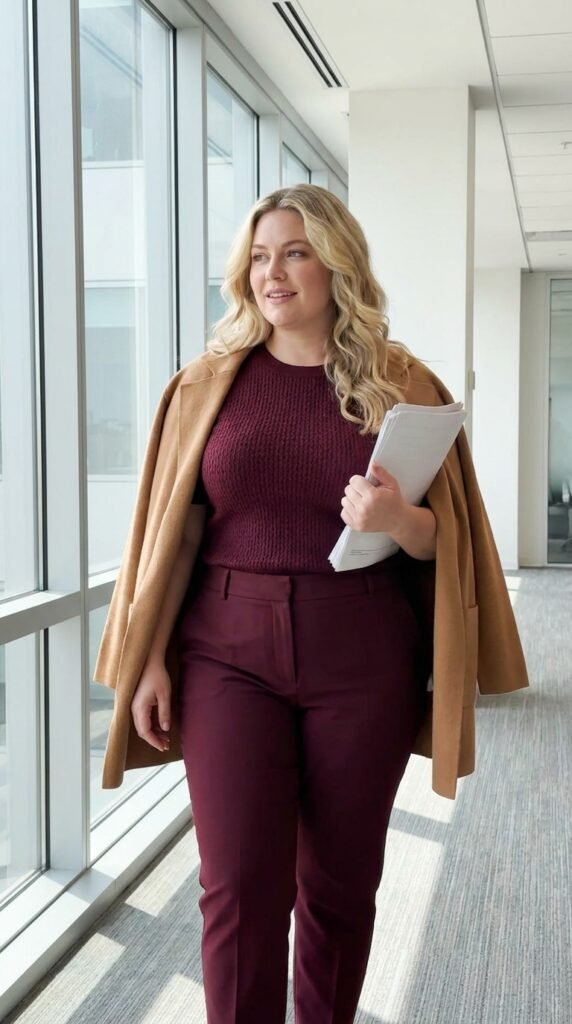
Here is a styling habit stylists use constantly. Wear one color from shoulder to shoe, then add a second piece on top in a different shade.
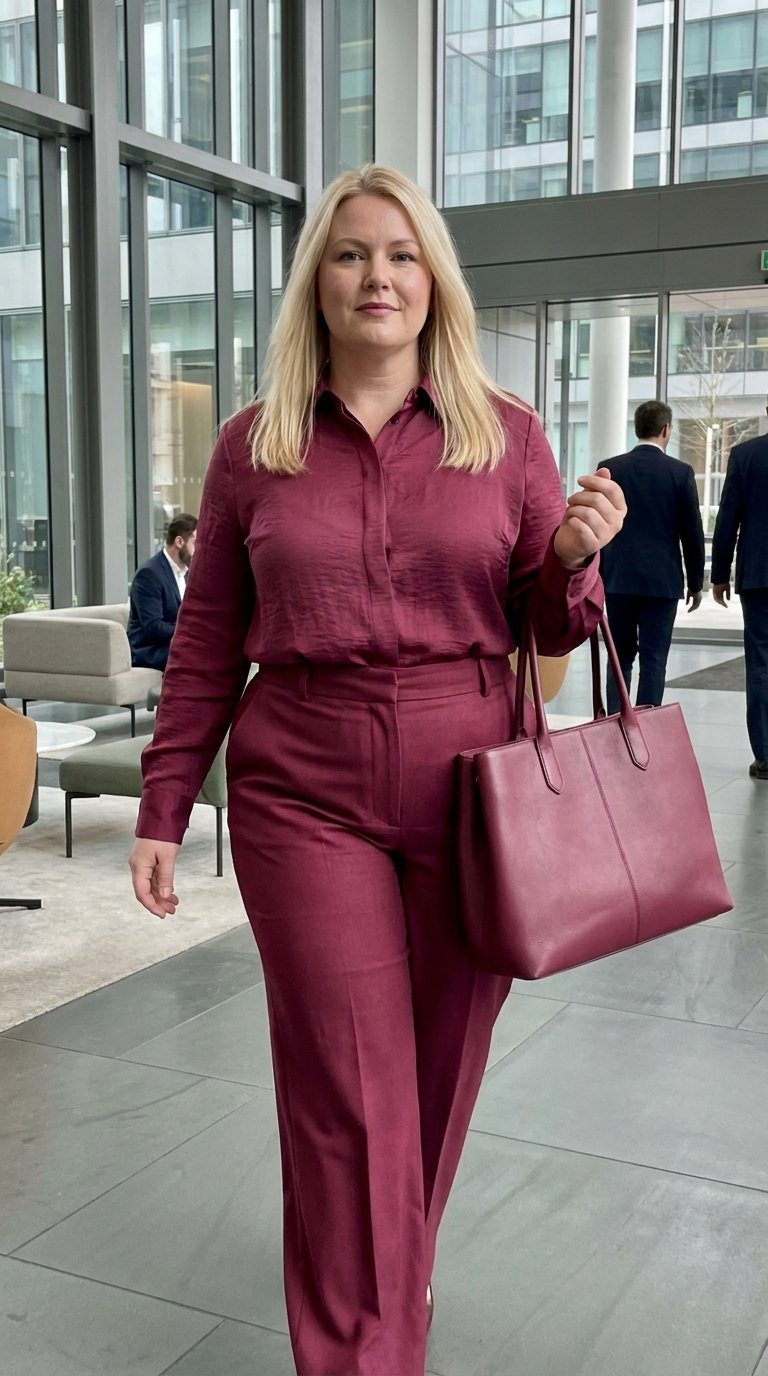
A burgundy knit top with burgundy trousers, topped with a camel cardigan, looks pulled together with zero effort. The unbroken line of color reads long, calm, and intentional.
Two easy columns to start with:
- Navy top, navy pants, blush or nude blazer over it
- All black base, then a dusty rose or cream layer
If picking shades feels tricky, this breakdown of work outfit color combinations for plus size women makes it simple.
Match your top and bottom in the same shade, then layer a contrast piece.
Keep shoes close to the pant color to extend the line.
Cutting the outfit in half with a strong contrast belt at the hip.
Mixing three or more unrelated colors in one look.
4. Choose Ponte, Crepe, and Twill Over Thin Jersey
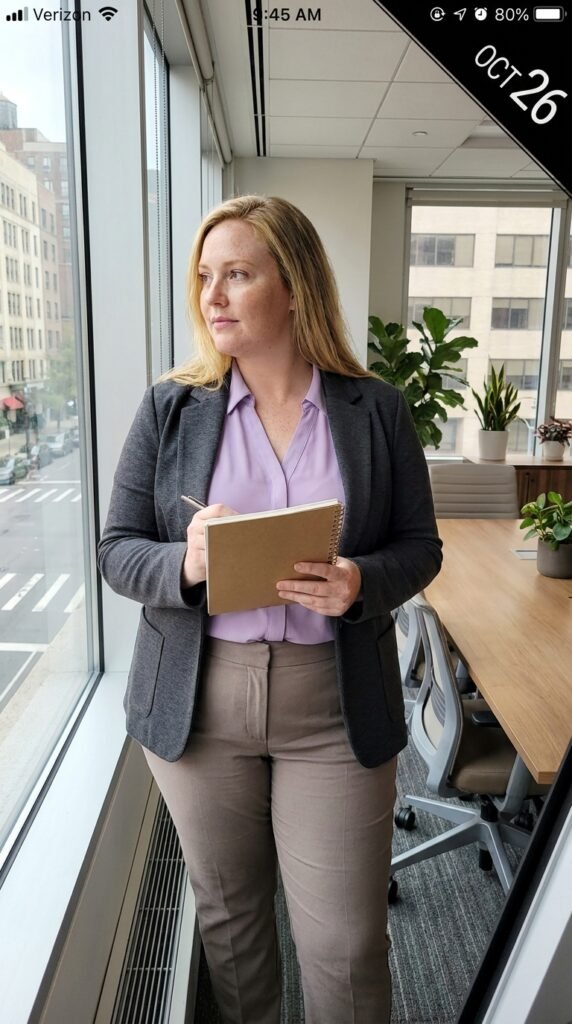
Fabric decides whether an outfit looks polished or tired by 2 p.m. Thin jersey clings, wrinkles, and stretches out at the seams. Structured fabrics hold their line all day.
A quick way to test in the store: scrunch the fabric in your fist for five seconds. If it springs back smooth, it will survive a workday. If it stays crumpled, leave it on the rack.
Here is how the common options compare.
| Reach for these | Think twice about these |
|---|---|
| Ponte knit, holds shape and moves with you | Thin cotton jersey, clings and pills fast |
| Crepe, drapes softly without sticking | Cheap satin, shows every wrinkle and pull |
| Stretch twill, structured but comfortable | Clingy ribbed knits in a tight weave |
5. Use the Half Tuck to Give Every Top a Waist
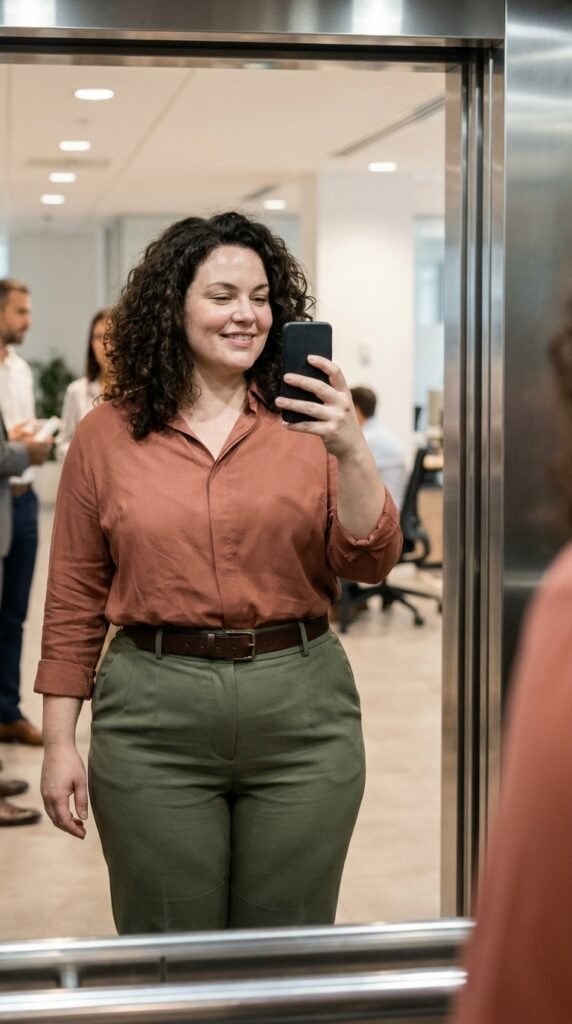
A lot of frumpiness comes from tops that hang loose past the hips in one straight line. You do not need new tops. You need the half tuck.
Take the front few inches of your blouse or knit and tuck it into your waistband, leaving the sides and back loose. That single move creates a waistline, shows off your belt, and makes trousers look longer.
It works with almost everything: button downs, fine knits, even sweaters if the fabric is thin enough. Practice it once in a mirror and it takes five seconds every morning after that.
Blouse hangs straight past the hips, the waistband disappears, and the outfit reads shapeless.
Front tucked a few inches in, waistline visible, legs look longer, and the same top suddenly looks styled.
6. Invest in One Pair of Wide Leg Trousers That Actually Fit Your Waist
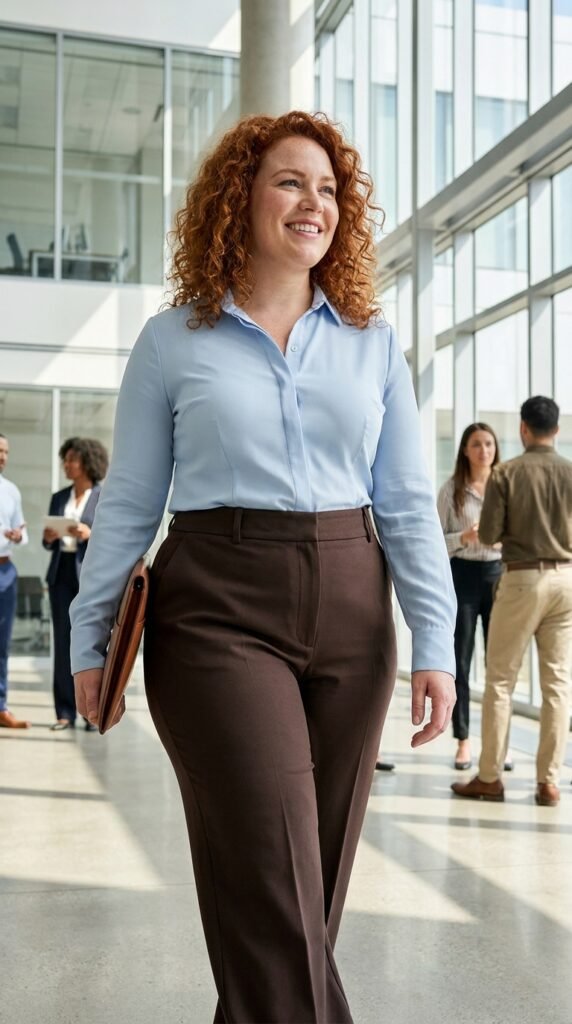
Skinny work pants had their decade. A well cut wide leg trouser in a heavier fabric is the fastest way to modernize an office wardrobe right now.
The fit rule matters more than the trend. Buy for your waist, not your hips, and let a tailor handle the rest. A high rise that sits comfortably at your natural waist keeps the whole look smooth when you sit down in meetings.
Before you shop, run through this quick list:
Wide leg trouser checklist
7. Pick Necklines That Frame, Not Choke

There is a reason a crew neck sweater can feel stuffy while a V neck in the same size feels polished. Necklines change the proportions of your whole upper body.
Open necklines create breathing room and draw the eye up toward your face, which is exactly where you want attention in a meeting. Crew necks and high mock necks can work too, but they need a longer necklace or open collar layer to break up the space.
The best options for workwear, at a glance:
8. Layer With Structure, Not Bulk
Layering is where a lot of work outfits fall apart. Piling a chunky cardigan over a loose top over a camisole adds volume everywhere and shape nowhere.
The fix is to layer thin over fitted. Start with a smooth, close fitting base, then add one structured piece on top.
Here is a simple order that works almost every day:
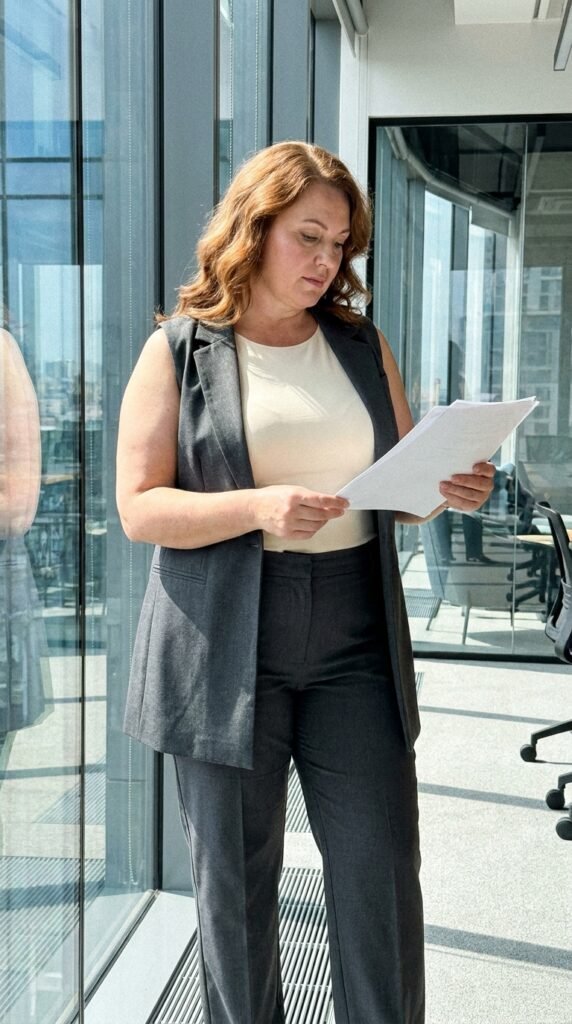
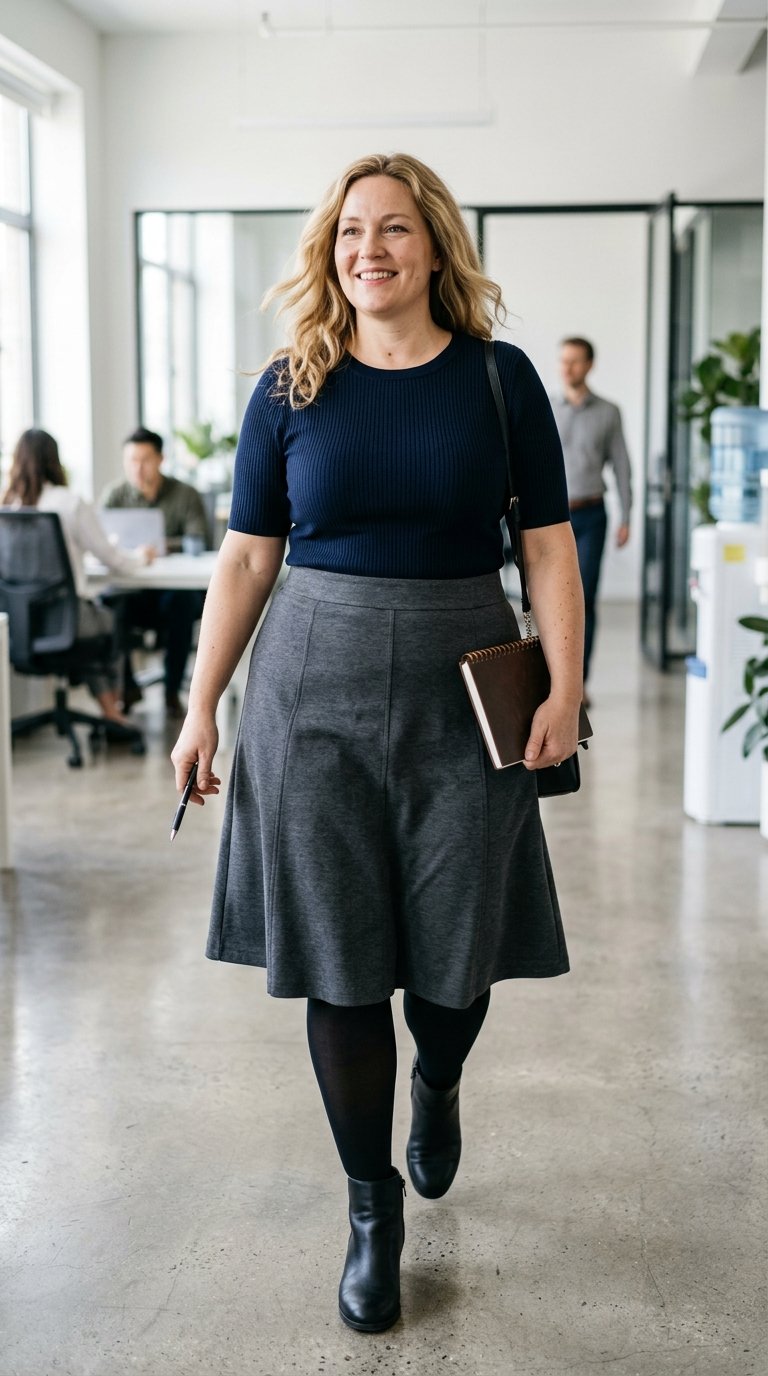
Start with a smooth fitted base, like a fine knit or a fitted shell top.
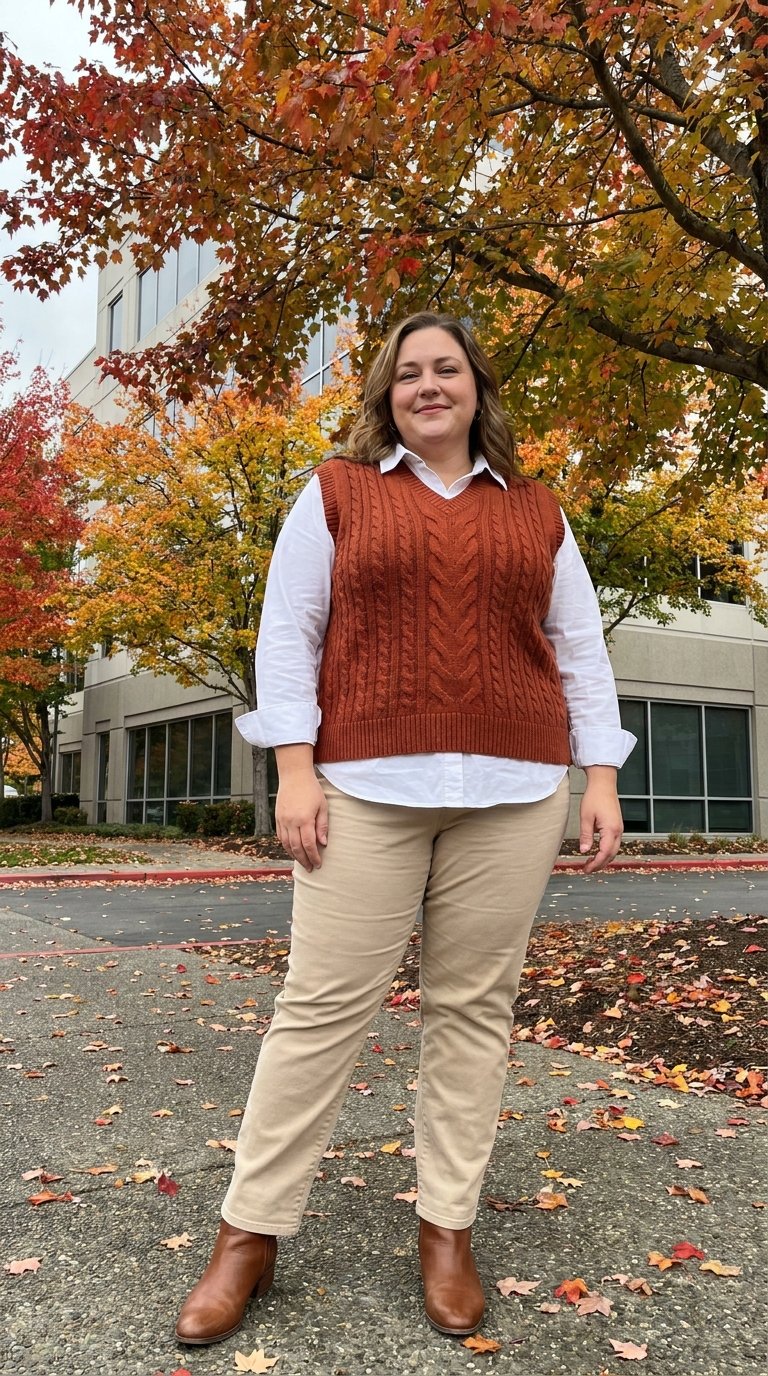
Add one structured layer, a blazer, longline vest, or duster cardigan with straight seams.
Stop there. Two layers plus one accessory is the sweet spot for an office look.
For a deeper dive, these office layering tips for plus size women cover every season.
9. Let Go of the Old “Rules” That Kept Your Wardrobe Beige
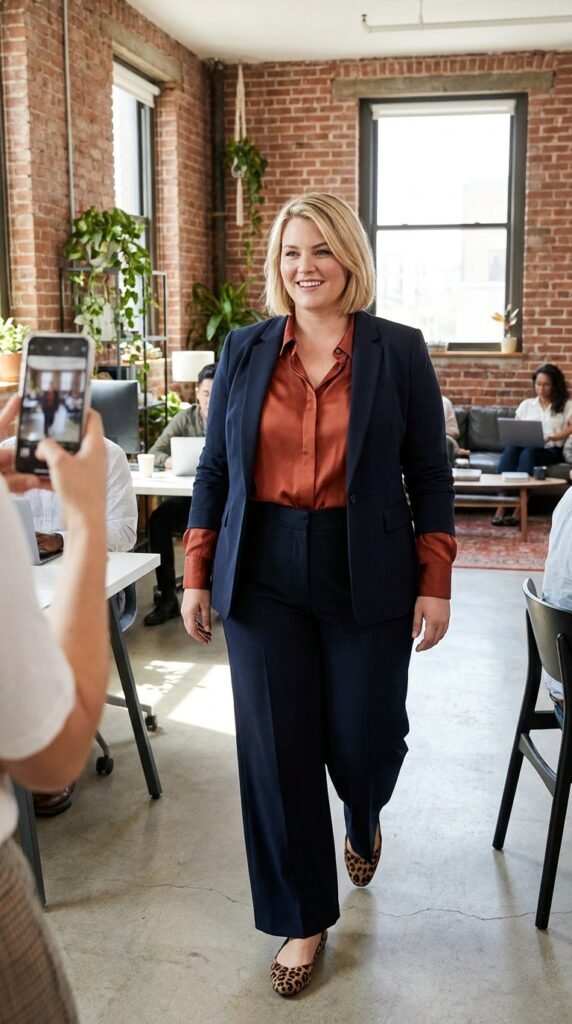
Somewhere along the way, curvy women were told to avoid prints, bright colors, horizontal stripes, and anything “too much.” That advice is what makes wardrobes look dated, not bodies.
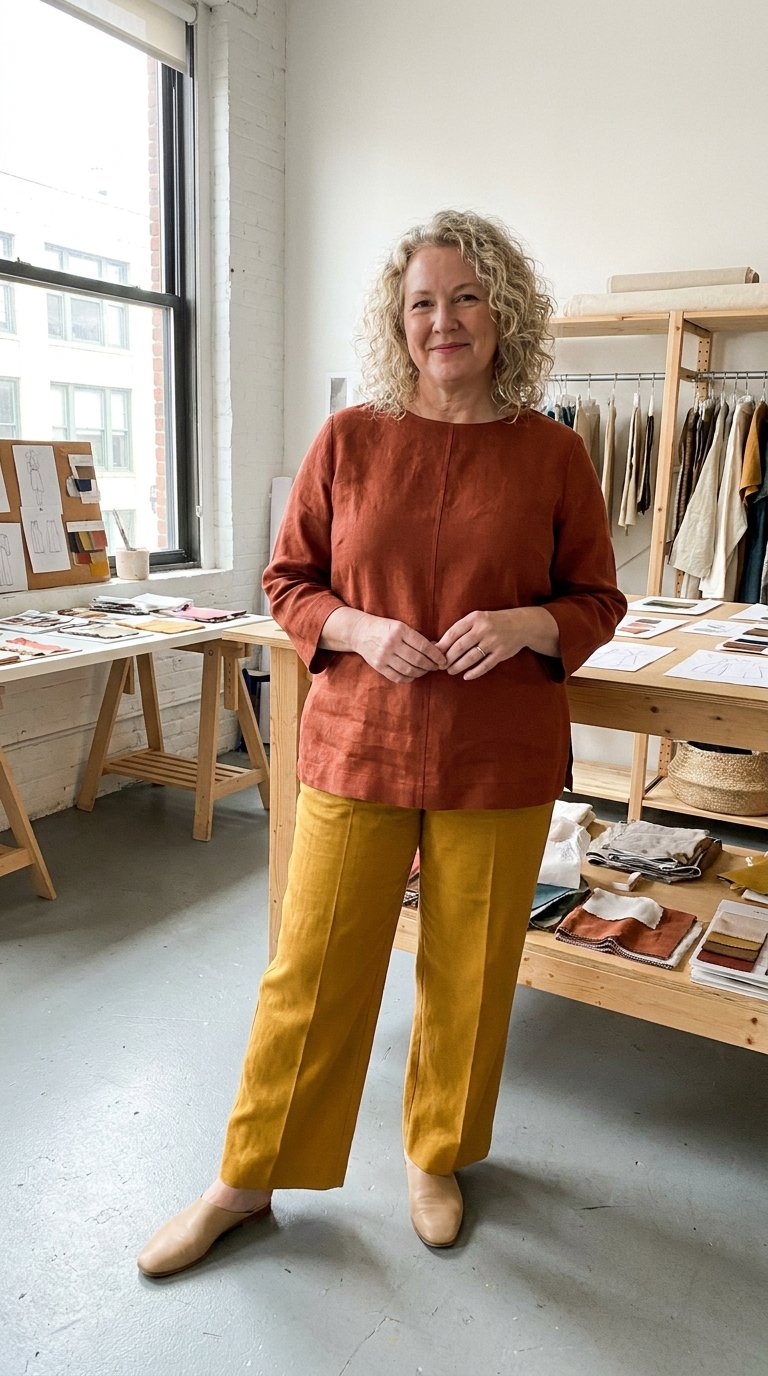
A bold rust blouse, a leopard flat, or a striped shirt under a blazer reads confident and current. The women who look the most stylish at work are usually the ones wearing what they actually like.
If you were raised on those old warnings, this list of fashion rules plus size professionals should break is worth a read.
Frumpy comes from poor fit and playing it safe, never from color, print, or personality.
10. Finish Every Outfit With One Deliberate Accessory
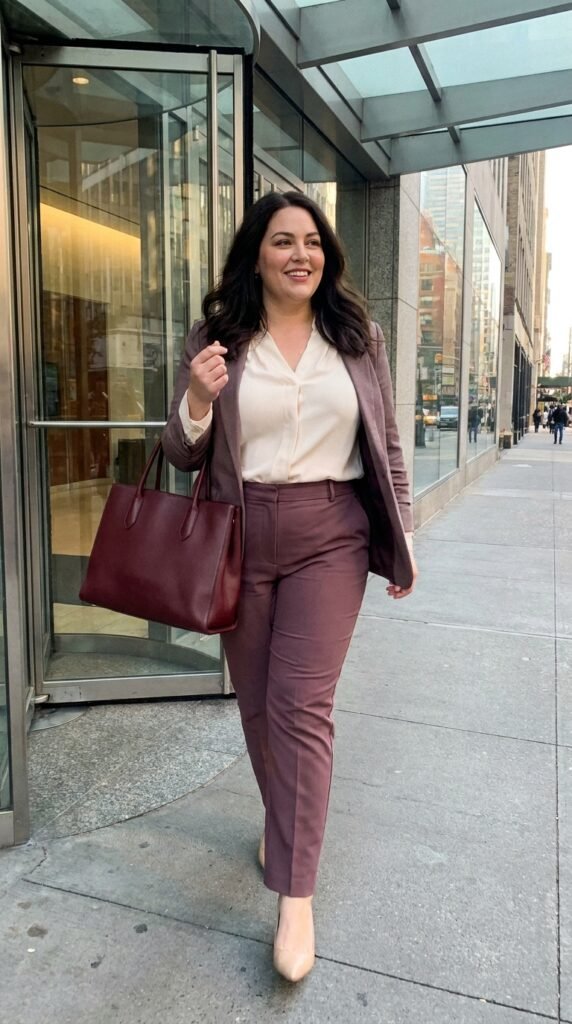
An outfit without a finishing touch often reads unfinished, which people misread as frumpy. The good news is that one accessory is enough.
Pick a single hero for the day and keep the rest quiet:
- A structured leather tote in burgundy or tan
- Gold hoops or one sculptural earring
- A silk scarf tied at the neck or on the bag handle
- A sleek belt that matches your shoes
The chair in your bedroom that collects half worn clothes probably also hides a scarf or belt you forgot about. Start there before buying anything.
- ▸Monday to Wednesday: rotate one hero accessory per day so outfits feel new.
- ▸Keep metals consistent within one outfit, all gold or all silver.
- ▸Match your belt to your shoes when in doubt. It quietly ties everything together.
11. Build a Five Piece Capsule Before Adding Anything Fun
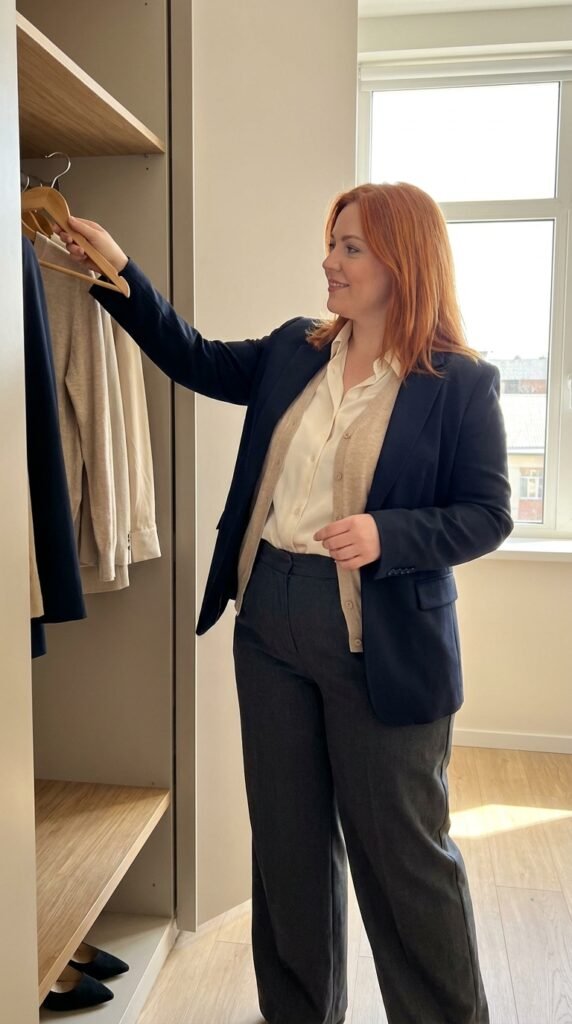
Most closet frustration comes from owning thirty pieces that do not talk to each other. A small core capsule fixes that fast.
Start with five workhorses in your best neutrals: a fitted blazer, wide leg trousers, a wrap or fit and flare dress, a quality white or cream blouse, and a fine knit in a color you love near your face. From those five, you can build two weeks of outfits before repeating an exact look.
Everything trendy you add later gets styled against this base, which is how expensive looking work outfits come together on a normal budget.
12. Do a Sixty Second Mirror Check Before You Leave
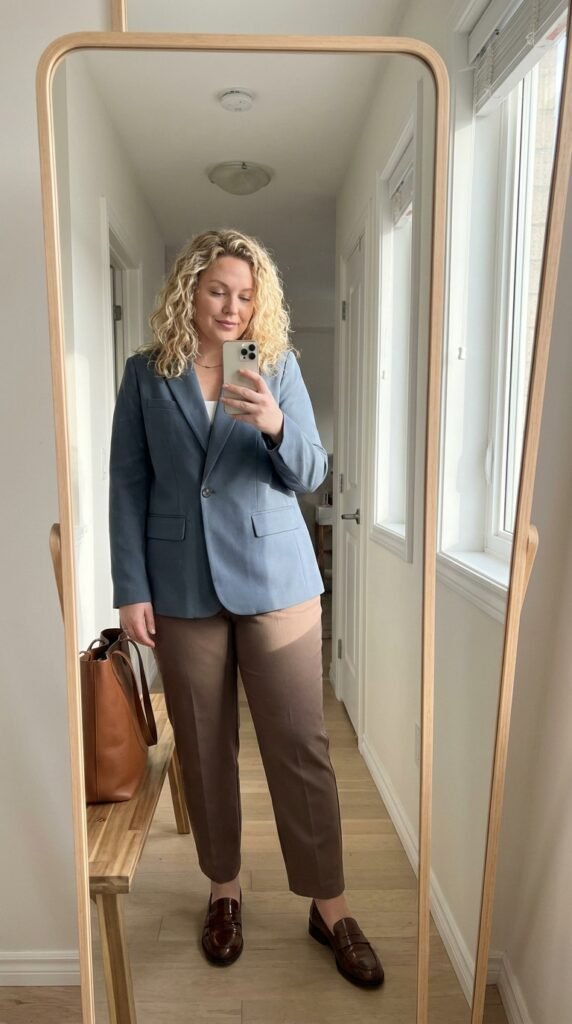
The difference between polished and rumpled is often decided in the last minute of the morning. Not with a full outfit change, just a quick scan.
Check the hem for wrinkles, the buttons for pulling, and the shoes for scuffs. Then look at your reflection sitting down, because that is how your coworkers see you most of the day.
If something pulls or rides up when you sit, note it for the tailor pile instead of quietly tolerating it for another year. Small fixes like these are covered in this list of common office outfit mistakes and how to fix them.
📌 Good To Know
Keep a small kit at your desk with a lint roller, safety pins, and a fabric shaver. It rescues an outfit faster than any shopping trip.
Final Thoughts
Learning how to dress professionally plus size comes down to a handful of habits: buy for your waist, tailor what you keep, choose fabrics with structure, and finish every look with one deliberate detail. None of it requires a new body or a new budget. It just requires styling with intention instead of settling for whatever the plus section happened to stock that season.
Start with one strategy this week, maybe the half tuck or the tailor trip, and build from there. Save this list to your work style board so it is waiting for you the next time you plan your outfits for the week.