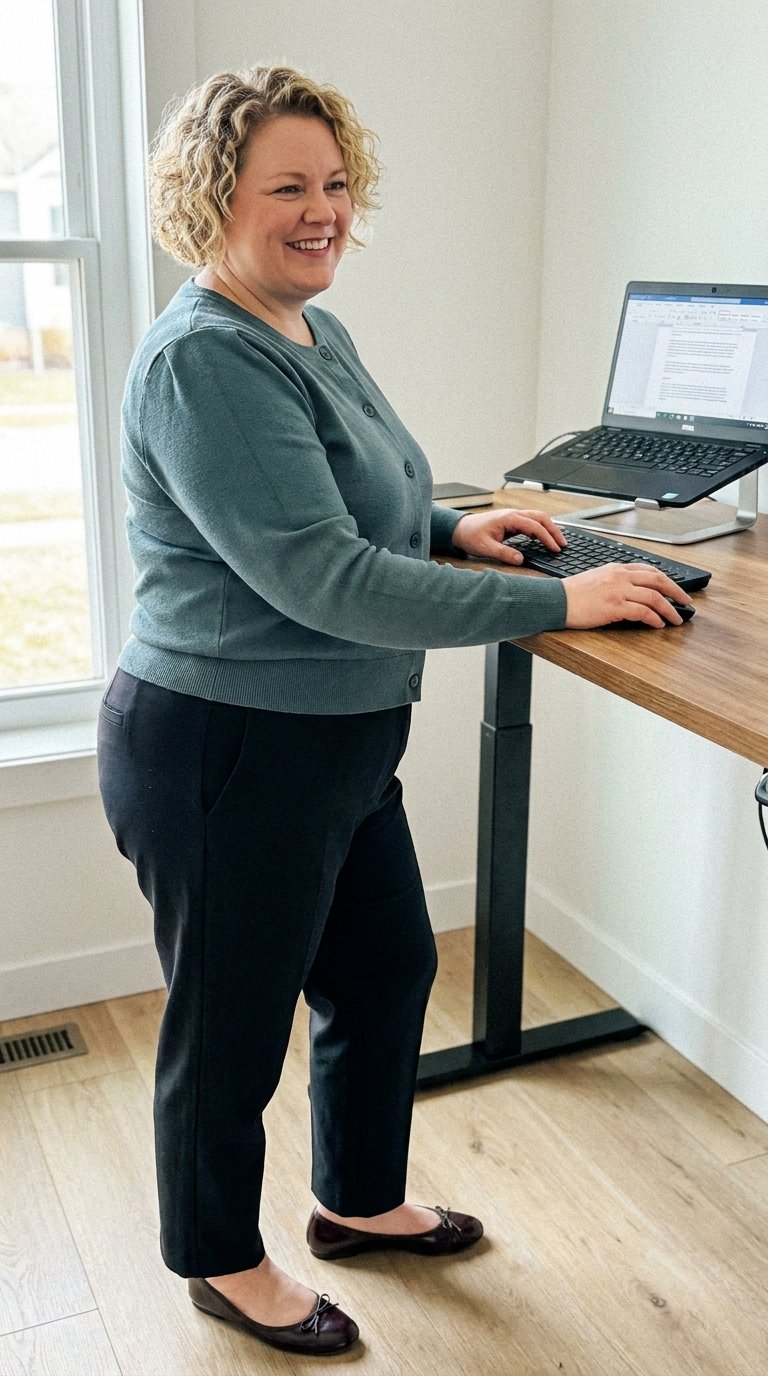
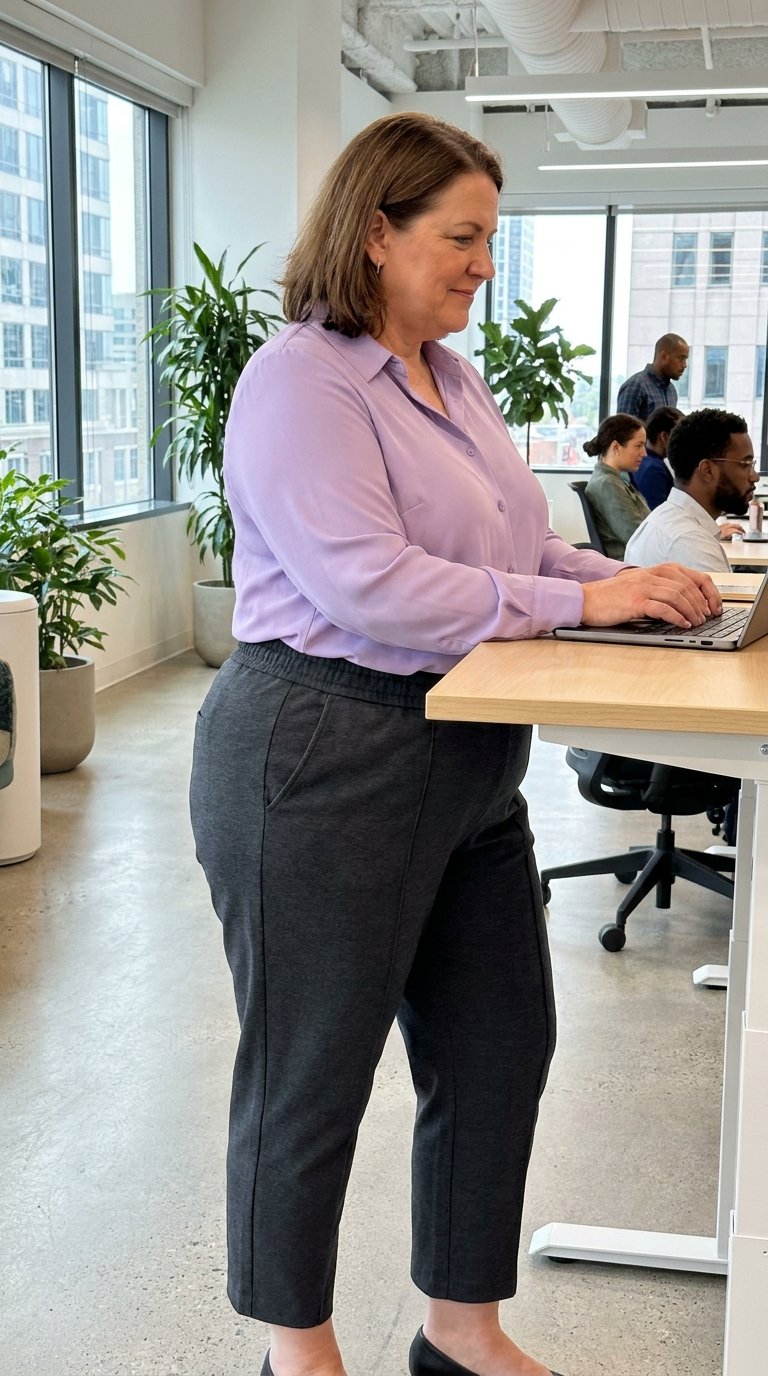
10 Plus Size Work Pants That Fit at the Waist Without Gaping
The waist gap is the most common fit complaint I hear from plus size women, and it makes sense. Most work pants are cut on a straight block, which assumes your waist and hips are nearly the same measurement. If your waist is smaller than your hips, and for most of us it is by a lot, the pants that fit your hips leave two inches of loose fabric flapping at the back of your waistband.
That gap is not your body’s fault. It is a construction shortcut by brands that never drafted a curvy pattern in the first place.
The good news is that some plus size work pants are actually built for a real waist to hip ratio. They use contoured waistbands, hidden elastic, curvy rises, and smart fabrics that stay put through a full workday.
Here are 10 styles and construction details worth looking for, so you can stop tugging your waistband every time you stand up from your desk.
1. Curvy Fit Pants With a Contoured Waistband
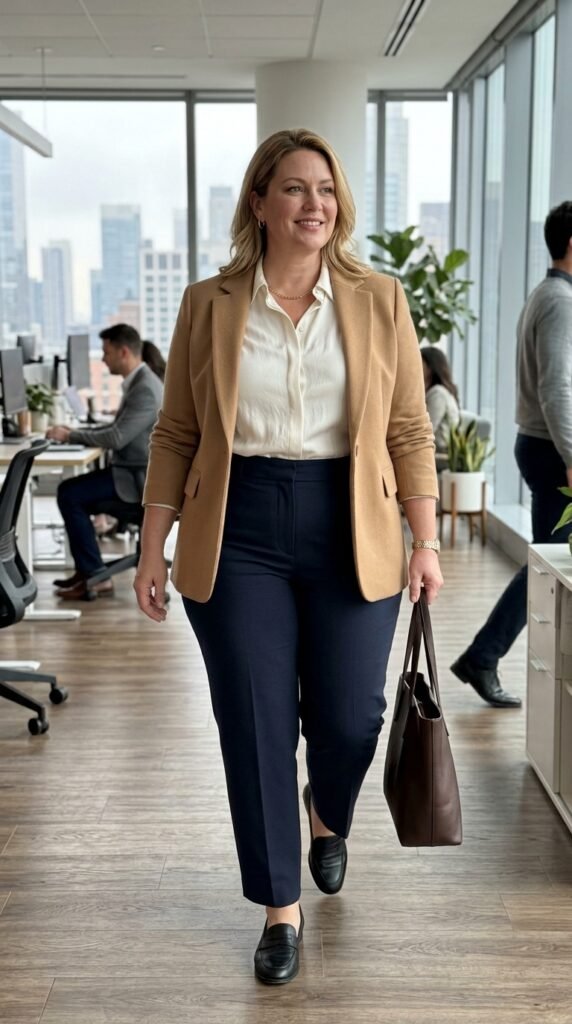
Start here if you only change one thing. A contoured waistband is cut on a curve instead of a straight strip of fabric, so it dips lower in front and rises in back to follow your actual shape. Brands label these as “curvy fit,” and they usually assume a 10 to 13 inch difference between waist and hips.
What to check on the product page:
- The words “curvy,” “contoured,” or “shaped waistband”
- A rise that is at least half an inch higher in the back
- Size range that runs to at least 24, ideally 28 or higher
Once you wear a contoured band, a straight one feels like wearing a cardboard tube.
2. Elastic Back Waistbands That Look Tailored From the Front
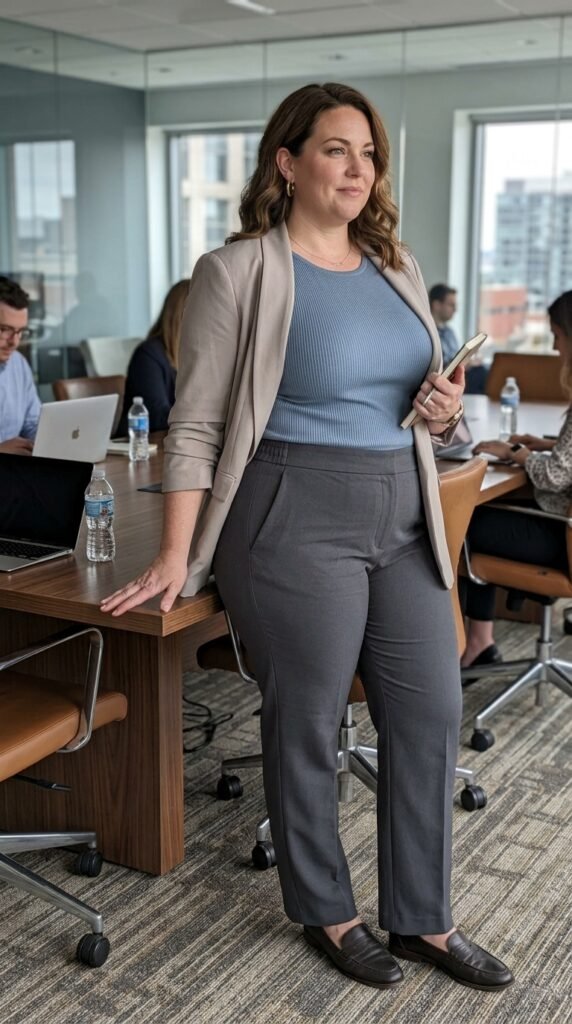
Nobody at your office needs to know your waistband has elastic in it. The best versions keep a flat, structured front with belt loops and a zip fly, then run soft elastic only through the back panel. The elastic pulls in the exact spot where gaping happens.
Two things separate a polished pair from a frumpy one:
- The elastic sits inside a fabric casing, so you never see the wrinkly gathered look from the outside.
- The band is at least 1.5 inches wide, so it holds without rolling.
Check the inside of the waistband before buying. Exposed, thin elastic tends to fold over by lunchtime.
💡 Quick Tip
Tuck a shirt in and look at your back waistband in a mirror. If the elastic reads smooth under the fabric, it will read smooth under blazers all day too.
3. Pull On Ponte Pants With a Wide Knit Waistband
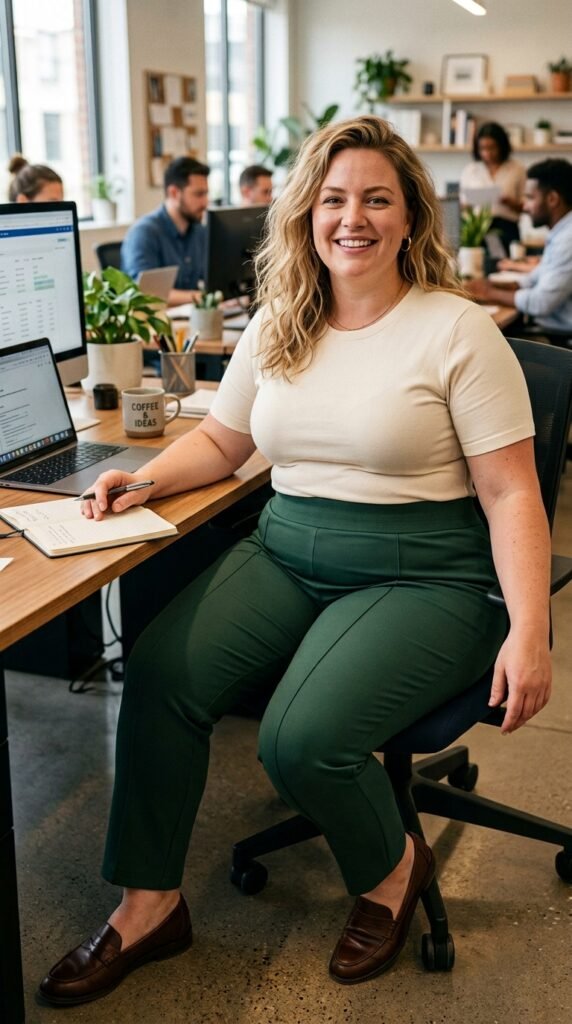
Here is the payoff first: a wide knit waistband cannot gap, because there is no rigid band to stand away from your body. Ponte is a thick double knit that looks like trouser fabric but stretches like a legging, and pull on work pants made from it are the closest thing to office sweatpants that still pass a dress code.
Look for ponte that is at least 300 gsm in weight, or described as “heavyweight” or “structured knit.” Thin ponte goes shiny over the thighs within a few months.
These are the pair to reach for on long meeting days when you will be sitting for hours.
Rigid trousers that fit your hips, gap two inches at the back waist, and dig in every time you sit down.
A wide knit band that moves when you move, lies flat against your back, and still looks like a trouser in photos.
4. High Waisted Pants With a Higher Back Rise
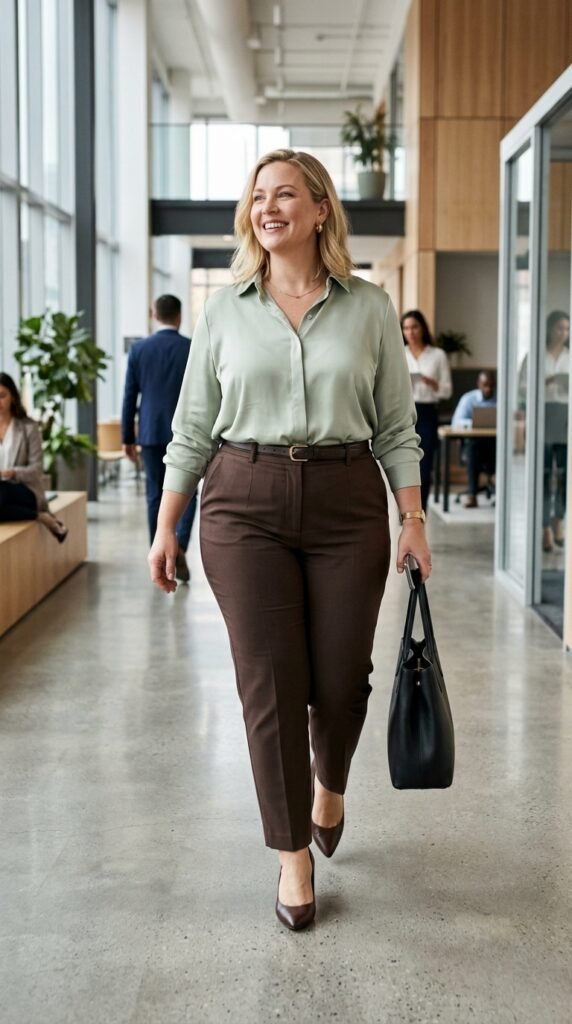
A lot of gaping is actually a rise issue, not a waistband issue. When the back rise is too short, the pants pull down as they stretch over your seat, and the waistband tips away from your back. High waisted work pants with a longer back rise solve this by giving the fabric enough room to travel over your curve and still land at your natural waist.
Before you order, run through this quick list:
High rise fit check
Sit down in the fitting room and check the back. If the band stays against your skin while seated, that is your pair.
5. Side Zip Pants With a Clean Flat Front
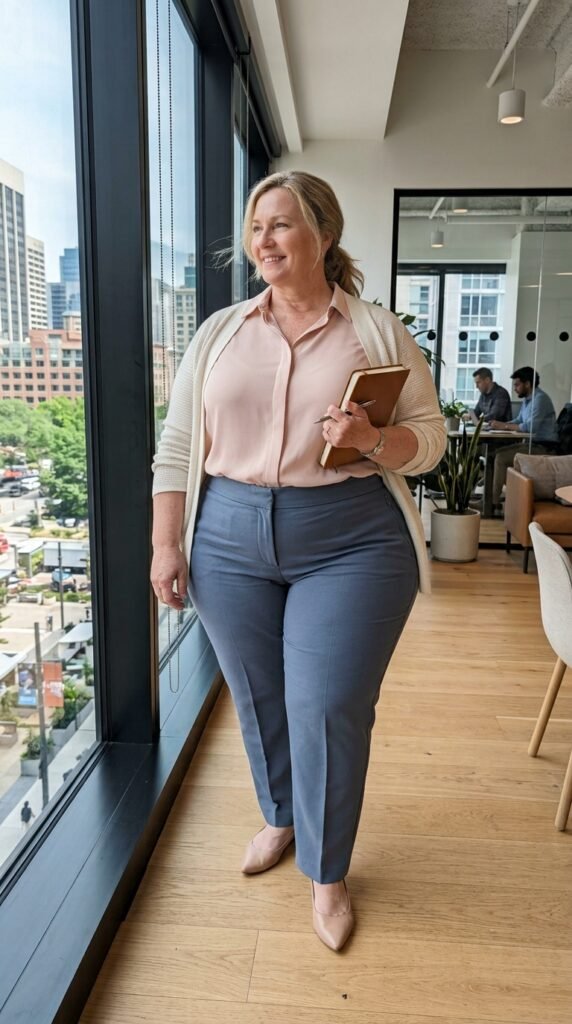
Front zippers and buttons add bulk right where you do not want it, and they force the waistband into a stiff straight line across your front. A side zip removes all of that hardware. The waistband can then be cut as one smooth curved piece that hugs your waist all the way around.
I find side zip pants also sit better under tucked blouses, since there is no button bump under the fabric.
One honest note: they take three extra seconds to put on, and the zipper sits right at your natural waist curve, so quality matters. A cheap side zipper will catch.
6. Stretch Woven Trousers With the Right Spandex Percentage
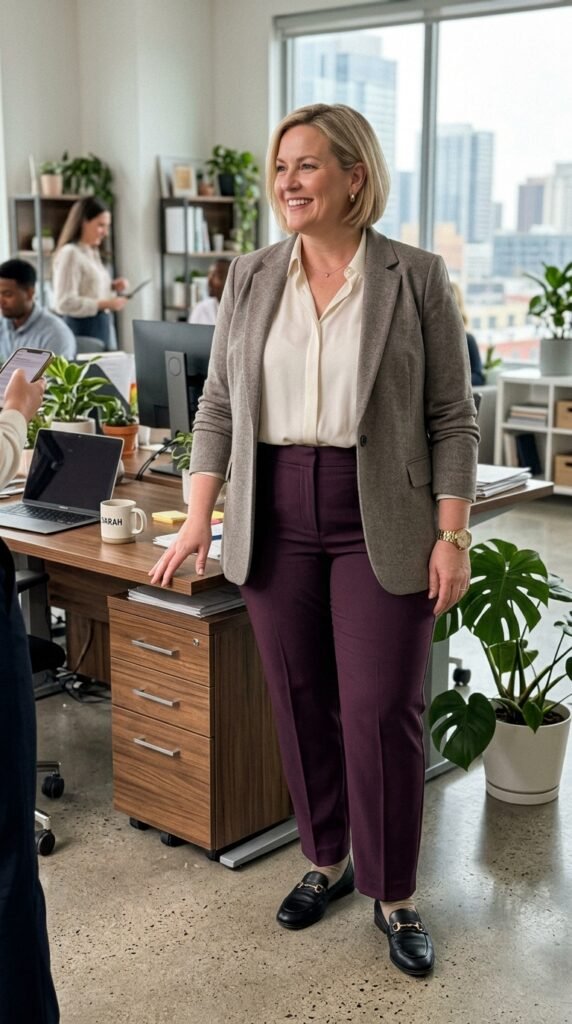
People get this one wrong constantly. They see “stretch” on a tag and assume all stretch is equal. It is not. The spandex percentage decides whether your stretch work pants recover their shape or bag out at the waist by 3 pm.
The sweet spot for woven trousers is 3 to 5 percent spandex blended with polyester or a poly viscose mix. Below 2 percent, the fabric barely gives, so you size up and get a gap. Cotton heavy blends with spandex stretch out and stay stretched.
Read the fabric tag before the price tag. It tells you more about how the waist will fit at the end of the day.
| 1 to 2% spandex | 3 to 5% spandex |
|---|---|
| Barely gives, so you size up for your hips. | Stretches over hips while the waist stays close. |
| Feels stiff when seated for long stretches. | Moves with you and springs back after sitting. |
| Waist gap appears once fabric relaxes. | Recovery keeps the band snug through the day. |
7. Wide Leg Trousers Cut With a Curvy Rise
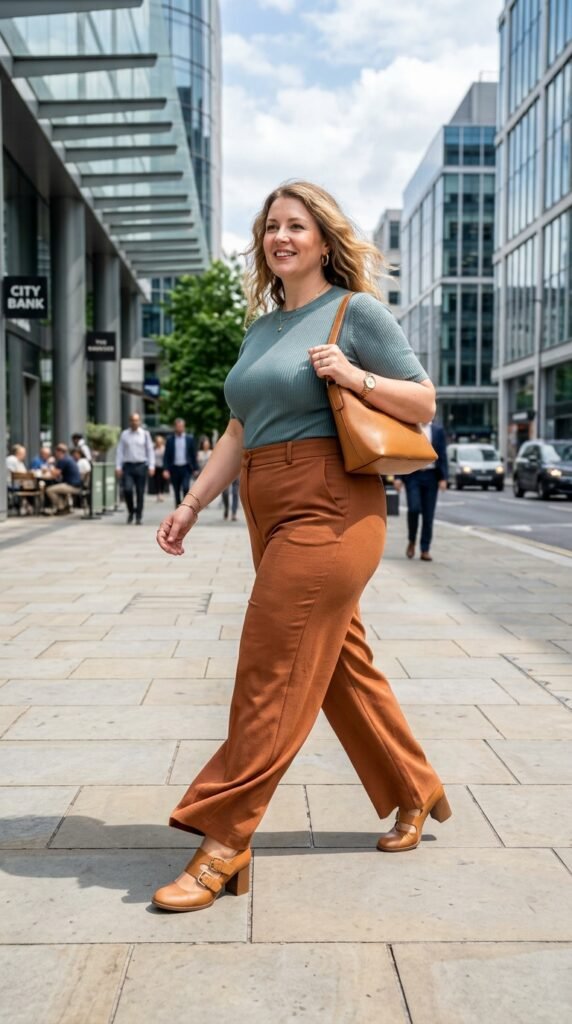
There is a myth that wide leg pants swamp fuller figures. In my experience the opposite is true, as long as the waist fits. A wide leg trouser that is fitted through the waist and flows from the hip down balances your frame and skims past thighs without pulling.
The trick is where the width starts:
- Width should begin at the hip or upper thigh, not at the waistband
- The waistband itself should still be contoured or elastic backed
- Length matters, so aim for hems that hit near the top of your shoe
Pair them with a fitted top so the shape stays clear.
A wide leg should be roomy in the leg and fitted at the waist. If the waistband is loose too, the whole silhouette collapses.
8. Pants With Adjustable Inner Waistband Tabs
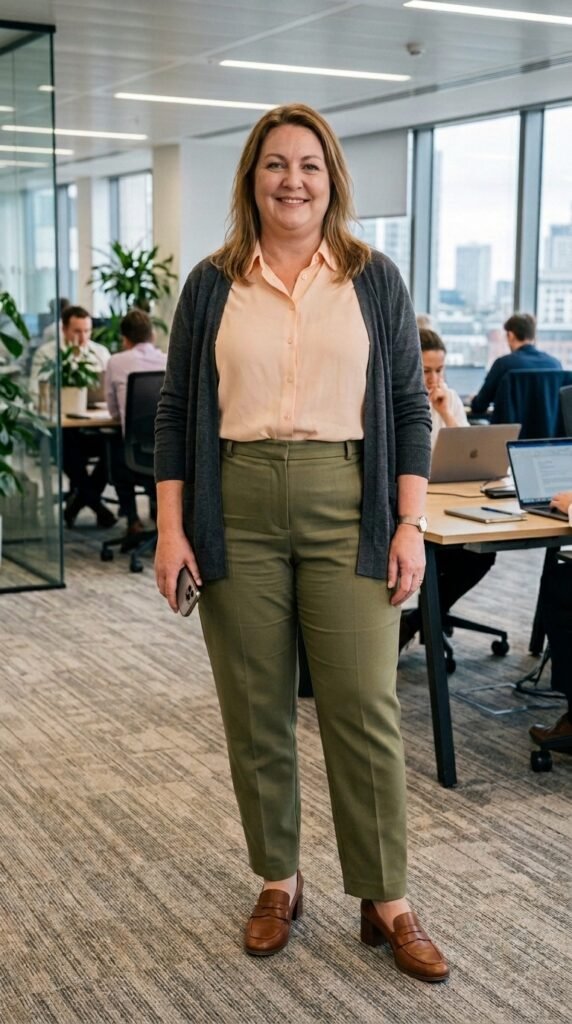
Kids’ pants have had this feature for decades, and some grown up workwear brands finally caught on. Inside the waistband sits a hidden elastic strip with buttonholes, plus a small button at each side. You tighten or loosen the waist in about a minute, no sewing involved.
This detail is quietly useful for anyone whose waist measurement shifts through the month. Instead of owning a “bloated days” pair and a regular pair, one pair covers both.
Here is how to set them the first time:
Put the pants on and fasten them normally, then pinch the back waistband to see how much slack you have.
Move each inner button one buttonhole tighter, splitting the slack evenly between both sides.
Sit, stand, and walk for a minute. If the band puckers, loosen one hole. Smooth and snug is the goal.
9. Straight Leg Pants in Double Weave Fabric
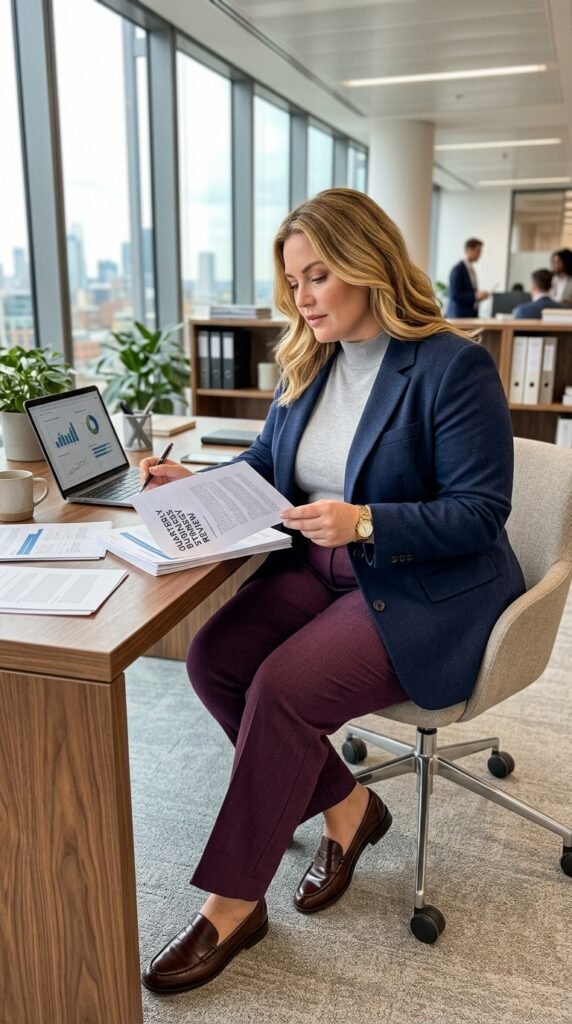
Double weave, sometimes labeled “bi-stretch” or “scuba suiting,” is two layers of fabric woven together. It has real body, so it never clings, but it stretches in both directions. That combination is why straight leg work pants in this fabric hold their line from waist to hem instead of bunching at the thigh.
The fabric does half the fit work for you. The waistband stretches enough to close the gap, while the structured hand keeps everything looking sharp in meetings.
One warning worth knowing: double weave holds warmth. Save these for air conditioned offices and cooler months.
Choose double weave or bi-stretch labels for structure with give.
Hang them after wearing so the knit side can relax back to shape.
Thin single layer suiting that shows every waistband edge.
Hot dryers, which break down the stretch fibers fast.
10. Linen Blend Pants With a Smocked Back Waist
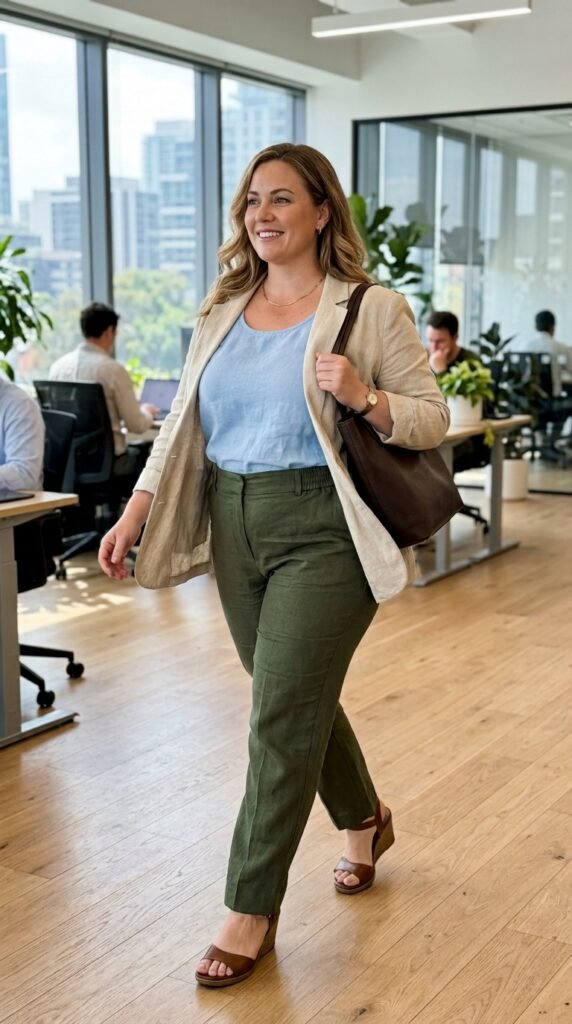
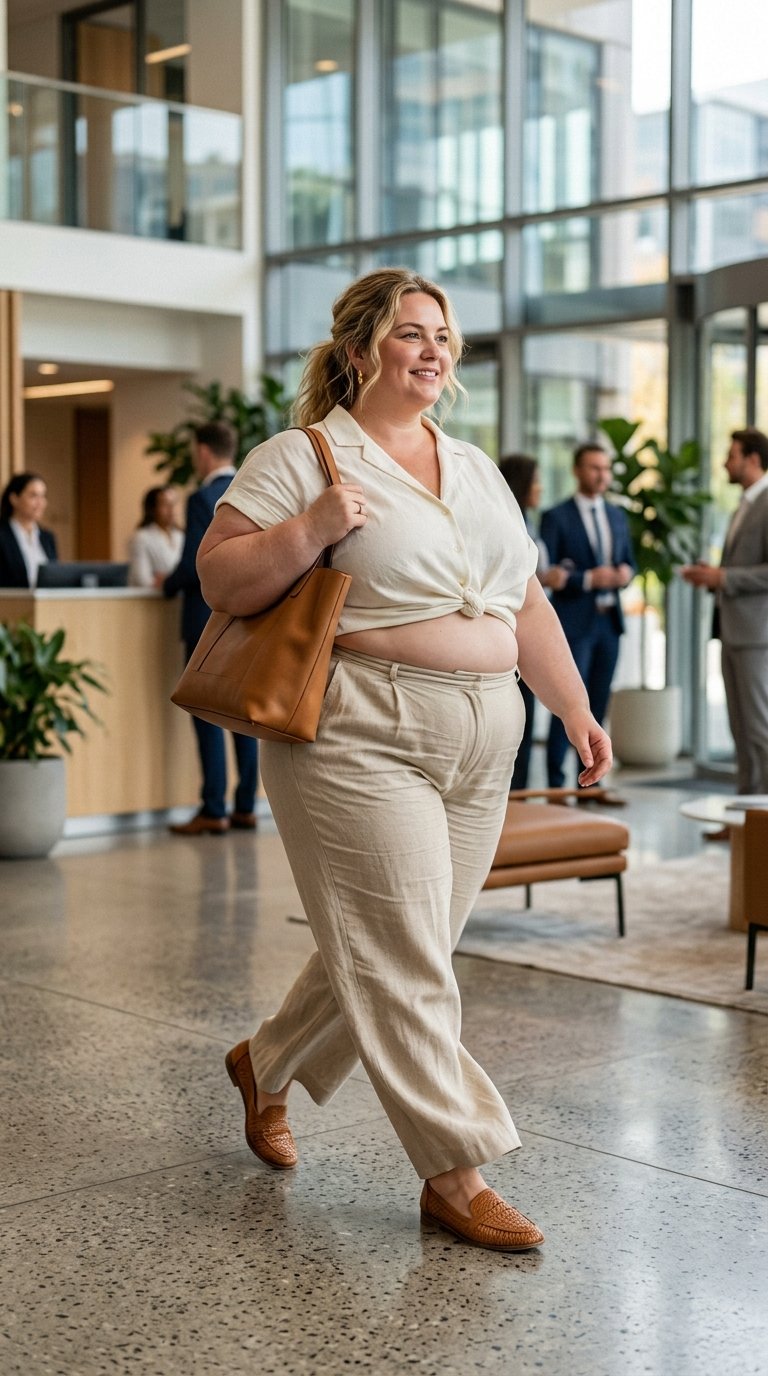
Summer offices call for breathable fabric, but pure linen has zero stretch, which brings the waist gap right back. The fix is a linen viscose or linen rayon blend with a smocked or shirred back waist panel. You get the airflow of linen work pants with a back waist that actually grips.
A few details that make a linen pair office ready rather than beachy:
- ▸A blend of 55 percent linen or less, so wrinkles soften instead of crease.
- ▸Darker colors like espresso, navy, or deep olive that read polished.
- ▸A full lining or thicker weave, since summer light is unforgiving.
Steam them the night before. Linen blends respond to steam far better than to a hot iron.
The Waistband Should Work as Hard as You Do
Once you know what to look for, shopping gets faster. Contoured bands, hidden elastic, a longer back rise, and 3 to 5 percent stretch are the details that separate plus size work pants that fit from pants you fight with all day. Start with one pair built the right way, and you will feel the difference by your first coffee refill.
Your waistband should be the thing you think about least at work, not the thing you adjust every hour.
Save this list to your work wardrobe board so it is there the next time you shop for trousers.