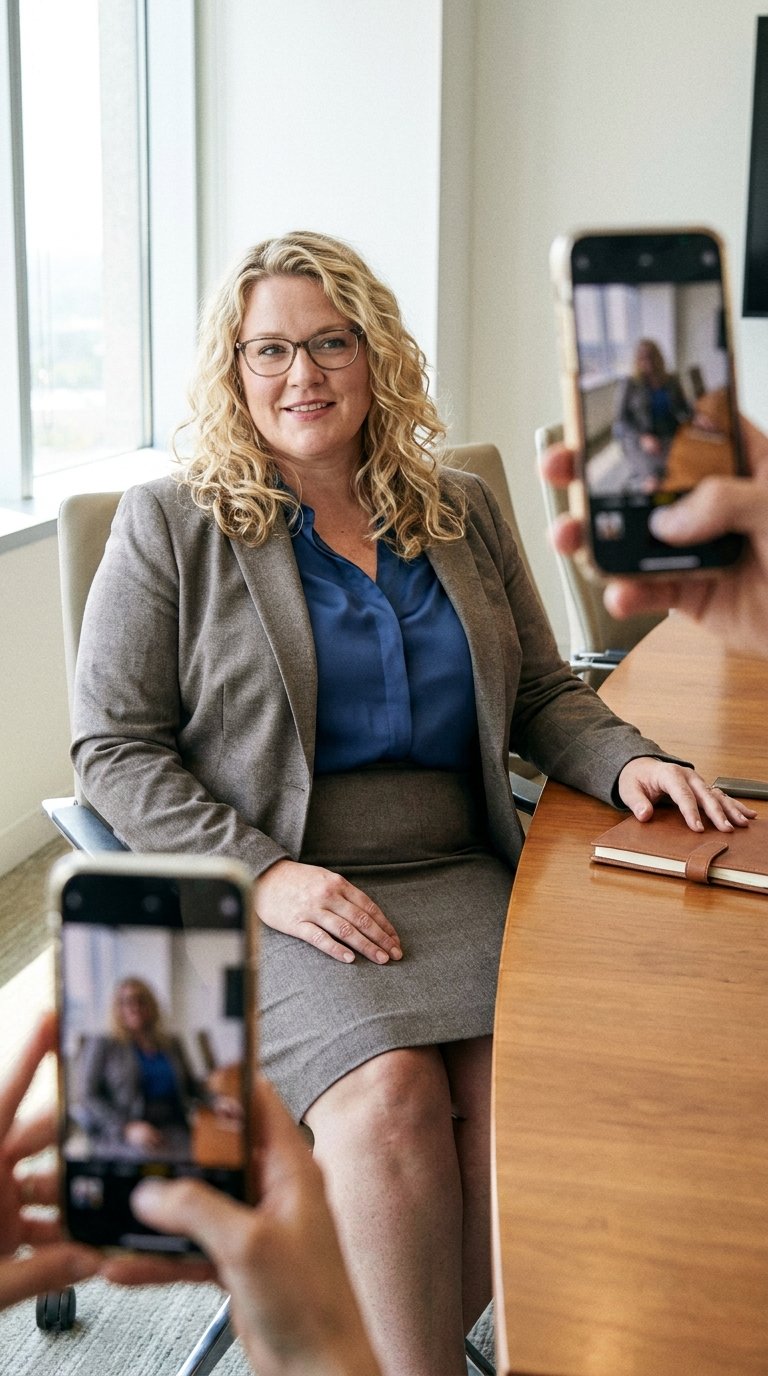
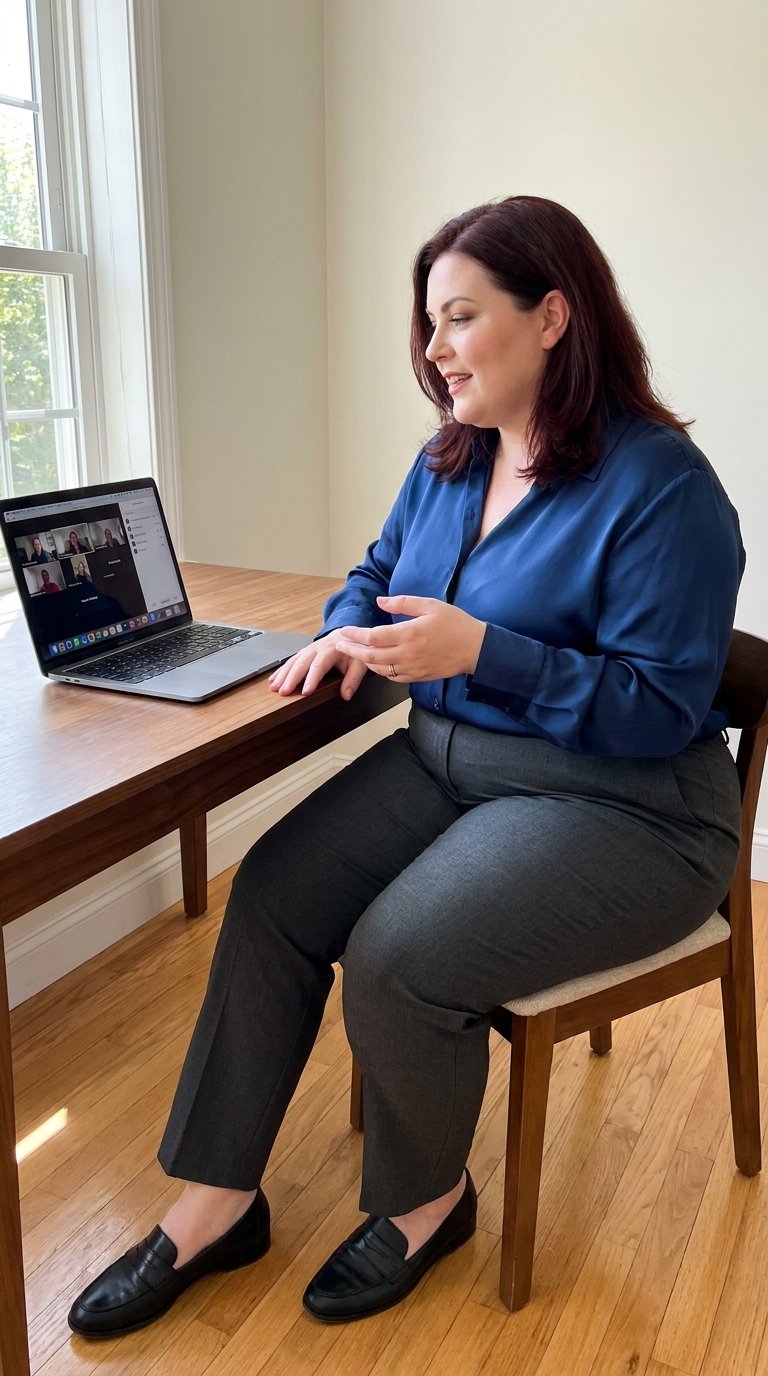
10 Interview Outfits for Plus Size Women With a Big Bust That Actually Fit Right
Most interview outfit guides skip the one detail that actually matters for a bigger bust: fit through the chest and shoulders. You can find fifty photos of blazers and blouses online and still end up standing in a fitting room wondering why every button wants to gap or every neckline pulls too tight. That is not a personal failing. It is a sizing gap in how most professional clothing is cut.
Finding interview outfits for plus size women with big bust needs a different approach than the generic “just wear a blazer” advice. It means paying attention to where a seam sits, how a fabric moves, and which necklines actually stay put when you sit down, shake a hand, or lean forward to grab your portfolio.
Below are 10 specific outfit moves, each one built around the fit details that matter for a fuller chest. Some are fabric swaps. Some are neckline choices. A few are small fixes you can do the night before. None of them ask you to shrink how you show up. Read through, save what fits your closet, and walk into that interview knowing your outfit is working with you.
1. Try a Wrap Top With a Deep V Neckline (Not a Plunge)
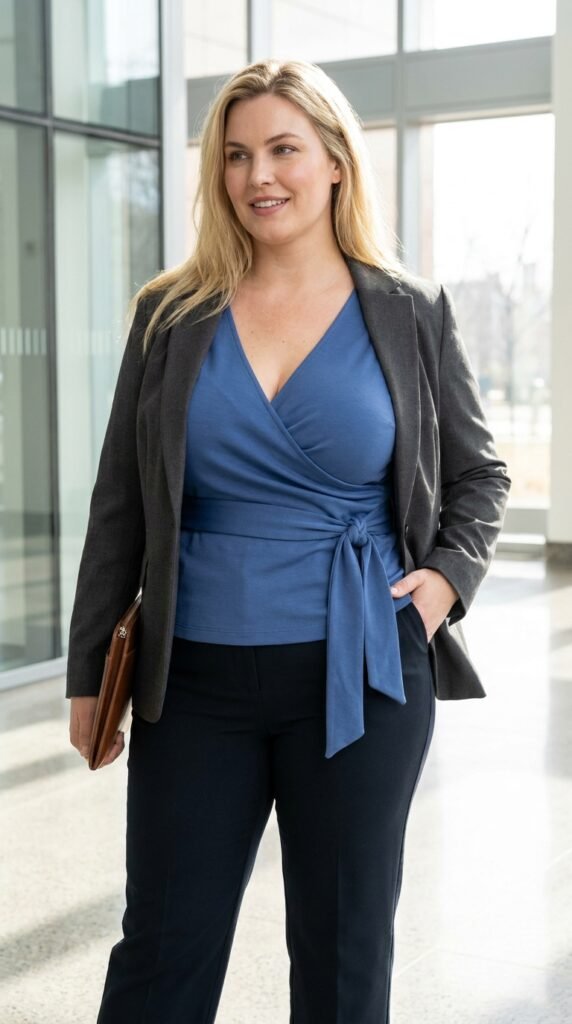
Button gap is the top interview outfit complaint from readers with a bigger chest, and it almost always comes from a straight button placket fighting against curve. A wrap top solves this because there is no button to strain in the first place. The fabric crosses and ties, so it moves with you instead of against you.
Look for:
- A V that sits two to three inches below the collarbone, not lower
- A self tie or interior snap so the wrap stays put all day
- A knit or ponte blend, not woven cotton, so it has some give
Pair it with a blazer you can open freely. For more ways to build the rest of the look around it, check out these plus size interview outfit ideas.
2. Choose a Blazer With Princess Seams, Not a Boxy Cut
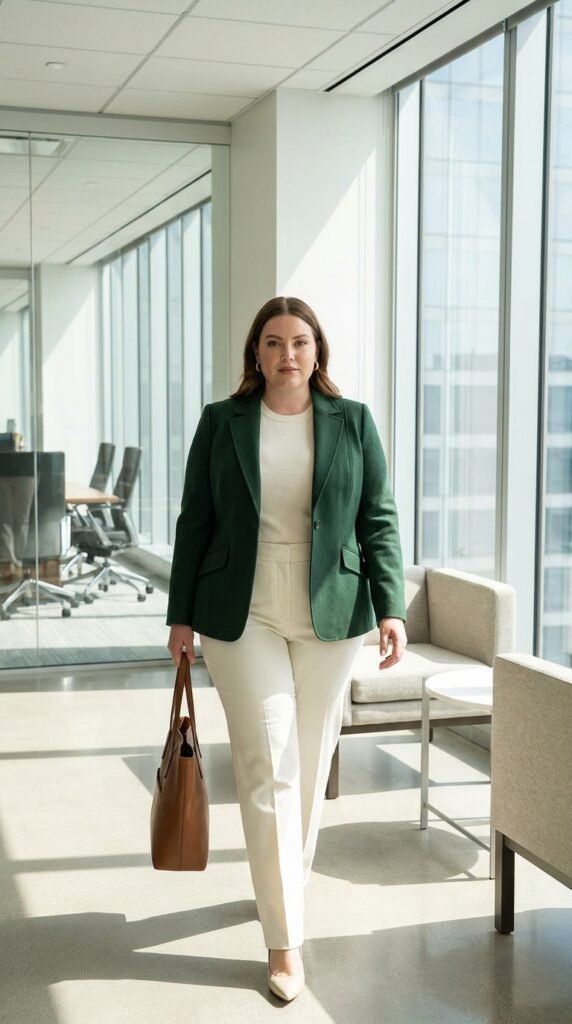
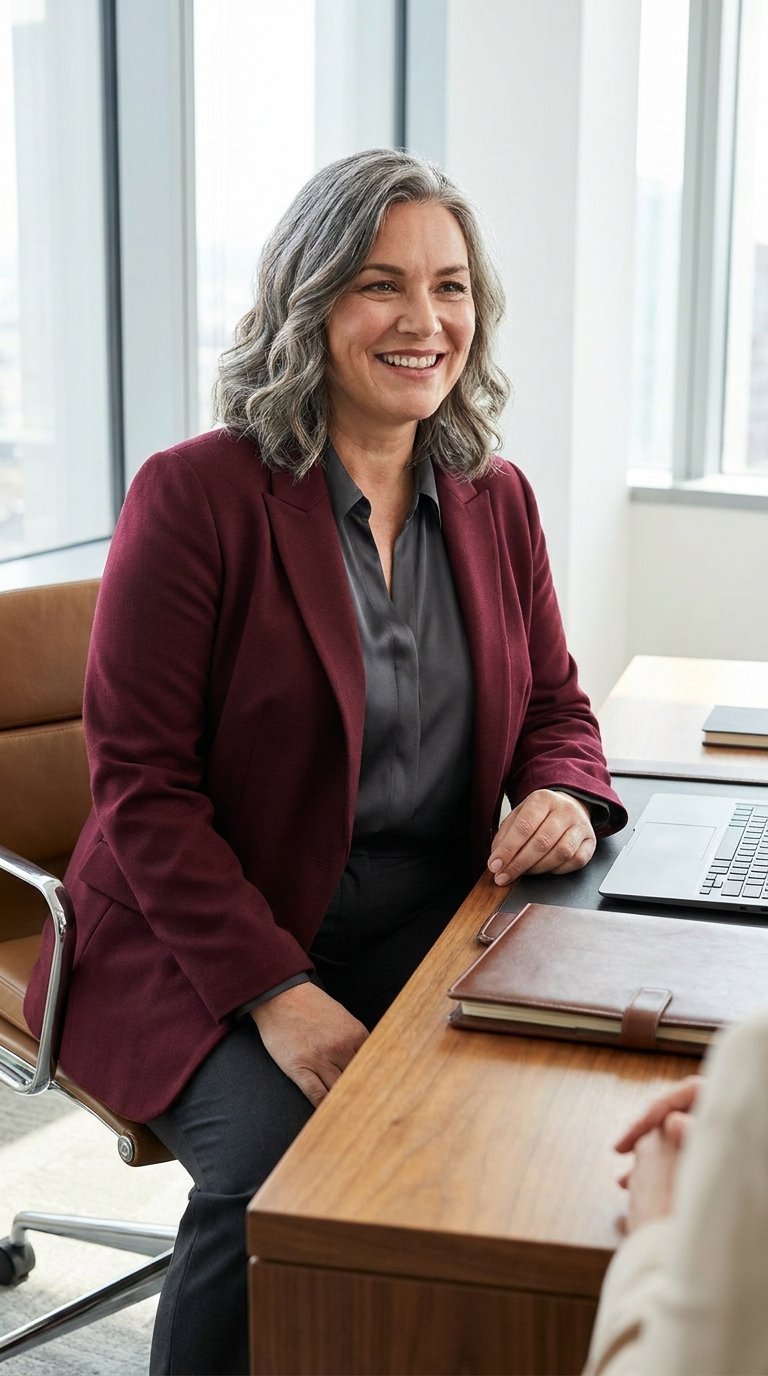
Start with the seams before you even try a blazer on. Princess seams run from the shoulder down through the bust and taper at the waist, which gives the jacket room where you actually need it instead of just adding overall bulk. A boxy blazer without those seams tends to pull straight across the chest and gap at the button, no matter the size on the tag.
Ask the store or the size chart for the bust measurement at the fullest point, not just the label size. If you are between sizes, size up and have the shoulders taken in instead of squeezing into a smaller fit.
💡 Quick Tip
Try the blazer sitting down and reaching forward before you buy it. If it pulls at the button in that position, it will pull all day at your desk.
3. Swap Cotton Blends for Ponte Knit
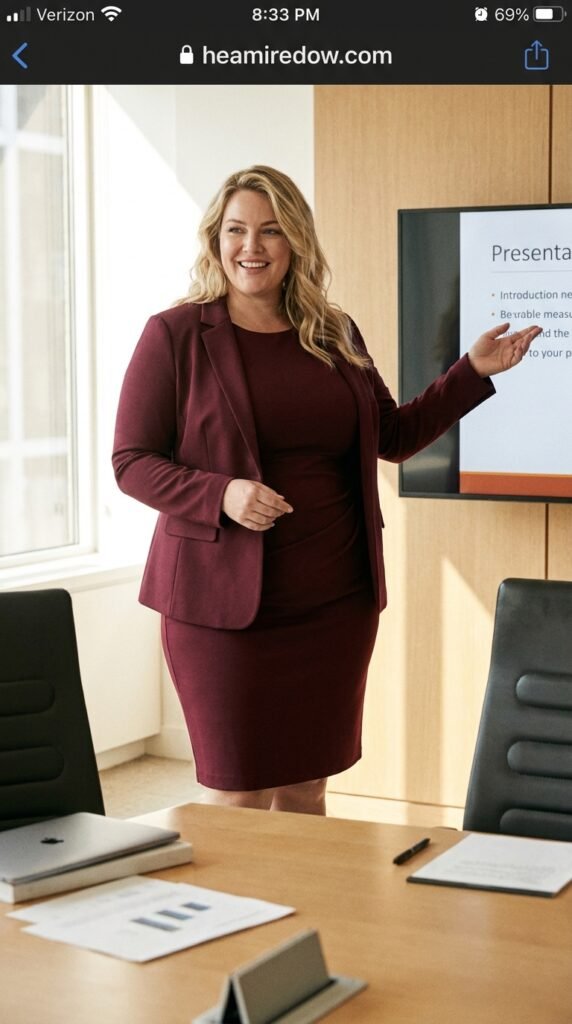
A lot of interview advice says stick to woven cotton for a crisp, put together look. For a bigger bust, that advice can work against you. Woven cotton has almost no stretch, so it strains at the widest point of your chest and shows every pull line by lunchtime. Ponte knit holds a similar structured look but moves with your body instead of resisting it.
It also recovers its shape after you sit through a long interview, so you are not smoothing wrinkles in the waiting room mirror. Look for ponte blazers, sheath dresses, and structured tops when you shop.
Choose ponte, scuba knit, or stretch twill.
Check the fabric tag before the fitting room.
Rigid cotton poplin with zero stretch.
Fabric that wrinkles the second you sit.
4. Layer a Fitted Cami Under an Open Blouse

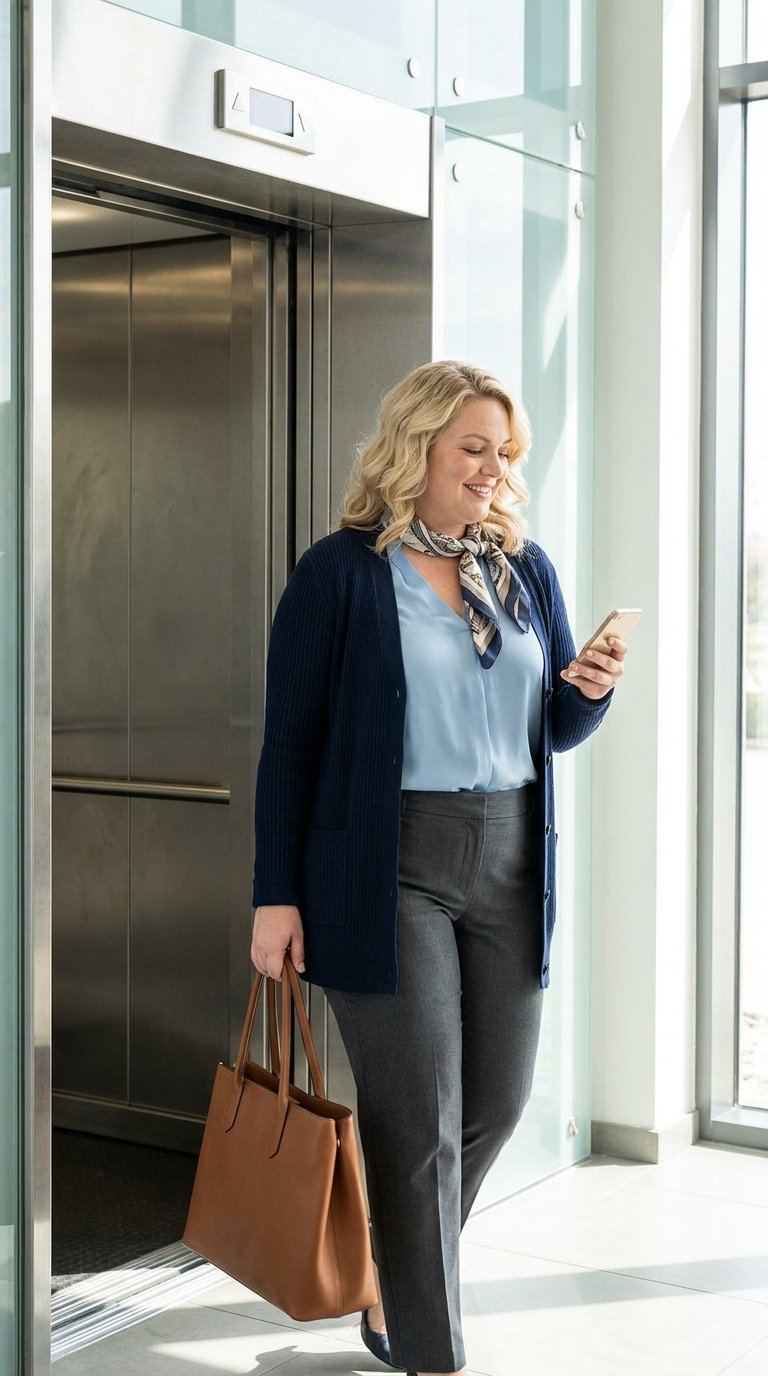
You get to the interview, take off your coat, and realize the blouse gaps right where you need it to stay closed. A fitted cami underneath fixes that before it happens, and it gives you the option to leave a button or two open without worrying about it.
Match the cami to your skin tone or the blouse color, not stark white, and pick a scoop or V cami, never a crew neck, so it doesn’t peek out from the neckline. A stretch knit keeps it from riding up when you move.
Raise your arms overhead in the fitting room.
Sit down and lean forward like you’re reaching for a bag.
Check the mirror from the side, not just straight on.
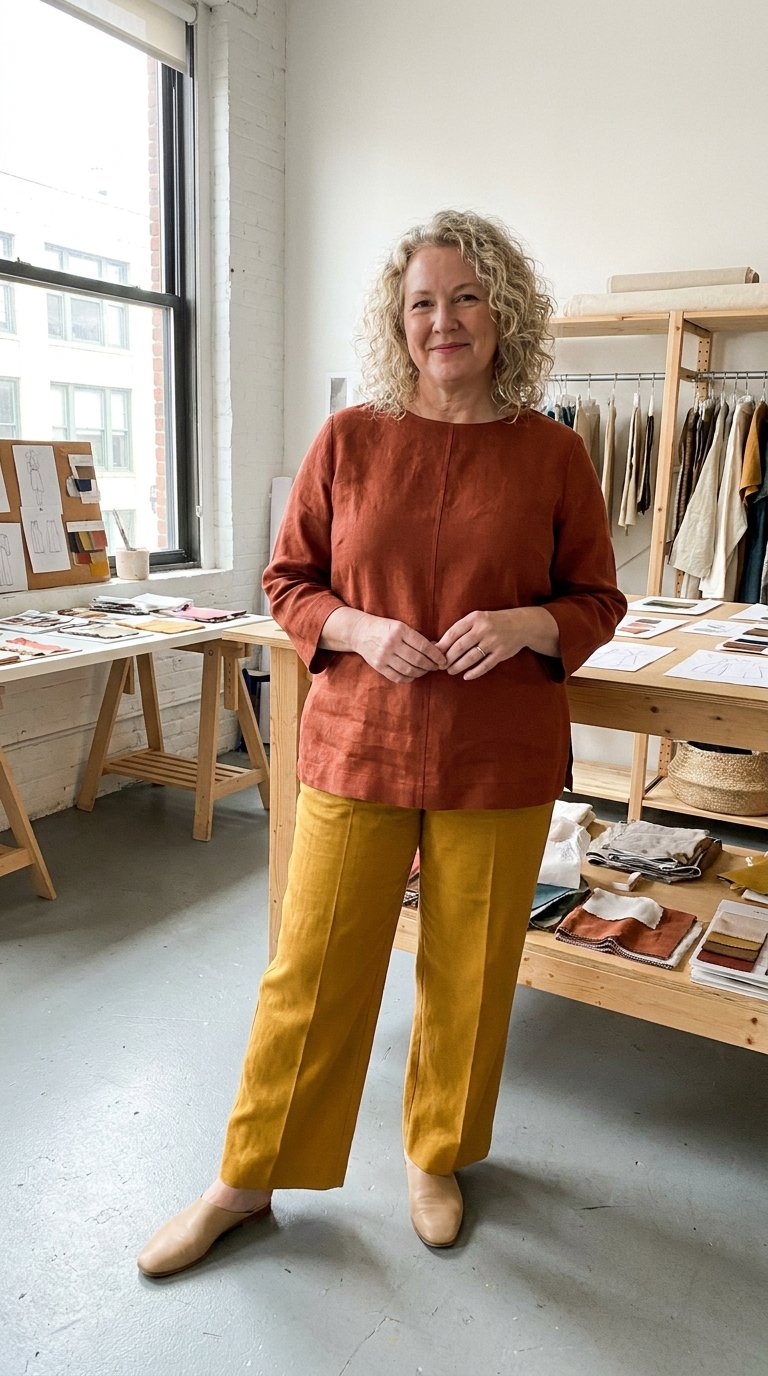
5. Pick Wide Leg Trousers to Balance Your Top Half
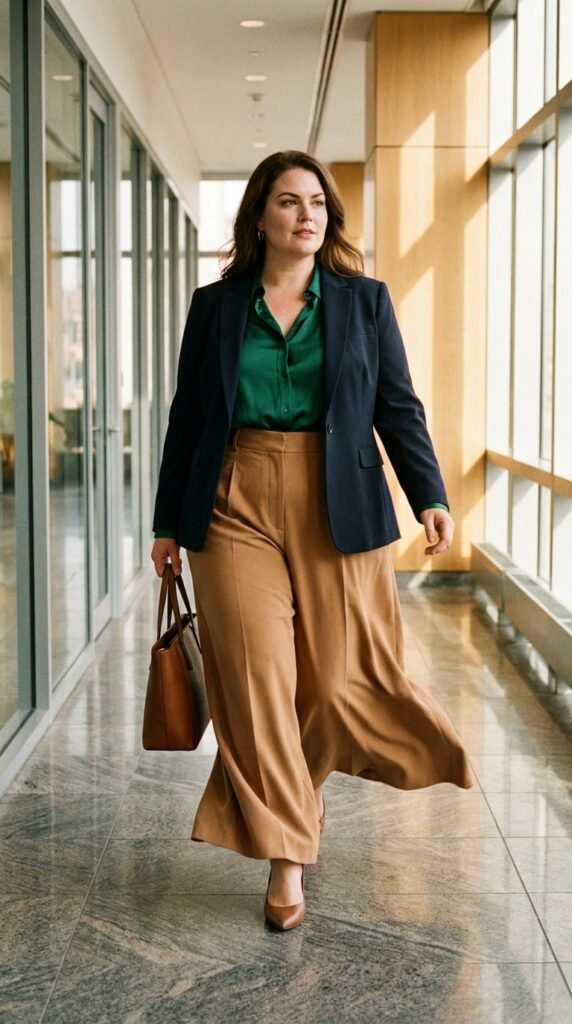
A wide leg trouser does something a lot of readers do not expect: it balances a fuller chest by adding visual weight lower down, so your whole outfit reads as one intentional silhouette instead of top heavy. High waisted styles also give you a defined line at the smallest part of your torso, which helps a tucked in blouse sit better.
Look for a trouser with some structure in the fabric so it holds its shape through a full day of interviews. For more ways to build a full look around this piece, see these plus size interview outfits with dress pants.
Skinny pants with a boxy top read top heavy and add extra fabric where you don’t need it.
Wide leg trousers with a tucked blouse create one long, balanced line from shoulder to hem.
6. Go With a Sheath Dress That Has Built In Structure
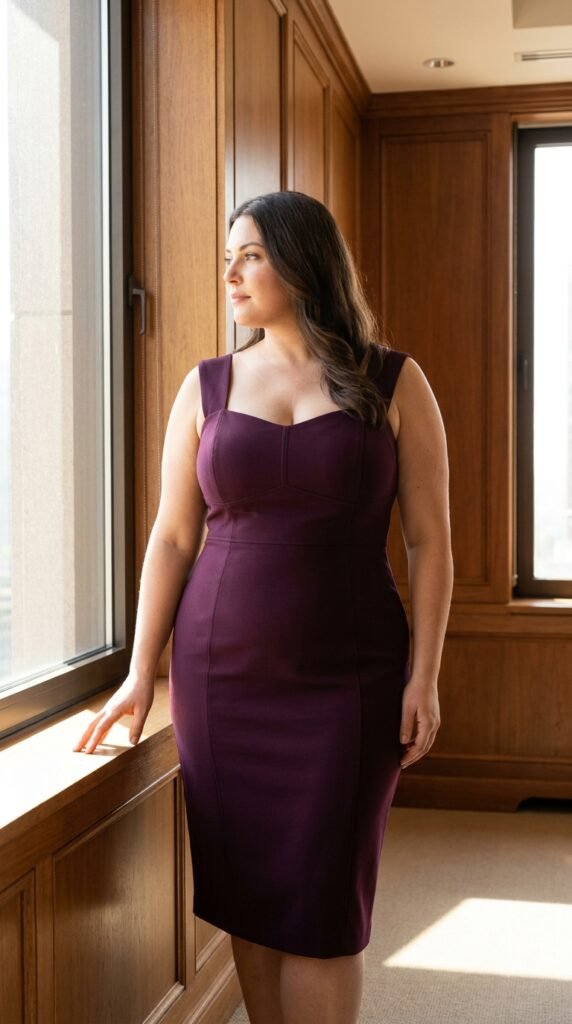
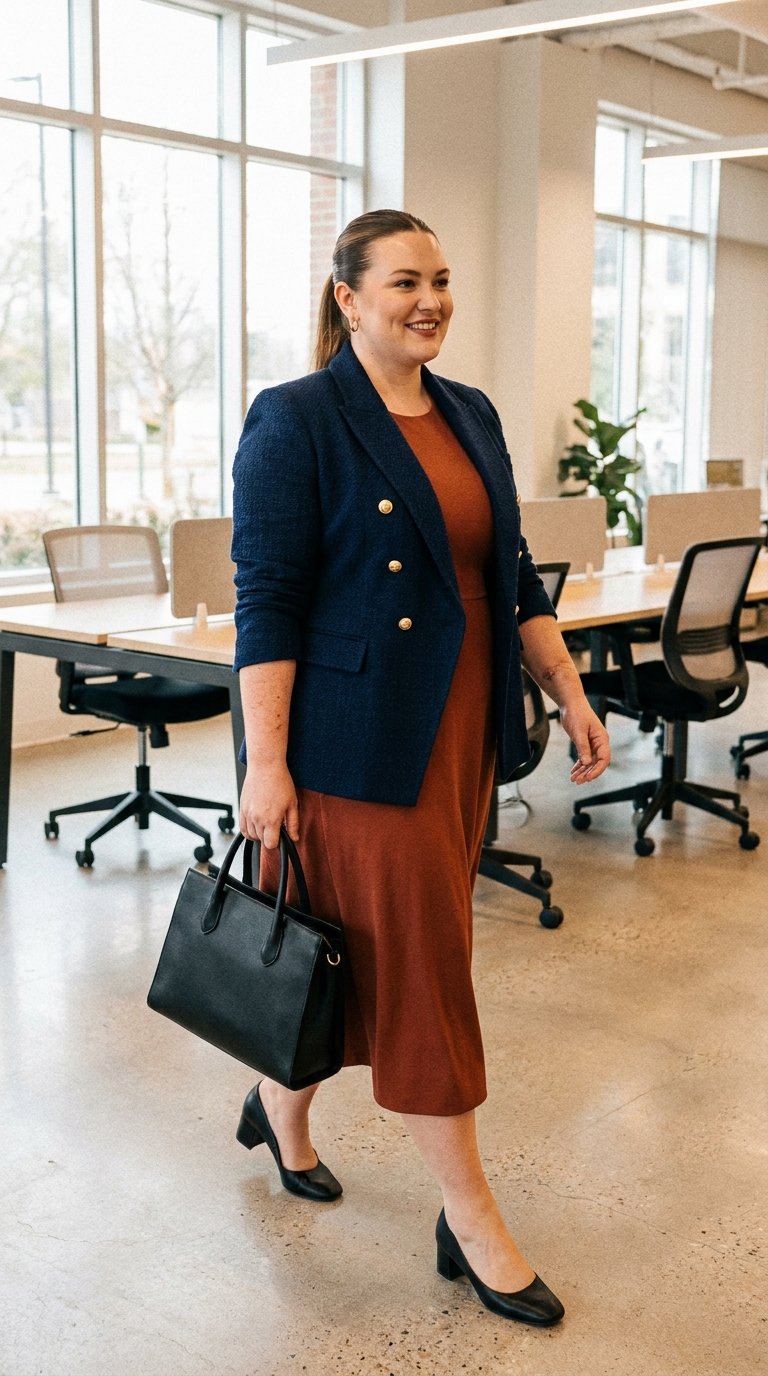
A well built sheath dress does more work for you than a two piece outfit, because the structure is already sewn in. No separate blazer to match, no waistband to adjust, no gap to check between pieces. Look for one with a lined bodice and a wide set strap, since a thin strap under a blazer tends to slide and dig by hour two.
A boat neck or scoop sheath keeps the neckline open enough to stay comfortable while you sit through interviews back to back. Browse a full range of options in these plus size interview dresses.
| Two Piece Outfit | Sheath Dress |
|---|---|
| More pieces to coordinate | One structured piece |
| Waistband to adjust | Built in shaping |
| Blazer gap to monitor | Nothing to gap |
7. Try a Boat Neck or Scoop Instead of a Crew Neck
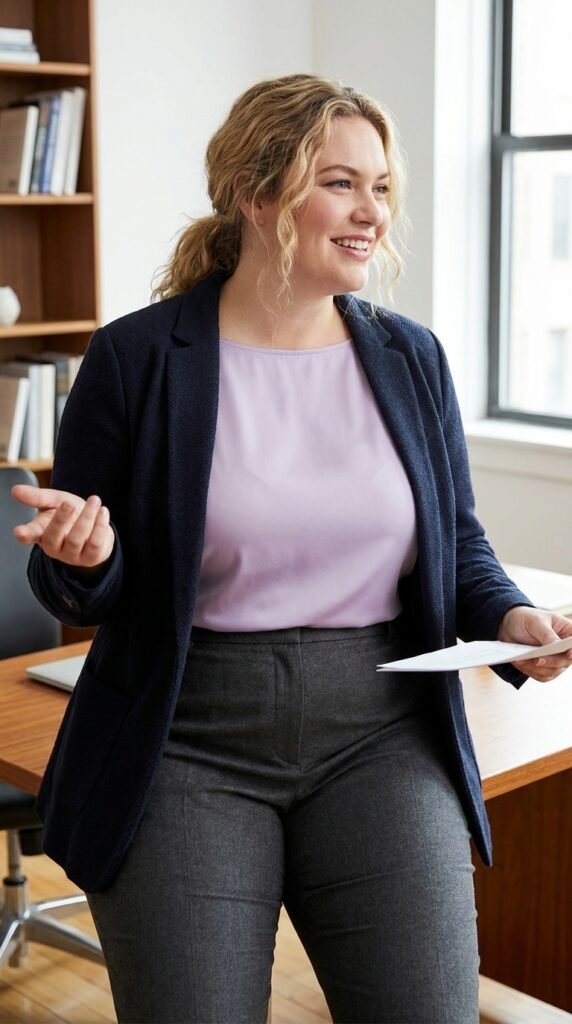
A high crew neckline is often the first thing people reach for because it feels the most conservative, but it can actually pull tighter across a fuller chest than a slightly wider neckline does. A boat neck or wide scoop sits along your collarbone instead of cutting straight across your chest, so it has more room to lay flat.
This is not about showing more skin. It is about giving the fabric a wider path to sit on so it does not strain by mid morning.
8. Pack a Small Kit: Safety Pins, Fashion Tape, and a Spare Cami
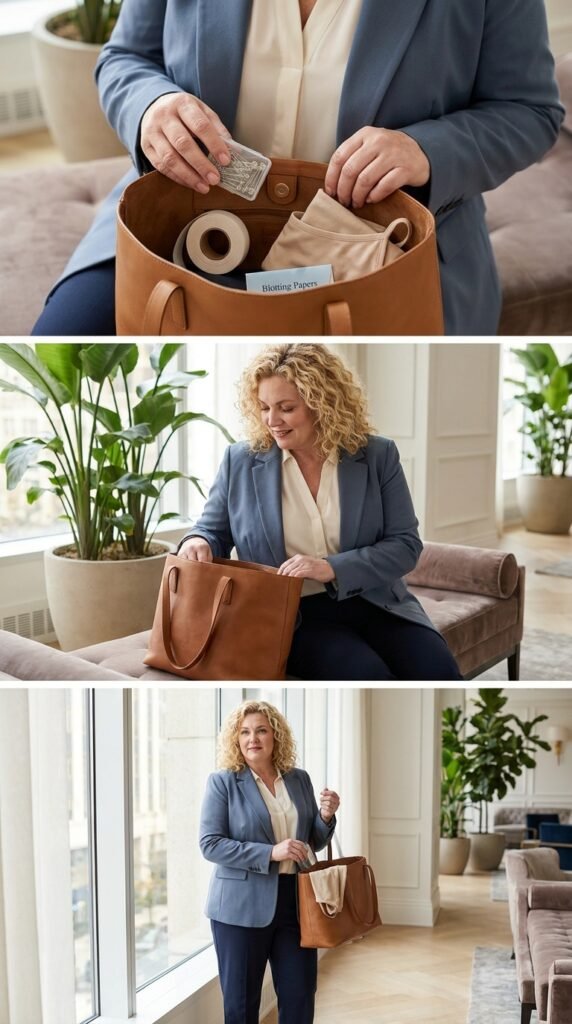
One simple rule fixes most last minute wardrobe stress: if a piece can gap, bring a backup for it. A small kit in your bag means you are never standing in a bathroom stall improvising thirty minutes before your interview.
Keep it small enough to fit in a zip pouch, and check it the night before, not the morning of.
What to pack
9. The One Fit Rule That Matters More Than the Size on the Tag
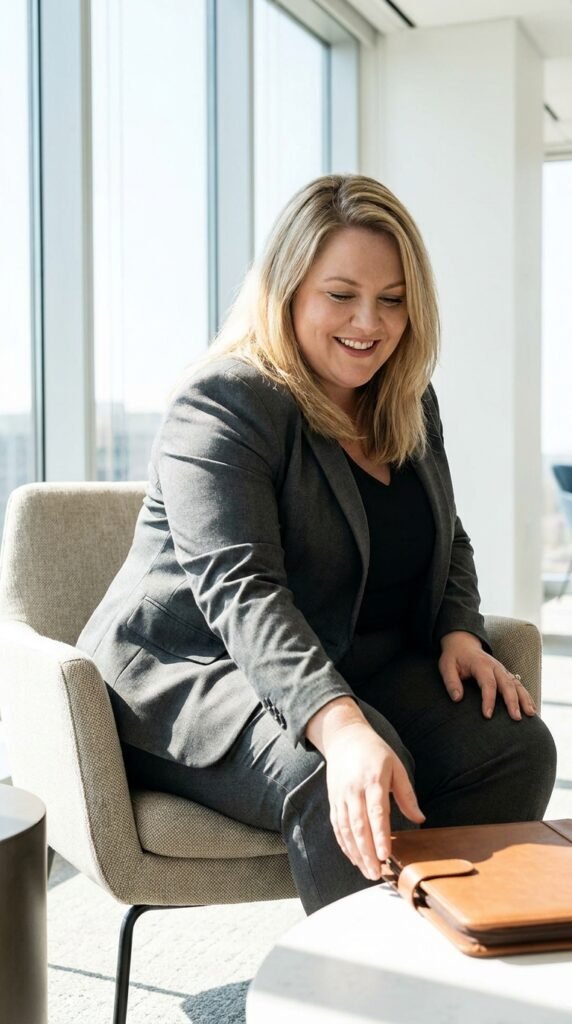
Size labels are inconsistent across brands, especially through the bust. A size 16 in one brand can fit completely differently than a 16 in another. What matters more than the number is where the garment is tightest when you move, not when you stand still.
Try every piece sitting down, reaching forward, and raising your arms before you decide it works. That thirty second test tells you more than any size chart ever will.
Fit is about movement, not the number on the tag. Test it sitting down before you buy it.
10. Skip the Peter Pan Collar for a Notched Lapel
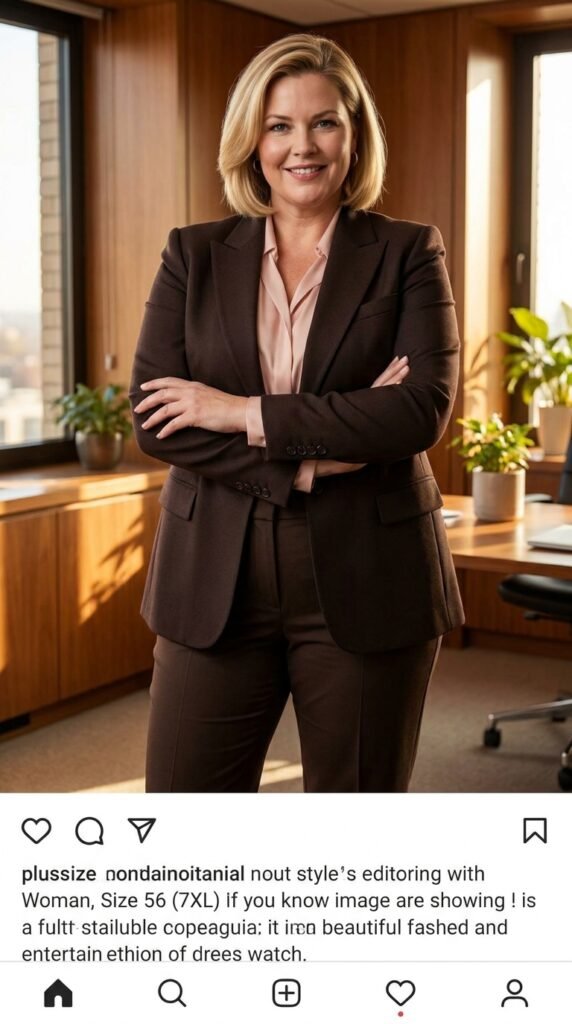
A Peter Pan collar sits high and rounded, which tends to add width right at the fullest point of your chest and can make a top look smaller than it is. A notched lapel, the kind you see on a blazer, creates a diagonal line instead, which draws the eye down and out rather than straight across.
If you already own a top with a rounded collar, try wearing it open under a blazer so the lapel becomes the main line instead.
📌 Good To Know
A notched lapel worn open creates a long diagonal line. A closed round collar creates a short horizontal one.
Getting interview outfits for plus size women with big bust right is not about finding the one perfect item. It is about knowing which details, a seam, a neckline, a fabric with a little give, actually hold up once you are sitting across from someone shaking their hand. Once you know what to look for, shopping gets faster and dressing for interview day gets a lot less stressful.
Keep this list on hand the next time you are prepping for a big interview, and build a small rotation of pieces that pass the sit down and reach test. Save this list for the next time you need an outfit that works as hard as you do.